Introduction
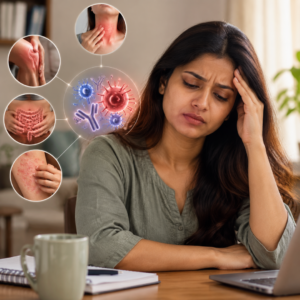
Psoriasis is a chronic, autoimmune skin disorder. This is characterised by rapid skin cell proliferation, leading to scaling, inflammation, and redness. While modern treatments mainly focus on managing symptoms, Ayurveda views psoriasis as an imbalance of the body’s doshas, particularly Vata and Kapha, along with the accumulation of toxins (Ama).
Panchakarma, the detoxification and rejuvenation therapy of Ayurveda, aims to cleanse the body, balance the doshas, and support long-term skin health. It is recommended as a holistic approach for managing psoriasis naturally.
In this article, we will see how Ayurveda helps to control psoriasis symptoms, which therapies are recommended for psoriasis, and what lifestyle changes support psoriasis management.
Can Panchakarma help control psoriasis symptoms?
Yes, Panchakarma- the intensive detoxification in Ayurveda can be highly effective in managing and controlling psoriasis symptoms. It aims to treat the condition as a systemic issue rather than just a skin problem, offering long-term remission and reduced flare-ups when combined with dietary changes.
Here are some key factors:
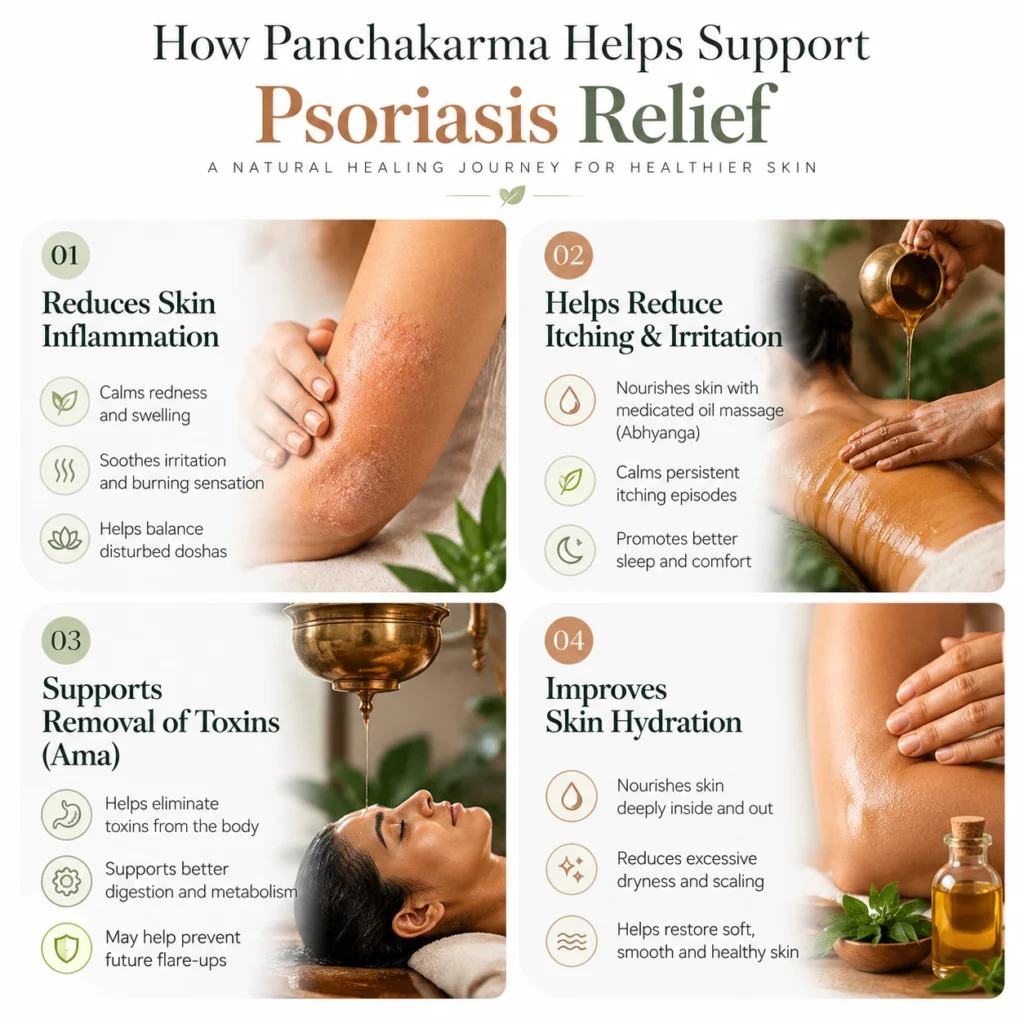
1. Reduces skin inflammation
Redness, swelling, and pain are often caused by inflammation. Panchakarma can help eliminate toxins and balance disturbed doshas, thereby reducing inflammation. With a decrease in inflammation, the redness, irritation, and burning sensations can subside for many patients.
2. Helps Reduce Itching and Irritation
Persistent itching can significantly affect daily life and sleep. Ayurvedic therapies such as medicated oil applications, Abhyanga (herbal oil massage), and internal detoxification procedures help soothe the skin and nourish affected tissues.
- Calm irritated skin
- Reduce itching episodes
- Improve overall skin comfort
- Minimise scratching-related damage
3. Supports Removal of Toxins (Ama)
Ayurveda considers toxin accumulation a major factor in chronic skin disorders. Panchakarma therapies are designed to eliminate these toxins from the digestive tract, blood, and tissues. With a reduced toxin load, the body can be expected to perform better, and this benefits the skin, preventing future flare-ups.
4. Improves Skin Hydration
Psoriasis often causes excessive dryness, scaling, and rough skin patches. Panchakarma includes therapies that nourish the skin from both inside and outside.
Benefits may include:
- Reduced skin dryness
- Softer skin texture, less scaling and flaking
- Improve skin appearance
5. Balances the Doshas
Each psoriasis patient may have a different doshic imbalance. Panchakarma treatment is customised according to the individual’s constitution and symptoms.
By restoring balance among Vata, Pitta, and Kapha, Panchakarma aims to:
- Support normal skin function
- Reduce symptom recurrence
- Promote long-term wellness
Ayurveda Therapy for Psoriasis Management: Which Therapies Are Recommended?
When it comes to managing psoriasis through Ayurveda, there is no single way that suits everyone. The therapies recommended depend on the individual’s symptoms, body condition, and the severity of the condition. Ayurvedic treatment focuses on detoxifying the body, balancing the doshas, and restoring healthy skin. The approach includes both internal and external therapies, dietary modifications, and lifestyle changes.
To learn how Panchakarma may fit into a personalised Psoriasis Management plan, explore the Panchakarma Therapy for Psoriasis Management page. You can also consult an Ayurvedic physician for personalised guidance.
- Virechana (Therapeutic Purgation): Virechana is one of the most commonly recommended Panchkarma therapies for psoriasis. Virechana involves the administration of a laxative to remove toxins from the body through the intestines. This treatment is effective in cleaning the liver, reducing Pitta, and eliminating toxins from the body.
- Raktamokshana (Blood Purification Therapy): In Ayurveda, blood purification is considered important in the management of many chronic skin conditions. In cases where Rakta Dushti (vitiation of blood) is present, blood purifying therapy or leech therapy can be used to purify the blood and reduce inflammation.
- Vamana (Therapeutic Emesis): In some cases where Kapha imbalance is considered significant, Vamana may be recommended. This procedure involves inducing controlled vomiting to expel toxins from the stomach and upper gastrointestinal tract. It is particularly useful in cleaning excess Kapha and detoxifying the body.
- Basti (Medicated Enema): Basti is used to clear an imbalance in Vata dosha. It involves the administration of herbal decoctions or oils into the rectum, helping cleanse the colon and remove deep-seated toxins.
Is psoriasis completely curable with Panchakarma?
No, psoriasis is not completely or permanently curable with Panchakarma. There is currently no absolute permanent cure for psoriasis in either modern medicine or classical Ayurveda. Psoriasis is a chronic, immune-mediated systemic disorder.
However, Panchakarma may play an important role in managing psoriasis symptoms and improving quality of life. In Ayurveda, psoriasis is believed to result from dosha imbalances and the accumulation of toxins (Ama) in the body.
Many patients undergo Panchakarma to help:
- Reduce itching and irritation
- Minimise redness and irritation
- Decrease scaling and dryness
- Improve skin texture and appearance
- Support Longer periods between flare-ups
- Enhance overall well-being
The goal is often to achieve better symptom control and support healthier skin rather than simply suppressing symptoms.
How often should Panchakarma be repeated for psoriasis?
This is the most common question that people ask after experiencing relief from Panchakarma. Whether the treatment needs to be repeated. The answer depends on several factors, including the severity of psoriasis, how long the condition has been present, and how well the individual responds to treatment.
The fastest solution, Panchakarma, is a personalised Ayurvedic therapy designed to cleanse the body, balance the doshas, and support long-term skin health. Because psoriasis is a chronic condition, periodic treatment may be recommended to help maintain results and reduce the chances of recurring flare-ups.
The specific frequency and duration will vary based on the severity of the psoriasis and the protocols recommended by your ayurveda physician:
Typical Treatment Schedule
Initial Intensive Course: A full, immersive Panchakarma program spans 14 to 28 days. This usually features treatments such as Virechana (therapeutic purgation) or Vamana (therapeutic vomiting) to deeply clear toxins.
Severe or Chronic Cases: For extensive or stubborn flares, doctors usually recommend a second 21-day course 3 to 6 months after the first one.
Maintenance: Once the initial cycle is complete, lighter preventive cleansing is typically scheduled annually or semi-annually at the change of seasons.
What Lifestyle changes support psoriasis management
To effectively manage psoriasis and achieve long-term remission, Ayurveda emphasises strict dietary and lifestyle modifications (Ahara and Vihara) alongside clinical treatments. These changes are designed to balance the doshas, prevent the buildup of toxins (Ama), and calm the immune system.
Diet plays a central role in preventing the internal imbalances that trigger psoriasis flare-ups. The sources recommend the following dietary habits:
- Foods to Include: Eat warm, nutritious, and easily digestible meals such as soup, stews, cooked vegetables, and ghee. This helps pacify the Vata dosha.
- Anti-inflammatory and Cooling Foods: Incorporate green moong, red rice, green leafy vegetables, and cucumbers.
- Embrace Bitter Tastes: Foods with bitter properties, such as bitter gourd and neem,are highly encouraged because they help detoxify the body and cleanse the blood.
- Hydration: Drink plenty of warm water and herbal teas to support internal detoxification and keep the skin hydrated.
- Foods to Avoid: Strictly avoid spicy, oily, sour, fermented, and processed foods, as these aggravate the Pitta and Kapha doshas.
Certain proteins and Dairy: Red meat, seafood, and dairy products are known triggers and should be avoided. - Avoid Incompatible Combinations: Do not mix incompatible foods, such as eating fish and milk together. Additionally, avoid overeating curds, black gram, and highly salty items.
Conclusion
Psoriasis is a chronic skin condition that often requires long-term management rather than a one-time treatment. Ayurveda approaches psoriasis by addressing the root causes, including dosha imbalances, toxin accumulation (Ama), and impaired digestion. Panchakarma plays a significant role in this holistic approach by detoxifying the body, balancing the doshas, and supporting the body’s natural healing mechanisms.
While Panchakarma may not provide a permanent cure for psoriasis, it can help reduce symptoms such as itching, redness, inflammation, dryness, and scaling. When combined with personalised Ayurvedic medicines, a balanced diet, healthy lifestyle practices, and regular follow-up care, Panchakarma may contribute to better symptom control, fewer flare-ups, and improved overall quality of life. For the best results, treatment should always be guided by a qualified Ayurvedic practitioner who can tailor the therapies to the individual’s condition and health needs.
Frequently Asked Questions (FAQs)
- What is Psoriasis?
Psoriasis is a chronic autoimmune skin condition that causes skin cells to build up rapidly, leading to thick, red, inflamed, scaly patches on the body. It may also cause itching, dryness, and discomfort. - Can Panchakarma cure psoriasis permanently?
No. Psoriasis is considered a chronic condition, and there is currently no guaranteed permanent cure. However, Panchakarma may help manage symptoms, reduce flare-ups, and improve overall skin health. - Which Panchakarma therapy is most commonly used for psoriasis?
Virechana (therapeutic purgation) is one of the most commonly recommended Panchakarma therapies for psoriasis because it helps eliminate toxins and balance aggravated Pitta dosha. - How long does Panchakarma treatment for psoriasis take?
The duration varies depending on the severity of the condition and the individual’s health status. A typical Panchakarma program may take between 14 and 28 days, while some patients may require additional follow-up therapies. - Is Panchakarma safe for psoriasis patients?
When performed under the supervision of a qualified Ayurvedic doctor, Panchakarma is generally considered safe. The therapies are customised according to the patient’s body constitution and health condition. - How often should Panchakarma be repeated for psoriasis?
The frequency depends on the severity of psoriasis and the patient’s response to treatment. Some individuals may benefit from annual or seasonal detoxification, while others may require additional treatment cycles as advised by their Ayurvedic physician. - Are dietary changes necessary during psoriasis treatment?
Yes. Ayurveda places great importance on diet. Avoiding processed, spicy, oily, and incompatible foods while following a balanced, easy-to-digest diet can support treatment outcomes and help prevent flare-ups.