CGHS, or the Central Government Health Scheme, supports India’s government workers. Since its launch, it has supported many health seekers. It also keeps their families safe. In 2026, CGHS continues to serve more than 50 lakh beneficiaries. This includes serving employees, pensioners, and their dependents.
CGHS covers consultations, medicines, hospital treatments, and specialist referrals. This scheme lets central government employees and their families receive 100% cashless treatment.
So, if you are a central government employee or pensioner, CGHS is important to know. Make 2026 your year! If you haven’t applied yet, now is the time to enjoy the benefits of CGHS.
Continue reading this guide, which explains everything in simple steps. This guide covers eligibility rules, monthly contributions, and the application process.
What is a CGHS card?
Healthcare must not be confusing and not at all expensive. The Central Government Health Scheme (CGHS) is a government-run healthcare program. The Ministry of Health & Family Welfare operates the Central Government Health Scheme.
Millions of cardholders and CGHS beneficiaries have benefited over the years. It operates in private health centers, Ayurvedic wellness centers, and more. Beneficiaries receive OPD and IPD cashless care under one organized scheme.
Key Benefits of CGHS in 2026
CGHS offers complete medical coverage that includes the following:
- doctor consultations
- prescribed medicines
- hospital admission
The CGHS scheme is not limited to allopathic medical care. It includes different AYUSH systems. These are Ayurveda, Yoga, Unani, Siddha, homeopathy, and naturopathy. CGHS pensioners receive cashless treatment at empanelled hospitals.
Who is Eligible for CGHS in 2026?
CGHS helps employees and their families. It offers simple access, financial help, and a range of medical services in one plan. The scheme covers:
- Central government employees are working in eligible cities.
- Retired employees and family pensioners.
- Sitting and former members of Parliament.
- Judges of the Supreme Court and high courts. (Retired and serving, both).
- Accredited journalists in Delhi have limited benefits.
- Delhi Police personnel and Railway Board employees.
- Freedom fighters and certain employees of approved autonomous bodies.
Dependent Rules under CGHS Criteria
Many health seekers find it unclear who qualifies as a dependent under the CGHS scheme. There are clear financial and relationship rules on who falls under this scheme. Let’s look at them:
- Spouse: CGHS covers the spouse, and the income limit does not apply here.
- Children: Sons stay eligible until they begin earning for themselves. Also, in case they marry, they are not eligible for the CGHS scheme. There is no age limit for the sons of CGHS beneficiaries.
- Daughters remain eligible until they marry or start earning. Age also does not apply to them.
- Sons with permanent physical or mental disabilities can qualify, even if they are over 25.
- Stepchildren qualify if they meet the similar dependency and income rules.
- Other Family Members: CGHS covers some relatives. They must depend on the employee for finances and live with them. This includes –
– Parents, sisters, minor sisters, minor brothers, widowed sisters, or daughters.
CGHS Rule for Female Government Employees
A female government employee gets a special option. She can choose to include either her parents or her parents-in-law as dependents. But they must have the same residential address as hers and meet income conditions.
If everyone understands the CGHS rules, getting medical benefits approved will be easy.
CGHS Ward Entitlements (2026)
The following contributions are based on the 7th CPC pay matrix level.
Important Clarification on Ward Entitlement
Ward eligibility depends on the employee’s monthly basic pay, not the pay level.
- General Ward: Basic pay up to ₹47,600
- Semi-Private Ward: ₹47,601 to ₹63,100
- Private Ward: ₹63,101 and above
This structure follows the 7th CPC Pay Matrix rules for CGHS beneficiaries.
How to Apply for a CGHS Card
Healthcare support must be simple, clear, and direct. This is especially important for government employees and pensioners. That is exactly what the Central Government Health Scheme (CGHS) does.
A CGHS card helps beneficiaries and their families. They can get treatment at CGHS Ayurvedic hospitals. They do not need to pay upfront. Other wellness centers offer the same option.
Today, the document and payment settlement have become much easier than before. You can apply for a CGHS card online through the official government portal. This digital system has helped in reducing paperwork. (A big time-saver)
Steps to Apply for a CGHS Card Online
1) Register on the Portal: Visit the official CGHS website. Choose whether you are a serving employee or a pensioner.
2) Fill in Personal Details: Enter basic information such as:
Name, department, office details, or PPO number in the case of a pensioner.
3) Add Family Members or Dependents: You can add eligible dependents. This includes your spouse, children, parents, and others. After this step, upload their respective photos, too.
4) Upload Necessary Documents: Attach scanned copies of your ID. Include proof of your address and any employment or pension documents.
5) Payment Process: For current employees, the contribution comes straight from their salary. Pensioners pay a fixed amount either online or through a demand draft.
6) Submit the Application: Review the form carefully for final submission. You will receive a reference number to track the application status.
Documents Required for CGHS Application
Applicants must keep a few documents ready before starting the process.
Common documents for all
- Passport-size photos
- Proof of residence
- Details and photos of dependents.
For Serving Employees
- Proof of government employment.
- Office and department details
- Pay level or salary information
For Pensioners
- Attested copy of Pension Payment Order (PPO)
- Last Pay Certificate
- Pension-related Documents
Where is CGHS Available in India?
CGHS empanelled hospitals and CGHS Ayurvedic hospitals are spread across major Indian cities. Cardholders can get treatments at top CGHS wellness centers. They can also go to hospitals in these areas. They are:
- Delhi NCR, Mumbai, Kolkata, Chennai, Bengaluru, Hyderabad, Pune, Ahmedabad, Jaipur, Chandigarh, Patna, Jammu, Guwahati, Thiruvananthapuram, and more cities.
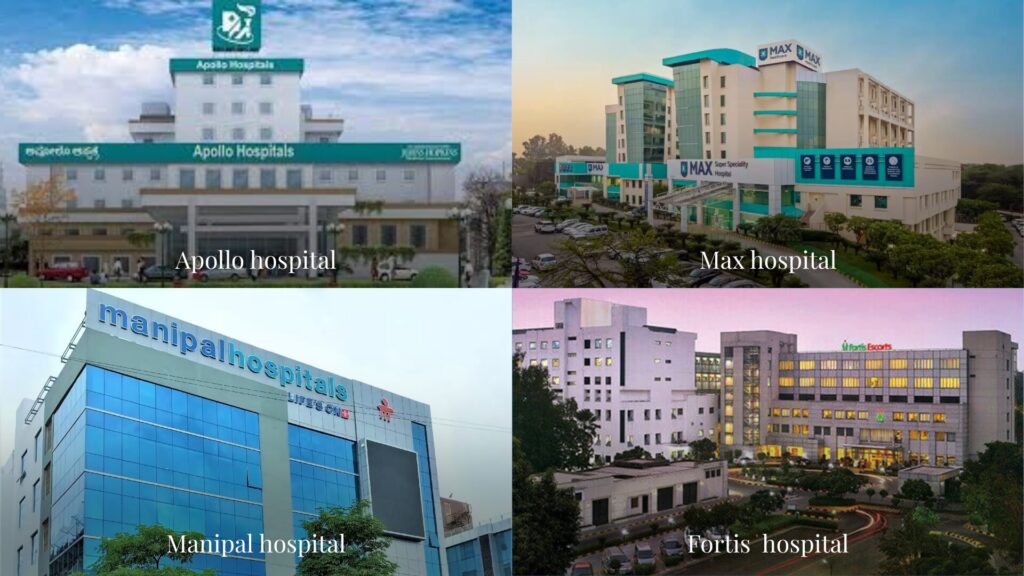
- Popular healthcare groups linked to CGHS are Apollo, Max, Fortis, and Manipal. They are well-known in the industry.
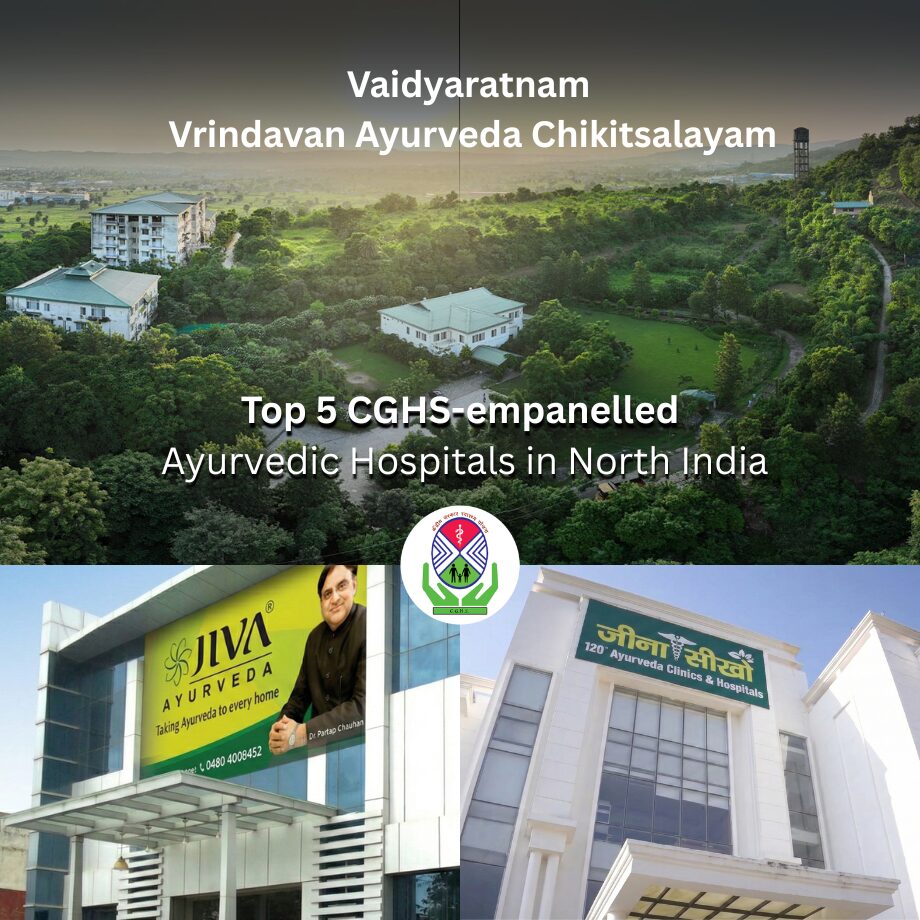
- The list of the top 5 CGHS-Empanelled Ayurvedic Hospitals in North India includes:
1) Vaidyaratnam Vrindavan Ayurveda Chikitsalayam, which sits on a 25-acre Shivalik hilltop. It offers 100% cashless classical Panchakarma treatments to all its CGHS beneficiaries and their health seekers. VAC is also empanelled with CAPF and the Haryana government.
2) SKK Ayurveda (Janakpuri), Jiva Ayurveda, Maharishi Ayurveda Hospital, and Jeena Sikho HiiMS are some of the well-known CGHS-empaneled Ayurvedic hospitals in North India. These five best Ayurvedic hospitals offer either cashless or reimbursable Panchakarma treatments.
Treatments Not Covered Under CGHS
CGHS covers a wide range of medical problems, but there are some treatments that don’t fall under the scheme. Such as:
- Experimental or unverified medical treatments
- Cosmetic surgeries that lack medical necessity
- Nutritional supplements such as protein powders
- Nonessential therapies like aromatherapy or chiropractic
- Cosmetic dental procedures, such as teeth whitening
- Insulin pens, while insulin cartridges may be supplied
Difference Between the CGHS & Ayushman Bharat
Both schemes are different. CGHS supports government employees and pensioners. But Ayushman Bharat (PM-JAY) helps economically weaker families mentioned in the SECC database.
CGHS requires a contribution based on pension or salary, but on a monthly basis. PM-JAY provides healthcare coverage to eligible families for free.
Speaking about the coverage limits, CGHS benefits depend on the employee’s pay level and treatment rates’ approval. Ayushman Bharat provides insurance coverage up to ₹5 lakh per family per year.