Introduction
Living with psoriasis can be frustrating. The constant itching, scaling, redness, and recurring flare-ups often affect not only your skin but also your confidence and daily life. While modern treatments can help manage symptoms, many people look for a more holistic approach that focuses on the root cause.
In Ayurveda, Panchakarma not only focuses on the visible symptoms but also aims to cleanse the body, restore internal balance, and support long-term skin health. But can it permanently treat psoriasis? In this article, we’ll explore what Ayurveda says about psoriasis, how Panchakarma works, what to expect during treatment, and the factors that influence long-term results, helping you make an informed decision about your treatment journey.
The Honest Truth: Panchakarma and Psoriasis Remission vs. Cure
Panchakarma and Psoriasis: What Can It Do?
Remission Is Different from a Permanent Cure
What Patients Can Realistically Expect
How Ayurveda Understands Psoriasis: Kushtha Roga Classification
Modern medicine considers psoriasis a chronic inflammatory condition linked to the immune system, which causes skin cells to grow and build up faster than usual. Doctors usually diagnose it by examining skin changes, reviewing the patient’s medical history, and, in some cases, performing a skin biopsy.
Psoriasis and Kitibha Kushtha
Psoriasis and Ekakushtha
Ayurveda and Modern Understanding: A Different Perspective
The Ayurvedic Root-Cause Model: Dosha, Ama, and Agni
Modern medicine tends to view psoriasis as an autoimmune skin disorder. Ayurveda views psoriasis as a symptom of deeper internal imbalances, not as a skin disease. Classical Ayurvedic texts categorise psoriasis under the broad classification of Kushta Roga (skin diseases) and state it to be similar to conditions such as Kitibha Kushta and Ekakushtha. While these conditions may not be precisely like modern medical diagnoses, they share many similar symptoms, such as dry, rough, scaly skin, changes in colour, and constant itching.
According to Ayurveda, visible skin lesions are only the external manifestation of an imbalance that begins from within the body. Good management is therefore concerned with removing the causes and not just with reducing the surface symptoms.
Psoriasis in Ayurveda: Kitibha Kushta and Ekakushtha
Classical Ayurvedic literature describes Kitibha Kushtha as a condition characterised by rough, hard, dry skin with scaling and discolouration. Ekakushtha is associated with extensive skin lesions covered by scales and reduced sweating.
The Role of Dosha Imbalance, Ama, and Impaired Agni
According to Ayurveda, psoriasis develops when three fundamental factors become disturbed:
Dosha Imbalance
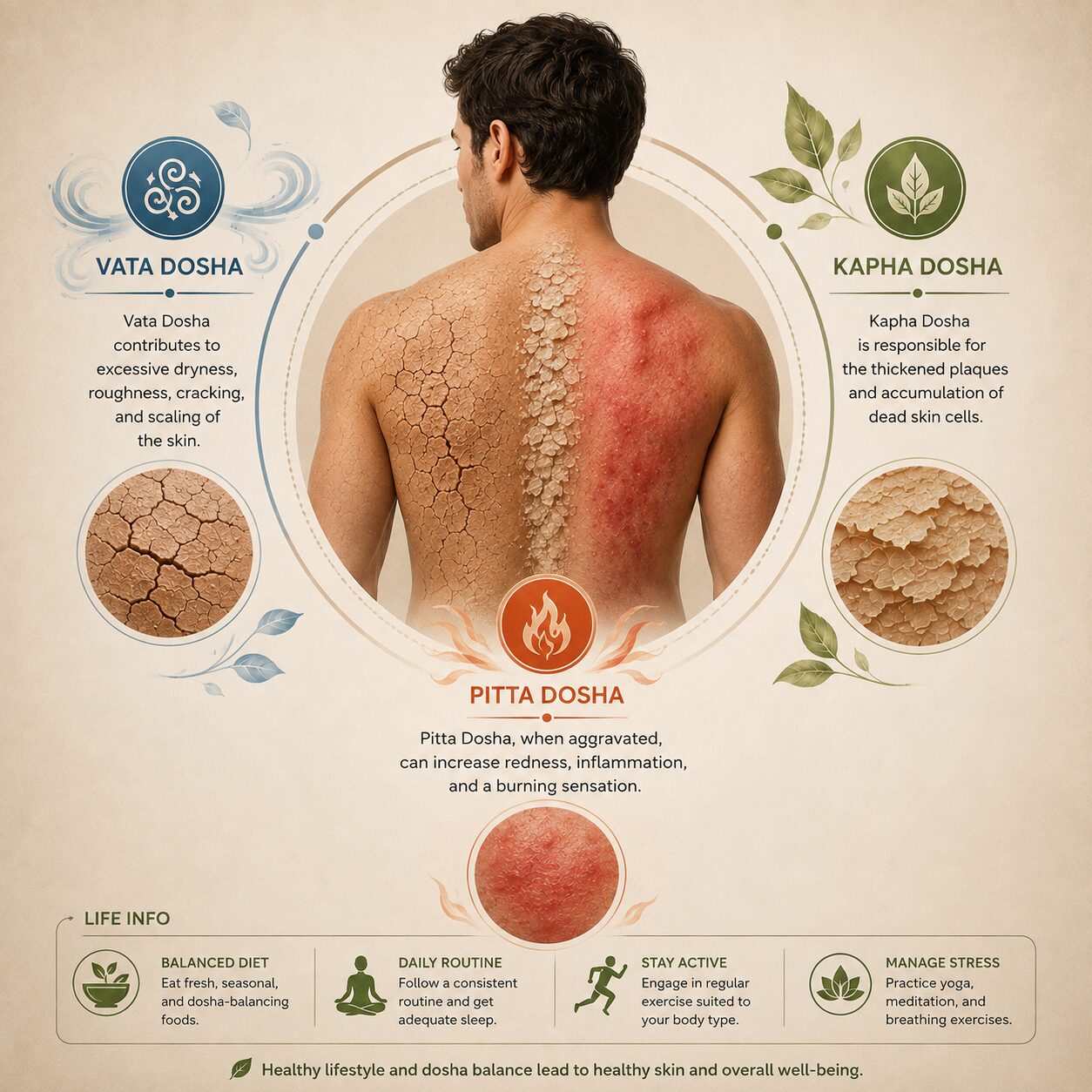
Psoriasis is commonly associated with an imbalance of Vata and Kapha doshas; Pitta may also contribute during active inflammatory flare-ups.
- Vata Dosha contributes to excessive dryness, roughness, cracking, and scaling of the skin.
- Kapha Dosha is responsible for the thickened plaques and accumulation of dead skin cells.
- Pitta Dosha, when aggravated, can increase redness, inflammation, and a burning sensation.
Ama (Metabolic Toxins)
According to Ayurveda, a lot of chronic illnesses are caused by the buildup of Ama, a poisonous byproduct of ineffective digestion and metabolism.
Ama is created when food is not fully metabolised due to poor digestion. These pollutants eventually travel throughout the body, settle in various tissues, interfere with regular bodily processes, and exacerbate chronic inflammation. Ama impacts blood and skin tissues in psoriasis, which makes the disorder chronic and prone to recurrent flare-ups.
Impaired Agni (Digestive fire)
Ayurveda considers healthy Agni essential for maintaining overall health. When Agni becomes weak due to poor dietary habits, stress, or lack of sleep, digestion becomes inefficient, promoting the formation of Ama. For this reason, Ayurvedic treatment focuses not only on the skin but also on restoring digestive health as the foundation for long-term healing.
The 3-Phase Panchakarma Protocol for Psoriasis: What to Expect
Panchakarma is not a single therapy but a carefully planned treatment process that unfolds in multiple stages. Rather than offering the same therapies to everyone, authentic Ayurvedic centres follow a structured protocol that prepares the body, performs detoxification, and supports long-term recovery. This systematic approach helps maximise the effectiveness of treatment and improvement in skin health.
At VVAC, the Panchakarma journey begins with a comprehensive evaluation by an Ayurvedic physician. This first consultation goes far beyond examining the skin lesions.
The physician assesses:
- The patient’s Prakriti (natural body constitution) and Vikriti (current Dosha imbalance)
- Severity, duration, and recurrence of psoriasis
- Digestive strength (Agni) and presence of Ama (metabolic toxins)
- Dietary habits and lifestyle
- Sleep quality and stress levels
- Previous treatment and current medications
- Associated conditions such as joint pain, obesity, diabetes, or digestive disorders
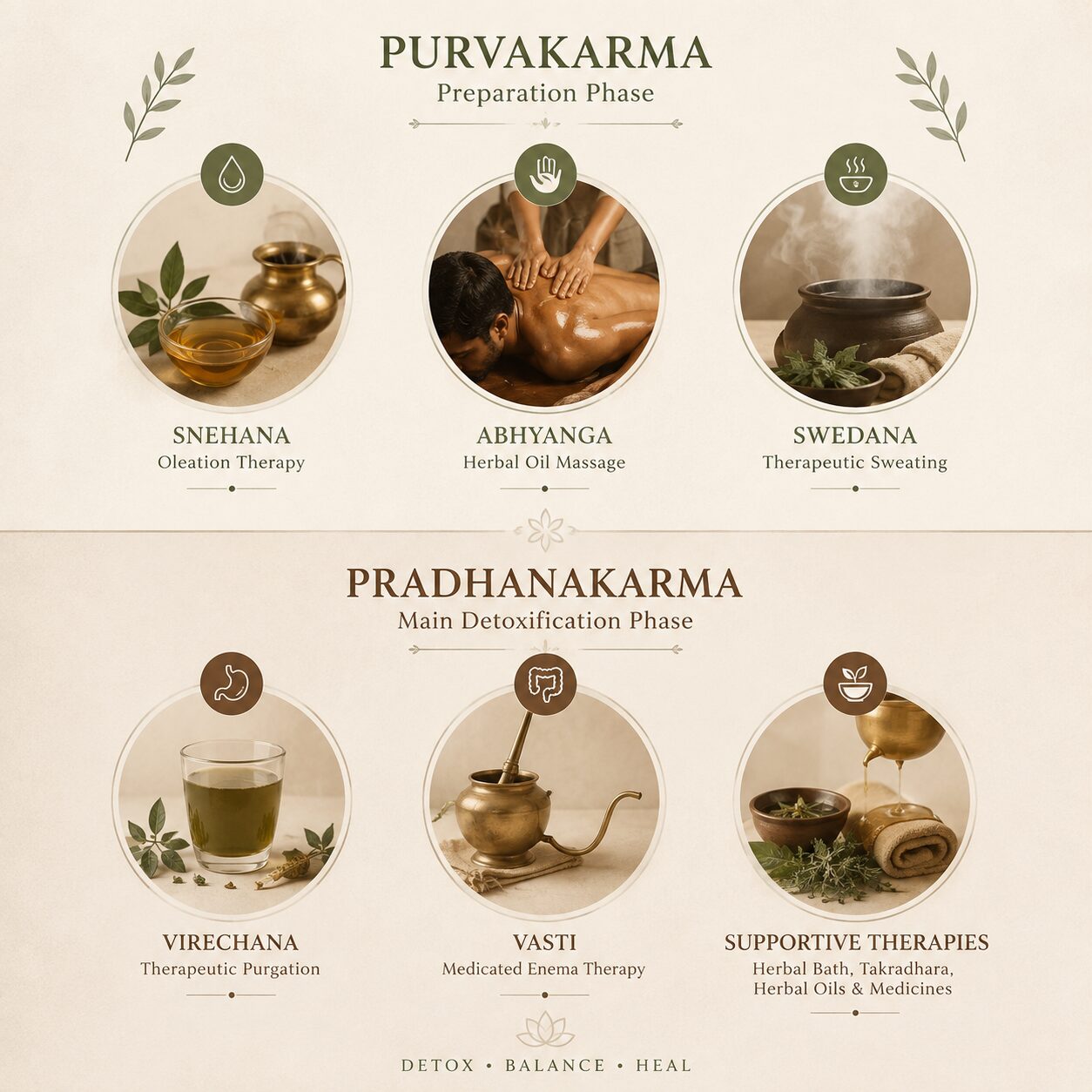

If you want to understand the treatment process in more detail, you can explore Panchakarma Therapy for Psoriasis Management and consult an Ayurvedic physician to know whether it is suitable for you.
Purvakarma (Preparation Phase)
Purvakarma prepares the body for detoxification by loosening and mobilising accumulated toxins from deep tissues into the digestive tract, where they can be effectively eliminated.
Purvakarma may include:
- Snehana (Oleation Therapy): Internal and external application of medicated oils or ghee to soften tissues, nourish the body, and mobilise toxins.
- Abhyanga (Herbal Oil Massage): A full-body massage with warm medicated oils to improve circulation, relax muscles, and prepare the body for cleansing.
- Swedana (Therapeutic Sweating): Steam or herbal fomentation following massage to open body channels (Srotas) and encourage sweating to loosen toxins.
This preparation phase usually lasts several days and ensures the body is ready for the main detoxification procedures.
Pradhanakarma (Main Detoxification Phase)
After preparation, the physician initiates primary Panchakarma therapies, tailored to the patient’s specific Dosha imbalance. Common psoriasis treatments include:
Virechana and Vasti: The Two Most Effective Panchakarma Procedures for Psoriasis
- Virechana (Therapeutic Purgation): Virechana is one of the most frequently recommended Panchakarma procedures for psoriasis. It aims to eliminate excess Pitta and accumulated toxins through controlled purgation under medical supervision.
- Vasti (Medicated Enema Therapy): When Vata imbalance is significant, medicated enemas may be incorporated to restore balance, support digestion, and improve systemic health.
- Additional Supportive Therapies: Herbal baths, Takradhara (medicated buttermilk therapy), medicated oil applications, Local therapies for scalp psoriasis, Herbal decoctions, and internal Ayurvedic medicines.
Paschatkarma (Recovery and Rejuvenation Phase)
Detoxification is only one part of Panchakarma. The recovery phase is important and known as Paschatkarma. During this stage, the focus shifts toward rebuilding strength, improving immunity, and preventing future flare-ups.
Patients typically receive:
- Gradual Dietary Progression: A carefully planned Ayurvedic diet is introduced to restore digestive strength (Agni) without overloading the digestive system.
- Personalised Herbal Medicines: Classical Ayurvedic formulations are prescribed based on the patient’s condition to support skin regeneration, maintain Dosha balance, and reduce the likelihood of recurrence.
- Rasayana (Rejuvenation Therapy): Rejuvenation therapies may be recommended to nourish tissues, improve vitality, and strengthen the body’s natural healing capacity after detoxification.Lifestyle and Stress Management
Patients are guided on:
- Anti-inflammatory dietary practices
- Daily Ayurvedic routines (Dinacharya)
- Yoga and breathing exercises (Pranayam)
- Stress management techniques
- Sleep hygiene
- Long-term skin care recommendations
Factors That Determine Long-Term Succsess: Compliance, Diet, and Lifestyle
As a highly customised Ayurvedic treatment, panchakarma’s efficacy varies from patient to patient. Even though many patients see notable improvements in their symptoms, several crucial criteria determine how quickly they heal. Knowing these factors makes it easier to set reasonable expectations and demonstrates why effective psoriasis management requires a customised treatment plan.
Disease Severity and Duration
The severity of psoriasis and how long a person has been living with the condition are among the biggest factors influencing treatment outcomes. Because the dosha imbalance and tissue involvement are typically less severe, patients with moderate or recently diagnosed psoriasis may react to Panchakarma more quickly.
However, a lengthier course of treatment, several Panchakarma sessions, and regular follow-up care may be necessary for people with moderate to severe psoriasis, chronic illness, or repeated flare-ups.
Individual Prakriti (Body Constitution)
According to Ayurveda, every person has a unique Prakriti, or natural body constitution, which influences how the body functions and responds to disease and treatment.
Psoriasis does not affect everyone in the same way. Because each patient’s Dosha imbalance is different, Panchakarma therapies, herbal medicines, dietary recommendations, and treatment duration must be tailored accordingly.
Lifestyle and Dietary Habits
Ayurveda considers diet and lifestyle to be integral components of psoriasis management. Even the most carefully planned Panchakarma treatment may not deliver lasting benefits if patients continue habits that aggravate Dosha imbalance.
Factors that can influence recovery include:
- Consuming highly processed, oily, spicy, or incompatible foods
- Irregular meal timings
- Poor sleep habits
- Chronic stress and anxiety
- Smoking and excessive alcohol consumption
- Sedentary lifestyle and lack of physical activity
Conversely, following a physician-recommended Ayurvedic diet, maintaining regular daily routines, staying physically active, practising stress management techniques, and getting adequate sleep can support healing and help reduce the likelihood of future flare-ups.
Patient Compliance
The success of Panchakarma depends not only on the therapies performed during treatment but also on the patient’s commitment to the prescribed regimen.
Patients who carefully follow their physician’s advice regarding:
- Dietary restrictions
- Herbal medications
- Lifestyle modifications
- Follow-up consultations
- Yoga and breathing exercises (Pranayama)
are generally more likely to experience sustained improvements than those who discontinue treatment prematurely or return to habits that may trigger recurrence.
The Importance of Personalised Treatment Plans
One of the greatest strengths of Ayurveda is that it does not rely on a one-size-fits-all approach. Two patients with similar-looking psoriasis may require entirely different treatment strategies depending on their Prakriti, Dosha imbalance, digestive strength (Agni), presence of Ama, age, overall health, and associated medical conditions.
A personalised treatment plan allows Ayurvedic physicians to determine:
- Whether Panchakarma is appropriate for the patient
- Which detoxification therapies are most suitable
- The ideal treatment duration
- Appropriate herbal medicines and formulations
- Dietary recommendations based on the patient’s constitution
- Long-term maintenance strategies to help reduce recurrence
Panchakarma vs. Conventional Psoriasis Treatment: A Comparative Analysis
| Conventional treatment | Ayurvedic approach |
| Focuses on controlling inflammation and psoriasis symptoms | Focuses on the Ayurvedic assessment of Dosha, Agni, Ama and overall health |
| May include topical medicines, phototherapy, systemic medicines or biologics | May include Panchakarma along with diet, lifestyle and Ayurvedic medicines |
| Treatment is selected according to disease severity and clinical factors | Treatment is individualized according to the person’s Ayurvedic assessment |
| Biologics target specific parts of the immune response | Panchakarma is traditionally used as a cleansing and therapeutic procedure within Ayurveda |
| Requires medical monitoring depending on the treatment | Panchakarma should be planned and supervised by a qualified Ayurvedic physician |
Post-Panchakarma Maintenance: Preventing Psoriasis Flare-Ups Long-Term
Completing a Panchakarma program is an important milestone, but maintaining its benefits requires continued care and healthy lifestyle practices.
Diet and Lifestyle Recommendations: A balanced, skin-friendly diet plays a key role in maintaining the benefits of Panchakarma. Avoid spicy, oily, or incompatible foods.
Ayurvedic Medicines: After Panchakarma, physicians may prescribe personalised Ayurvedic herbal medicines and Rasayana (rejuvenation) therapies to strengthen immunity, nourish body tissues, and support healthy skin regeneration.
Stress Management: Stress is a well-known trigger for psoriasis flare-ups. Incorporating Yoga, Pranayama (breathing exercises), meditation, and adequate sleep into daily life can help reduce stress, improve emotional well-being, and support overall health, complementing Ayurvedic treatment.
Follow-Up Consultations: Regular follow-up visits allow Ayurvedic physicians to monitor recovery, evaluate progress, and make necessary adjustments to medicines, diet, or lifestyle recommendations.
Preventing Flare-Ups: By combining Panchakarma with ongoing self-care and regular follow-up, many patients can achieve longer periods of remission and improved quality of life.
Conclusion
Panchakarma is not a guaranteed cure for psoriasis; it plays an important role in achieving long-term remission and improving overall quality of life. Its success depends on factors such as disease severity, individual body constitution, lifestyle, and treatment adherence. Choosing an authentic Ayurvedic centre like Vrindavan Ayurveda Chikitsalayam (VVAC), which combines classical Kerala Panchakarma protocols, personalised care, and freshly prepared herbal medicines, can help patients manage psoriasis more effectively while supporting healthier skin and long-term well-being.
Classical Ayurvedic References
The understanding of Kushtha Roga, its classification, Dosha involvement, and Ayurvedic management is described in several classical Ayurvedic texts.
- Charaka Samhita – Chikitsa Sthana, Chapter 7: Describes Kushtha Roga, including its classification, clinical features, involvement of Vata, Pitta, and Kapha, and principles of Shodhana and other therapeutic approaches.
- Sushruta Samhita – relevant sections on Kushtha: Provides descriptions of different Kushtha presentations and their clinical characteristics, forming part of the classical Ayurvedic framework for understanding skin disorders.
- Bhavaprakasha: Provides information on Ayurvedic concepts related to digestion, Ama, medicinal substances, and their traditional applications in maintaining health and managing disease.
- Ashtanga Hridaya – Uttara Tantra: Contains classical discussions relevant to skin disorders and their Ayurvedic management, including consideration of Dosha involvement and individualized treatment.
These classical references provide the traditional Ayurvedic foundation for understanding Kushtha Roga and developing an individualized approach to the management of chronic skin conditions.
Frequently Asked Questions (FAQs)
Q: Can Panchakarma permanently cure psoriasis?
A: Panchakarma cannot guarantee a permanent cure, but it achieves prolonged remission by eliminating Ama (metabolic toxins), balancing Doshas, and restoring digestive fire. Long-term success depends on post-treatment lifestyle adherence and dietary modifications.
Q: How long does it take to see results from Panchakarma for psoriasis?
A: Most patients experience visible improvement in 2-4 weeks during the treatment phase, with continued skin regeneration over 3-6 months post-treatment. Full remission timelines vary based on disease duration, severity, and individual Prakriti.
Q: Is Vasti or Virechana better for psoriasis treatment?
A: Both are essential: Virechana eliminates excess Pitta and inflammatory toxins, while Vasti restores Vata balance and improves digestion. The physician selects based on individual Dosha imbalance—often both are used sequentially in a complete Panchakarma cycle.
Q: What is the difference between Ayurvedic psoriasis treatment and modern medicine?
A: Modern medicine targets immune suppression and symptom relief; Ayurveda addresses root causes (Dosha imbalance, Ama, weak Agni) to prevent recurrence. Both can be complementary when coordinated with your physician.
Q: Will psoriasis return after Panchakarma treatment?
A: Flare-ups may occur if triggering factors (stress, poor diet, sleep deprivation) return, but properly treated patients experience significantly longer remission periods and milder flares. Maintenance Rasayana therapy and Dinacharya adherence reduce recurrence risk.
Q: Can Panchakarma treat scalp psoriasis specifically?
A: Yes, scalp psoriasis responds well to Panchakarma combined with localized therapies like medicated oil applications, herbal baths, and Takradhara (buttermilk therapy). Systemic detoxification addresses the underlying Dosha imbalance that causes scalp manifestations.
Q: How does Ama contribute to psoriasis chronicity?
A: Ama (undigested metabolic waste) accumulates in blood and skin tissues, perpetuating chronic inflammation and triggering recurrent flare-ups. Panchakarma’s primary goal is Ama elimination through Virechana and Vasti to break this inflammatory cycle.
Q: What dietary changes support Panchakarma results for psoriasis?
A: Post-treatment diet should be warm, easily digestible, anti-inflammatory (avoiding dairy, refined sugars, and processed foods), and tailored to your Dosha type. Personalized Ayurvedic dietary protocols are provided during the Paschatkarma recovery phase.