Classical Ayurvedic Treatment for Paralysis – Paralysis is known as Pakshaghata, which is a combination of two words: Pakshaghata (one side of the body) and Ghatanam (loss of function or damage). Primarily, Paralysis is caused by the aggravation of Vata dosha that governs the motor functions and movements of the body.
Upon the imbalance in the Vata dosha, the loss of the muscle function can be of different types. For example –
- Partial paralysis
- Localised or generalised loss of motor function
- Temporary or permanent
It means that the disruption could be of nerves, blood vessels, muscles, or motor functions, directly affecting the healthy muscle movement. According to Ayurveda, Pakshaghata obstructs or deranges the Vata dosha that can cause Ardita (facial paralysis), Ekanga Vata (Limb or specific areas), or Sarvanga Vata (generalised paralysis).
Some people become temporarily paralyzed and eventually regain some degree of movement. For example, Bell’s palsy is a condition that can temporarily paralyze your face.
Click on the image below to take a quick 5 minutes quiz to know your dosha imbalance.
Causes and Symptoms of Paralysis
Paralysis can often be caused by neurological disorders such as spinal cord injury, stroke, and multiple sclerosis. Other causes of paralysis include:
- Cerebral palsy, post-polio syndrome, traumatic brain injury, neurofibromatosis, birth defects, and excessive grief, stress, or fear are some physiological reasons to cause paralysis.
- According to Ayurvedic texts, the primary reasons behind Vata imbalance are Raktaavrita vata (vitiated blood flow), Avarana (obstruction of vata by kapha or pitta by external trauma, Marga Avarodha (blocked srotas) and more. Some of the chronic diseases or improper dinacharya leads to degeneration of dhatus that include nervous tissue and muscles in the body.
Due to these causes of paralysis, some of the common signs and symptoms (Lakshana) are sudden loss of movement or sensation in limbs, slurred or lost speech (Vak Stambha), muscle weakness or stiffness (Mamsa Shosha), facial deviation (Vakra mukhata), involuntary drooling or imbalance and more.
Also, depending on the nature and location of the paralysis, symptoms may vary. A health seeker might feel trouble speaking, breathing or swallowing, which requires immediate and consistent ayurvedic treatment for paralysis.
Ayurvedic Treatment for Paralysis at Vaidyaratnam Vrindavan Ayurveda Chikitsalayam
If you are seeking the best ayurvedic treatment for paralysis through classical keraliya Panchakarma, VVAC is the place for you. VVAC is one of the leading providers of traditional Kerala Ayurveda & Panchakarma treatments near Chandigarh.
The following are some of the classical Panchakarma therapies for Paralysis that are performed at VVAC by well-experienced therapists under the guidance of senior Ayurvedic doctors. They are as follows –
To understand the Ayurvedic approach and rehabilitation process in more detail, explore Panchakarma Therapy for Paralysis Rehabilitation. You can also consult with an Ayurvedic Physician for personalized guidance.
| Ayurvedic Treatment for Paralysis | How it is Performed | Benefit in Paralysis |
| Abhyangam | It is a full-body warm oil massage using medicated oils like Mahanarayan Taila | As per Abhyangam, there is an improvement in blood circulation that nourishes muscles and nerves. Also, it reduces stiffness and calms the aggravated Vata |
| Padabhyangam | This is a self massage using warm oil of feet and lower limbs | Known to relieve tension in leg muscles, strengthens ligaments, improves nerve response in paralysed limbs |
| Pizhichil | Warm medicated oil is poured continuously over the body | It aids in detoxification through sweating, stimulates nerve endings, and enhances circulation and flexibility |
| Nasya | Medicated oils or powders are administered through the nasal passage | Nasya detoxifies head region, improves brain function, and help speech recovery and cognitive functions |
| Sneha Vasti | Unlike Nasya, Sneha Vasti is about medicated oil enema administered through the rectum | Performing this panchakarma treatment in Paralysis directly pacifies Vata in the colon and strengthens the nervous disorders |
| Shiro Vasti | Warm oil is retained on the head inside an especially kneaded cap for a specific duration | Doing so helps in nourishment of brain and nerves that reduce anxiety, and motor functions |
| Swedana (Sudation) | Herbal decoctions are used to give health seekers a medicated steam | This ayurvedic herbal steam therapy relieves stiffness, improves joint mobility, promotes sweating to flush out the accumulated toxins from the body (amas) |
| Basti (Enema Therapy) | This therapy includes usage of both oil and decoction enemas which is prescribed by VVAC senior doctors after a thorough ayurvedic checkup | Known to be the best therapy for Vata disorders that rejuvenate nervous system and support long-term recovery in paralysis |
Yoga Asanas for the Treatment of Paralysis
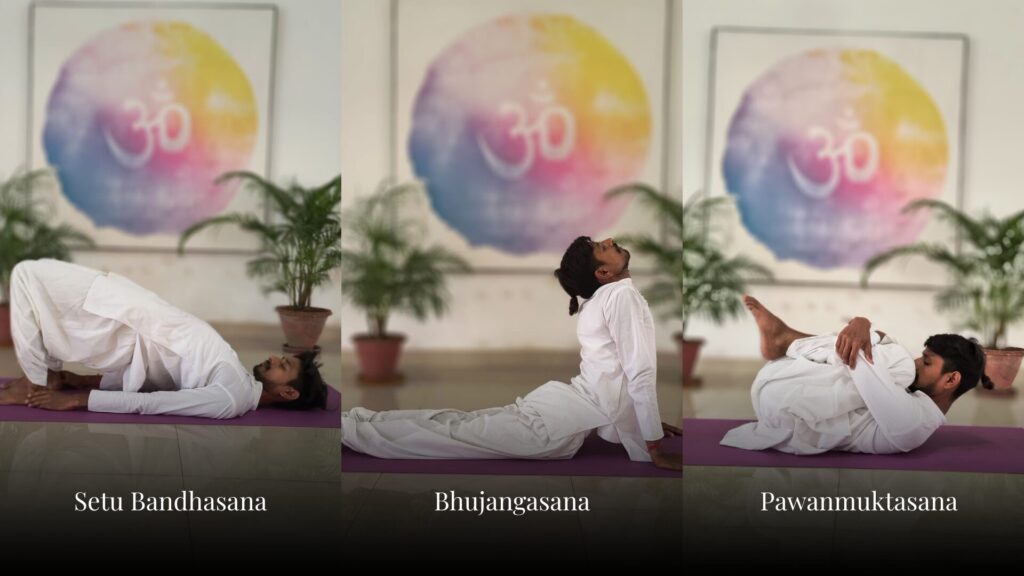
Besides classical ayurvedic treatment for Paralysis, yoga is an integral part for holistically treating it. All the below-mentioned yoga asanas will support neurological rehabilitation and improve motor control. Since, the health seekers with Paralysis can’t practice these asanas themselves, the yoga gurus at VVAC help them to do the asanas in their comfortable capacity.
A) Tiryaka Tadasana – This pose improves flexibility of spine and sides of the body that helps in balancing of the dosha. Also, it promotes better coordination between body and mind.
B) Setu Bandhasana – Bridge pose strengthens back, hips, and legs muscles that improves blood circulation to the brain and spine that calms the nervous system, mild depression and fatigue.
C) Pawanmuktasana – Practising wind-relieving pose relieves muscular stiffness in legs and abdomen area that massages the internal organs, improves digestive function, and helps reduce toxins that aggravate Vata. In fact, the health seekers who have almost no mobility will benefit from this asana.
D) Bhujangasana – Also, known as Cobra pose, this asana strengthens spinal muscles, improves flexibility, stimulates nerves in the spine and boosts blood circulation in the whole body.
Besides these yoga asanas for paralysis, some others are Ardha Matsyendrasana, Makarasana, Viparita Karani, Anulom Vilom, Bhramari Pranayama, etc.
Importance of Diet in Paralysis Recovery
According to Ayurveda, Vata dosha plays an important role in neurological disorders like Paralysis. A proper vata-pacifying helps in the ayurvedic treatment for paralysis by calming the nervous system, boost recovery, and improve energy levels.
- Drink Cumin (Jeera) Water – Consuming Jeera water aids digestion, reduces bloating, and supports Agni (digestive fire), which is crucial in recovery.
- Avoid Cold, Refrigerated, and sugary drinks- these aggravate Vata, hinder nerve repair, and reduce circulation to the limbs.
- Increase Protein Intake – Consuming a proper protein-rich diet is vital for muscle regeneration and nerve repair. Vegetarians can opt for green gram (mung), moong dal, urad dal, horse gram, jowar, ragi, quinoa. Additionally, for non-Vegetarian options, choose boiled egg whites, light chicken stew, and fish (preferably warm and spiced with ginger/pepper).
- Avoid Heavy, Gas-forming Legumes – Avoid including rajma, chole, chana, and peanuts in your meals as they disturb digestion and increase Vata.
- Prefer Warm, Freshly Cooked, Easy-to-Digest Foods for example Kichadi, vegetable soups, and porridges made with ghee are highly beneficial.
- Cook with Vata-Pacifying Spices. Hence, use cumin, ginger, hing (asafoetida), ajwain, cinnamon, turmeric, and black pepper.
- Use Sendha Namak (Rock Salt). It is not only gentle on the system but also doesn’t disturb dosha balance like refined salt.
- Avoid processed, fried, and packaged foods as they increase ama (toxins) and delay healing.
- Drink Warm Herbal Decoctions – Dashmool kwath, Ashwagandha tea, or Brahmi tea (only under doctor’s guidance) help rejuvenate nerves and reduce inflammation.
- Hydration is Key – Drink lukewarm water throughout the day to maintain cellular hydration and flush out toxins.
- Add Healthy Fats – Cow’s ghee, sesame oil, and flax seeds (in moderation) nourish the nervous system and support Vata balance.
- Fruits to Include – Ripe bananas, cooked apples, papaya, and soaked raisins help in energy recovery and are easy to digest.
- Avoid Fasting or Skipping Meals – Weakens the nervous system and increases dryness (Rookshata), a key trait of Vata.
Physiotherapy Sessions for Paralysis at Vaidyaratnam Vrindavan Ayurveda Chikitsalayam
At Vaidyaratnam Vrindavan Ayurveda Chikitsalayam (VVAC), the journey of healing from paralysis is not limited to just traditional Ayurveda. We go a step further by integrating modern physiotherapy through our collaboration with ReLiva, bringing together ancient wisdom and scientific rehabilitation for the best possible outcomes.
Our team of expert physiotherapists at ReLiva plays a crucial role in enhancing mobility, muscle function, and independence in patients recovering from paralysis. One of the key techniques used is Passive Range of Motion (PROM). This involves gently moving the patient’s joints through their natural range without any effort from the patient. It helps in maintaining joint flexibility, preventing stiffness, and reducing the risk of muscle contractures that often arise from immobility.
Another important part of the treatment is the Stretching Protocol. Through guided stretches, muscles are gently elongated, improving elasticity and flexibility. Stretching not only prevents tightness but also enhances circulation to the affected areas, which is essential for nerve repair and tissue healing.
As the patient gains basic mobility, Strengthening Exercises are introduced. These exercises are carefully tailored to each patient’s condition and performed with close supervision. The focus is on gradually building strength in both the core and limbs, helping restore control over voluntary movements. It’s a slow yet steady journey from weakness to regained power.
For patients who are beginning to stand or take steps again, Gait Training becomes a crucial milestone. This therapy works on re-training the body to walk properly. It improves muscle coordination, balance, and posture. With regular sessions, patients often notice a significant improvement in their walking pattern and confidence.
During the initial stages of mobility training, Parallel Bar Support is used to help patients practice walking in a safe environment. Holding onto the bars provides physical stability and mental assurance, allowing the patient to take steps with reduced fear of falling. This method is highly effective in building walking confidence and preparing for independent movement.
This integrated approach at Vaidyaratnam Vrindavan Ayurveda Chikitsalayam not only helps in reducing the overall recovery time but also significantly improves the quality of life. By combining Ayurvedic treatments with modern physiotherapy, we ensure a well-rounded and holistic recovery path for every paralysis patient, focusing on both inner healing and external strength.
FAQs on Ayurvedic Treatment for Paralysis at VVAC
1. Can Ayurveda treat paralysis effectively?
Yes. Ayurveda provides a holistic approach to managing paralysis (Pakshaghata) by correcting the root imbalance in the Vata dosha through Panchakarma therapies, herbal medications, diet, and lifestyle.
2. What is the Ayurvedic name for paralysis and what causes it?
Paralysis is known as Pakshaghata in Ayurveda. It is caused mainly by Vata imbalance, often triggered by stroke (Raktaavrita Vata), trauma, chronic illness, emotional stress, or a sedentary lifestyle.
3. What kind of therapies are used for paralysis at VVAC?
We offer a combination of:
- Panchakarma therapies: Abhyanga, Sneha Vasti, Pizhichil, Nasya, Shiro Vasti
- Physiotherapy in partnership with ReLiva
- Herbal medicines, diet, yoga, and meditation
4. What is Panchakarma and how does it help paralysis patients?
Panchakarma is a detoxification and rejuvenation therapy in Ayurveda. For paralysis, it helps cleanse toxins, balance Vata, nourish the nervous system, and restore motor function.
5. How long does treatment take at VVAC?
Treatment duration depends on the severity and condition. Generally, patients are advised a minimum stay of 14 to 21 days, with follow-ups and home care guidance.
6. What facilities are available at VVAC for in-patients?
VVAC provides:
- Comfortable AC and non-AC rooms
- 24/7 nursing care
- Doctor visits and monitoring
- Wheelchair-accessible spaces
- Peaceful, natural surroundings
- Daily Yoga and Meditation sessions
- Hygienic, sattvic food from an organic kitchen
7. Is physiotherapy available at VVAC?
Yes. VVAC collaborates with ReLiva Physiotherapy, offering expert rehabilitation including:
- Passive Range of Motion (PROM)
- Stretching and strengthening
- Gait training
- Parallel bar walking support
8. Are treatments customized for each patient?
Absolutely. Each patient undergoes a detailed Ayurvedic consultation. Based on their prakriti (body constitution) and condition, a tailored treatment plan is created.
9. Are the therapies painful?
No. Most Panchakarma therapies are soothing, detoxifying, and rejuvenating. They are administered under expert guidance with utmost care and comfort.
10. What kind of food is served during treatment?
We provide Sattvic, vegetarian meals that are freshly cooked using organic ingredients. Food is customized according to each patient’s digestive strength and dosha condition.
11. Do you offer support for non-ambulatory patients (with limited movement)?
Yes. We have fully equipped rooms, trained nursing staff, and special therapy support for patients with mobility challenges.
12. Is accommodation available for caretakers or family members?
Yes, VVAC provides options for attendants or caregivers to stay in our wellness center and support the patient during their healing journey.
13. What yoga asanas are taught to paralysis patients?
We guide patients in gentle, restorative asanas such as Bhujangasana, Setu Bandhasana, Pawanmuktasana, Tiryaka Tadasana, Makarasana, and Anulom-Vilom, personalized to each patient’s ability.
14. Is there spiritual or mental healing support too?
Yes. Along with physical therapies, VVAC focuses on mental calmness through guided meditation, yoga nidra, pranayama, and spiritual rituals, enhancing overall well-being.
15. Are your treatments approved and authentic?
VVAC follows classical Ayurveda protocols under the guidance of experienced Vaidyas and is affiliated with the reputed Vaidyaratnam Group, Kerala.
16. Can international or out-of-state patients seek treatment?
Yes. VVAC welcomes patients from all over India and abroad. We provide complete travel assistance, airport transfers (from Chandigarh or Delhi), and multilingual support (including Russian, English, and Hindi).
17. What post-treatment support is provided?
After discharge, patients receive:
- A detailed follow-up plan
- Diet and lifestyle chart
- Herbal medicines
- Online consultations and support for continued guidance