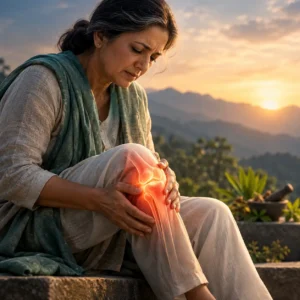
Are you looking for Sciatica Ayurveda treatment? Do you feel discomfort in your lower back that radiates down into your hips and legs? In that case, you are not alone. Up to 40% of adults experience it at some point in their lives.
Sciatica pain can occasionally flare up and go away. If a flare-up is severe or lasts more than a week, it affects your day-to-day activities.
As per a study, 90% of cases, a lumbar disc herniation causes sciatica pain. It affects young and working adults the most. Why? Because, physical activities, driving, and whole-body movements can trigger the condition. Researchers looked at 60 diagnosed sciatica patients at the Srinagar’s research institute.
Some of the interesting readings were:
- 71.67% of middle-class patients suffered the most from sciatica pain.
- Around 36.67% (22 patients) were from the upper middle class.
- The lower-middle class included the 35% of the total count.
The working class’s connection with sciatica is relevant because they engage in physical stressors. These stressors may trigger the pain and other symptoms of sciatica. The result is that lifestyle and occupational factors play an important role in the development of the condition.
What is Sciatica (Gridhrasi) in Ayurveda?
Sciatica refers to pain that starts in the lower back and radiates through the buttocks and down the legs. It occurs when the nerve root in the lumbar spine is compressed. Also, sciatica affects only one side of the body at a time.
Root Cause Analysis: Why Vata Imbalance Triggers Sciatica
In Ayurveda, Sciatica is commonly correlated with Gridhrasi, a condition primarily associated with aggravated Vata Dosha. Vata governs movement, nerve functions, circulation, and musculoskeletal activity in the body. When Vata becomes aggravated by an unsuitable lifestyle, excessive physical strain, or other contributing factors, it can affect the lower back, hips, and legs, causing symptoms such as pain, stiffness, tingling, and restricted movement.
Vata Aggravation
Irregular eating habits, inadequate rest, excessive physical activity, prolonged travel, exposure to cold and dry environments, and an irregular daily routine are traditionally considered factors that can aggravate Vata. When aggravated, Vata may contribute to dryness, stiffness, pain, and impaired movement, which may appear in the lower back and along the leg in Gridhrasi.
Role of Ama
In some Ayurvedic presentations, Ama—metabolic waste associated with impaired digestion and metabolism—contributes when present alongside Vata aggravation. When Ama and Vata are involved together, symptoms may include heaviness, stiffness, restricted movement, and increased discomfort. An Ayurvedic physician assesses the presence of Ama individually before deciding on an appropriate treatment approach.
Lifestyle Factors
Modern lifestyle habits can contribute to mechanical stress on the lower back. Long periods of sitting, inadequate physical activity, poor posture, sudden exertion, and insufficient recovery may increase strain on the lumbar region and contribute to back and leg discomfort.
Prolonged Sitting
Sitting for extended periods, particularly with poor posture, can place continuous stress on the lower back. People who work at desks, drive for long hours, or spend significant time working on computers may undergo heightened lower-back pain and soreness. Taking regular movement breaks and keeping proper sitting posture can help reduce unnecessary strain.
Injury and Physical Strain
Sudden injuries, lifting heavy objects incorrectly, repetitive movements, or excessive physical exertion may contribute to lower-back and leg symptoms. In Ayurveda, this physical strain may also aggravate Vata and disrupt normal movement.
Age-Related Changes
As a person ages, the spine, muscles, joints, and intervertebral discs can change naturally. These changes may contribute to lower-back pain and symptoms that radiate into the leg. From an Ayurvedic perspective, advancing age is also associated with a natural predominance of Vata, making Vata-balancing approaches an important consideration in appropriate cases.
Occupational Factors
Certain occupations can repeatedly stress the lower back. Jobs involving prolonged sitting, standing, driving, heavy lifting, repetitive bending, or physically demanding activities may increase the risk of back discomfort. Maintaining proper ergonomics, taking regular breaks, using proper lifting techniques, and incorporating movement into your daily routine can support spinal and musculoskeletal health.
Because the causes and contributing factors of sciatica can vary from person to person, an Ayurvedic treatment plan should be based on an individual assessment of the patient’s symptoms, constitution, lifestyle, and underlying condition.
Clinical Differentiation: Sciatica vs. Other Lower Back Conditions
Not every instance of lower-back pain that extends toward the leg is necessarily Sciatica or Gridhrasi. Different spinal, musculoskeletal, and nerve-related conditions can produce similar symptoms. Understanding the differences can help you choose the right evaluation and treatment approach.
Gridhrasi
In Ayurveda, Gridhrasi is described as a Vata-related disorder characterized by pain and stiffness that begins around the lower back or hip region and extends along the leg. Classical descriptions also mention associated symptoms such as tingling, restricted movement, and difficulty walking. Depending on the presentation, Vata or Vata-Kapha involvement may be considered.
From a modern medical perspective, symptoms commonly referred to as sciatica can occur when the sciatic nerve or its contributing nerve roots become irritated or compressed. Therefore, persistent or severe radiating pain should be properly evaluated to understand its underlying cause.
Katigraha
Katigraha is an Ayurvedic term associated primarily with stiffness and pain in the lower-back region. Unlike Gridhrasi, the symptoms may remain more localized to the lumbar area rather than characteristically extending down the leg.
A person with mainly lower-back stiffness and restricted movement may present differently from someone with pronounced radiating leg pain. An Ayurvedic physician evaluates the symptoms and overall condition before determining the appropriate treatment approach.
Other Causes of Radiating Leg Pain
Pain travelling from the lower back into the buttock or leg can have several possible causes. These may include irritation or compression of spinal nerve roots, disc-related problems, spinal stenosis, muscle or joint-related conditions, and other neurological or musculoskeletal disorders.
Because these conditions can present with similar symptoms, self-diagnosis is not recommended. A qualified healthcare professional should assess the nature, location, duration, and severity of pain, along with associated symptoms.
Spondylosis
Spondylosis refers to age-related degenerative changes in the spine. It may affect the vertebral joints, discs, and surrounding structures and can contribute to back pain, stiffness, or, in some cases, nerve-related symptoms.
While Gridhrasi and spondylosis may share symptoms such as lower-back pain and restricted movement, they are not interchangeable diagnoses. A person may have degenerative spinal changes with or without nerve-irritation symptoms. Appropriate clinical evaluation is therefore important before deciding on a treatment plan.
When Professional Assessment Is Needed
Lower-back pain and radiating leg pain should not always be managed with home remedies alone. Professional assessment is particularly important when pain is persistent, severe, worsening, or associated with neurological symptoms.
Seek prompt medical attention if you experience significant weakness in the leg, progressive numbness, difficulty walking, loss of bladder or bowel control, numbness around the groin or inner thighs, fever, unexplained weight loss, or severe pain following a significant injury.
An Ayurvedic consultation can help determine whether an Ayurvedic approach is appropriate for the individual’s condition. Where necessary, the physician may also recommend appropriate investigations or evaluation by another medical specialist to rule out conditions requiring urgent or specialized care.
The distinction between Gridhrasi, other Vata-related conditions, and modern spinal disorders should therefore be made through a proper clinical assessment rather than symptoms alone.
Although each person’s experience is different, sciatica usually affects the legs, feet, back, and butt. Symptoms may occur constantly or intermittently.
Depending on the location of sciatic nerve pain, the following are common symptoms of sciatica:
- Low back pain
- Pain in the leg that worsens when sitting
- Burning or tingling sensation in leg
- Difficulty while walking on your toes
- Numbness or loss of sensation in the foot or leg
- Persistent or severe pain on one side of the back, leg, or hip
- Loss of reflexes and difficulty in mobility
- Worsening pain with specific activities
- Muscle weakness
Although the exact cause of sciatica varies from person to person, it may be due to an injury or aging. Some of the common causes include-
- Lumbar herniated disc: The herniated disc or an overgrowth of bone. It compresses one or more spinal nerve roots that form the sciatic nerve.
- Degeneration of tissue: There are numerous ways in which degeneration of the lumbar spine’s tissues might compress or irritate the sciatic nerve roots.
- Lumbar spinal stenosis: The narrowing of the spinal canal, known as lumbar spinal stenosis. Studies indicate that sciatica in older people can often be caused by lateral recess stenosis.
- Spondylolisthesis: Spondylolisthesis is a condition in which a small stress fracture causes one vertebral body to slip forward over the other. Bilateral sciatica can result from spondylolisthesis, which is more common in younger people.
- Pregnancy: The increased growth of the uterus during pregnancy puts pressure on the sciatic nerve.
- Piriformis Syndrome: The Piriformis muscle, located in the buttocks can sometimes become tight or spasm that compress the sciatic nerve. It gets worsened by sitting for long periods or climbing stairs.
- Trauma or Injury: Accidents, falls, or sports injuries can cause damage to the spine or sciatic nerve, which may radiate down the leg.
- Infections: Spinal infections can cause inflammation and pressure on the sciatic nerve, leading to severe back pain.
Effective Sciatica Ayurveda Treatment at VVAC
As per Ayurvedic text, its features closely resemble the Gridhrasi, which is classified as a Nanatmaja Vataja Vikara (having the involvement of one only Dosha). The pain in Gridhrasi starts in the hip and radiates towards Kati (back), thigh, Jaanu (knee), Jangha (calf), and Pada (foot).
The word Gridhrasi generally suggests the patient’s stride, which resembles that of a vulture because of the patient’s radiating pain. Modern medicine has limitations in that it can only provide temporary pain relief and can have side effects when used for the long term. In Ayurveda, Gridhrasi can be effectively managed with Panchakarma procedures and oral medication.
Ayurveda treatments for sciatic pain include a set of systematic treatments. The top Sciatica Ayurveda treatment includes Bastikarma, Siravedha, and Agnikarma, along with medications consisting of natural herbs. The natural herbs have the properties of Ama Pachana, which helps in reducing inflammation of the joints, followed by Shodhana, which involves the removal of deeply deposited toxins in the body, and Brahman, i.e., rejuvenation of damaged parts or cartilage.
| Sciatica Ayurveda Treatment at VVAC | How it helps the condition |
| Snehana (Abhyantara Sneha, Bahya Sneha) | At Vrindavan Ayurveda Chikitsalayam, the Sciatica treatment in Ayurveda involves Snehana. AT VAC, Snehana is further divided into two treatments, Abhyantara Sneha and Bahya Sneha. In the Abhyantra Sneha (Internal Oleation) medicated ghee or oils are consumed to lubricate internal tissues that reduce dryness and inflammation caused by Vata imbalance. According to a research paper published in the National Library of Medicine, external Snehana and asanas are beneficial in the Ayurvedic treatment of Sciatica. |
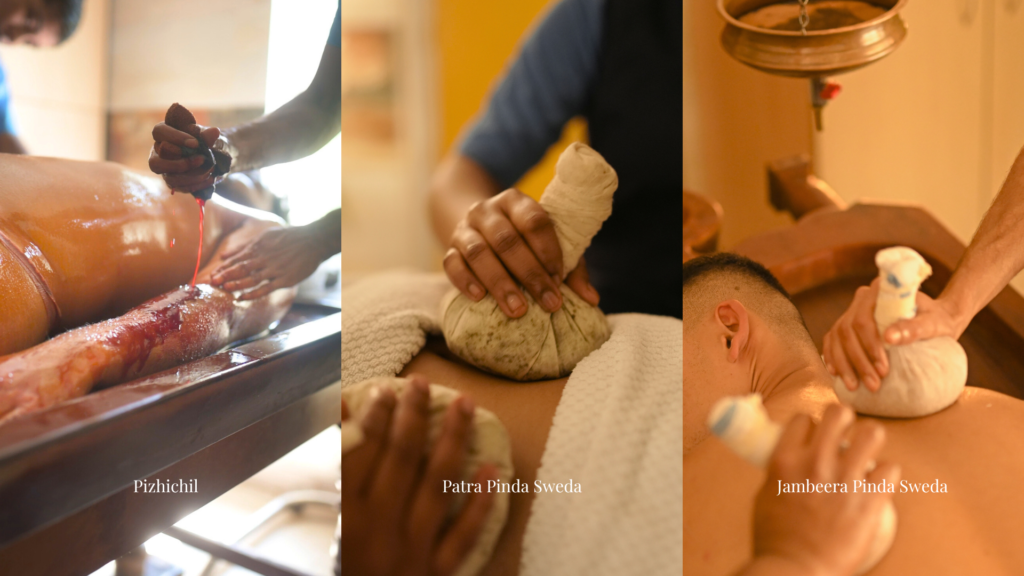
| Swedana (Pizhichil, Patra Pinda Sweda, Jambeera Pinda Sweda, Upnaha Swedan) | Pizhichil, Patra Pinda Sweda, Jambeera Pinda Sweda, and Upnaha Swedan are types of Swedana (Sudation Therapy) 1) Pizhichil: A continuous stream of warm medicated oil is poured over the whole body to soothe the nerves. 2) Patra Pinda Sweda: Herbal Potlis (Poultices) with medicated leaves are applied over the affected body to relieve stress and pain from that area. 3) Jambeera Pinda Sweda: A specialized treatment that uses lemon-based poultices on the affected area to reduce stiffness and inflammation. 4) Upnaha Swedan: Herbal pastes are warmed, applied, and wrapped around the affected area to manage pain. |
| Sanshodhan | According to this Ayurvedic treatment, Sanshodhan eliminates toxins from the body that are responsible for aggravating Sciatica and Vata imbalance. According to classical Ayurveda, Sanshodhan is the main detoxification treatment. |
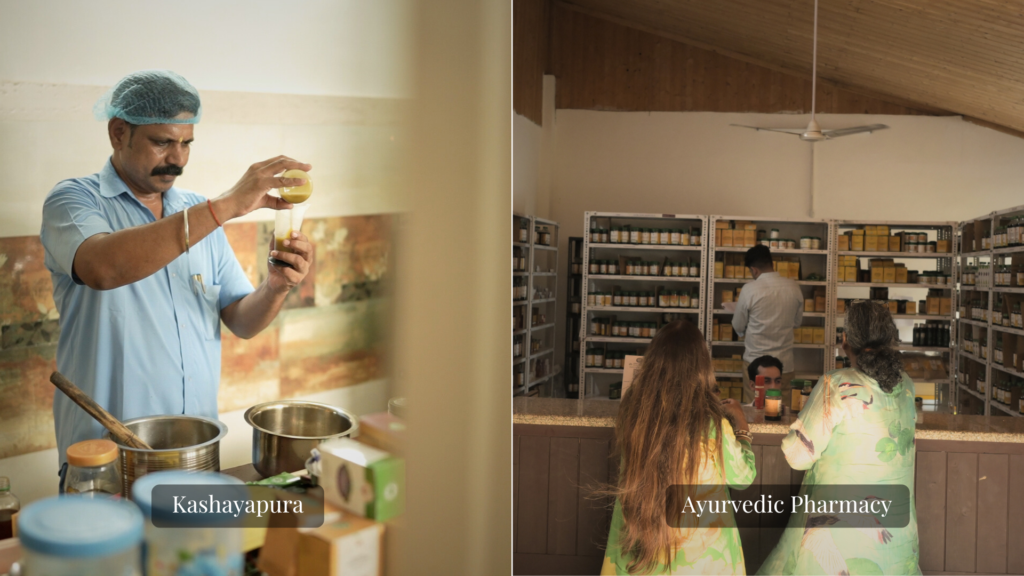
| Basti | This medicated Enema treatment uses medicated oils and decoctions to nourish nerves and reduce inflammation in the lower back and spine. At Vrindavan Ayurveda Chikitsalayam, all the medicated oils and decoctions are freshly prepared from scratch at the in-house Kashayapura. |
| Raktamokshan | To purify blood and improve blood circulation, the bloodletting therapy is done on a person to ensure long-term relief from Sciatica. |
Basti Therapy: The Gold Standard Sciatica Treatment in Ayurveda
Basti is an important therapeutic procedure in Ayurveda and is traditionally considered particularly significant in managing Vata-related disorders. In the Ayurvedic approach to Gridhrasi, Basti may be considered when Vata aggravation is a prominent part of the clinical presentation. The type, ingredients, duration, and frequency of Basti are selected according to the individual’s condition, strength, digestive status, age, and other clinical factors.
What is Basti?
Basti is a classical Ayurvedic therapy in which a qualified Ayurvedic physician administers specially prepared medicated oils, herbal decoctions, or other formulations through the rectal route. It is traditionally used as part of Panchakarma and is particularly associated with managing Vata disorders.
Basti is not a single standardized treatment. Physicians select different types and formulas based on the patient’s condition and therapeutic needs. In Gridhrasi, the physician may incorporate Basti into a broader treatment plan along with therapies such as Snehana and Swedana when clinically appropriate.
Anuvasana Basti
Anuvasana Basti is an oil-based Basti therapy traditionally prepared using medicated oils or other suitable oily formulations. It is generally associated with Vata-pacifying and nourishing approaches.
In patients with Vata-dominant presentations, an Ayurvedic physician may include Anuvasana Basti in the treatment plan. The choice of oil and treatment schedule depends on individual factors rather than being the same for every person.
Niruha / Asthapana Basti
Niruha Basti, also known as Asthapana Basti, primarily uses a medicated herbal decoction along with other ingredients selected according to the patient’s condition. It is traditionally used for therapeutic cleansing and management of Vata-related disorders.
Niruha Basti’s formulation and composition are individualized. A physician considers factors such as the patient’s digestive capacity, strength, age, symptoms, and overall health before deciding whether this procedure is appropriate.
Why Basti is Traditionally Important in Vata Disorders
According to classical Ayurvedic principles, Vata is associated with movement and is considered an important Dosha in disorders affecting the musculoskeletal and nervous systems. Basti has traditionally been given a significant role in Vata disorders because of its therapeutic relevance within Panchakarma.
For Gridhrasi, Basti may be incorporated into a broader Ayurvedic management plan aimed at addressing Vata imbalance, supporting mobility, and reducing discomfort and stiffness. Use should be based on the individual’s Ayurvedic assessment, not on the assumption that everyone with sciatica requires the same Basti procedure.
How the Physician Determines Suitability
Basti is a specialized Ayurvedic procedure and should be administered only after an appropriate clinical assessment. Before recommending it, the physician considers the patient’s symptoms, Ayurvedic constitution (Prakriti), current Dosha involvement, digestive capacity (Agni), strength, age, medical history, and the condition’s severity and nature.
The physician also determines whether Basti is appropriate at that particular stage of treatment and selects the suitable type, formulation, dose, and schedule. In some cases, the physician may recommend preparatory therapies such as Snehana (oleation) and Swedana (sudation) before Basti.
Because radiating leg pain can have different underlying causes, appropriate medical evaluation is important, particularly when symptoms are severe, persistent, progressive, or accompanied by weakness, significant numbness, or bladder or bowel changes.
At Vrindavan Ayurveda Chikitsalayam, Panchakarma procedures such as Basti are planned based on individual clinical assessment rather than a fixed protocol for every patient.
Why VVAC’s Sciatica Treatment Succeeds: Vaidyaratnam Legacy & Personalization
VVAC is affiliated with Vaidyaratnam with a historical background since 1941. For efficient management of chronic diseases, VVAC offers medical modalities that have been scientifically and traditionally proven. The hospital is situated in Baddi, approximately a 50-minute drive from Chandigarh.
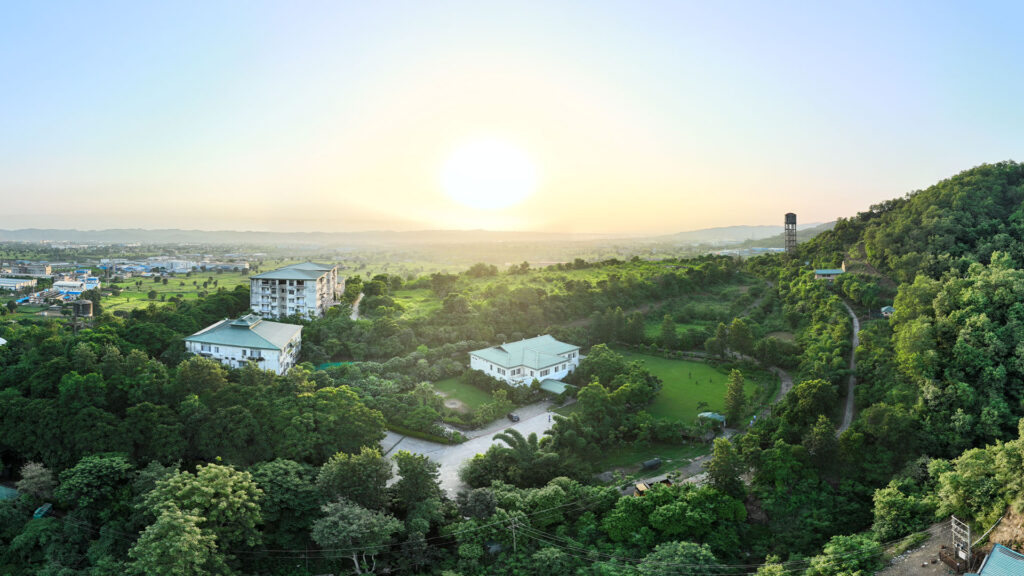
The Ashtavaidyans (Ayurvedic physicians of Kerala and masters of the eight branches of Ayurveda) at VVAC offer specific treatment to each individual depending on body constitution. Additionally, the expert at the hospital recommends lifestyle modification, diet, yoga, herbal therapy, and even spiritual practice to restore and maintain balance of body and mind. They consider every individual as unique and the treatment is based on the defined constitution.
For personalized treatment, we have over 100 varieties of medicinal oils and 600 types of Ayurvedic medications formulated by Vaidyaratnam. The hospital has a refreshing environment of lush green area which is very effective in relieving stress and promoting recovery.
At VVAC, Ayurvedic treatments for sciatica focus on strengthening the nervous system, identifying the underlying cause of the condition, and reducing pain. A customized combination of treatments is the most effective Sciatica treatment in Ayurveda.
- Take a diet rich in whole grains, unprocessed foods, fruits, vegetables, nuts, fatty fish (such as salmon), and soluble and insoluble fiber may be effective in reducing inflammation.
- Stay away from processed meats, fries, and onion rings since they are rich in fat and cause inflammation.
- Pizzas, bread, and pasta are regarded as meals to avoid if one has sciatica because of their high gluten content, which can lead to inflammation and trouble with digestion for some individuals.
- Unhealthy lipids like trans fats are produced when vegetable oils are hydrogenated. Consuming trans fats can raise dangerously high LDL cholesterol levels, which can worsen inflammation.
- Anti-Inflammatory foods like turmeric, ginger, garlic, leafy green vegetables, berries, and many more reduce inflammation and pain in the sciatic nerve.
- Avoid Vata-Aggravating foods that are cold, dry, and light. As it can lead to increased pain and discomfort.
The diet of a health seeker coming to VVAC for their ayurvedic treatment for Sciatica will be prescribed after a thorough ayurvedic check up by our senior physicians. Speaking about our menu, it is curated thoughtfully by eminent nutritionist and wellness expert, Sangeetha Khanna.
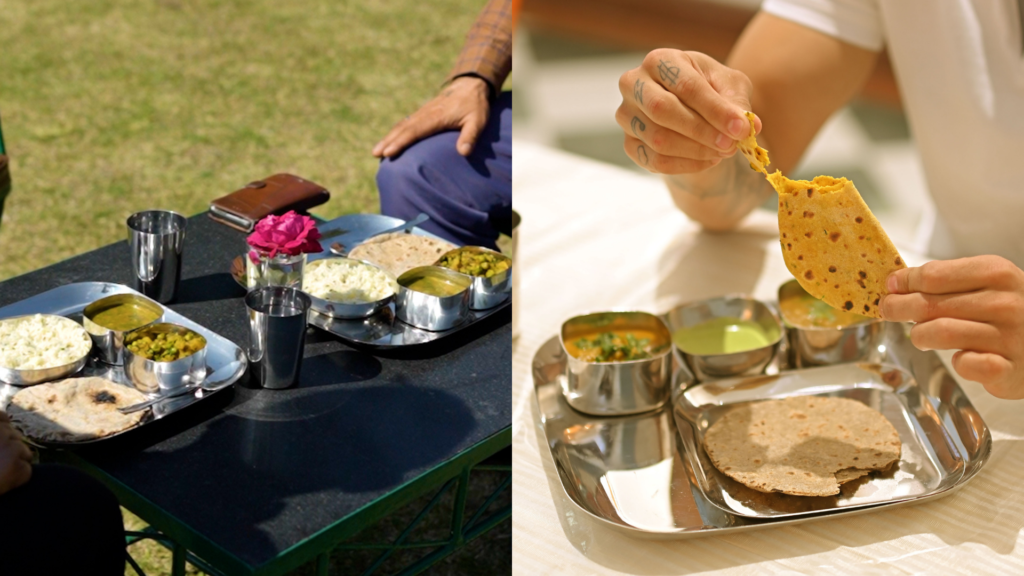
Besides prescribed, organic, and sattvic meals, most of the ingredients for the meals are procured from VVAC’s organic farms.
Yoga Poses for Sciatica Pain Ayurvedic Treatment
The video has the following yoga asanas that are primary and simple-to-follow. They are as follows –
Besides these five asanas, the additional asanas are –
- Ardha Matsyendrasana – This asana enhances spinal flexibility and relieves nerve compression.
- Ardha Kapotasana – It stretch the hip muscles, reducing tension on the sciatic nerve.
- Markatasana – It mobilizes the spine, improving circulation and reducing stiffness.
- Supta Kapotasana – Opens up the lower back and hips, alleviating nerve pain.
- Supta Eka Pada Padangushtasana – Stretches the hamstrings and improves sciatic nerve function. Besides these five asanas, more asanas are –
- Child’s Pose (Balasana)
- Half Moon Pose (Ardha Chandrasana)
- Cobra Pose (Bhujangasana)
- Locust Pose (Salabhasana)
- Knees-to-Chest Pose (Pawanmuktasana)
- Legs-Up-the-Wall pose (Viparita Karani)
- Downward-Facing Dog (Adho Mukha Svanasana)
- Pigeon Pose (Eka Pada Rajakapotasana)
- Cat-Cow Stretch (Marjaryasana-Bitilasana)
- Seated Forward Bend (Paschimottanasana)
- Bridge Pose (Setu Bandhasana)
Natural Herbs used in Sciatica Ayurveda Treatment
- Ashwagandha (Withania somnifera): Ashwagandha is one of the most powerful Ayurvedic herbs. Used in sciatica, it has anti-inflammatory and rejuvenating properties. It strengthens the ligaments, back muscles and spine.
- Guggulu (Commiphora mukul): Guggulu is a potent herb with analgesic and anti-inflammatory properties. It aids in improving joint flexibility and reducing pain in the lumbar region.
- Nirgundi (Vitex negundo): Nirgundi has anti-inflammatory properties and helps in reducing pain. Nirgundi oil is excellent for massage to reduce swelling and sprains.
- Rasana (Pluchea lanceolata): Rasana has Tikta Rasa, Kapha-Vata hara and spasmolytic & analgesic properties. Apply Rasna powder paste or massage the lower back with Rasna oil. It reduces pain and inflammation. Rasana has Vata-balancing properties.
- Shallaki (Boswellia Serrata): Shallaki has anti-inflammatory and analgesic properties. It reduces pain in the joints and muscles.
- Ginger (Zingiber Officinale): Consumption of Ginger reduces pain and inflammation.
- Dashamoola, Devdaru (Cedrus Deodara), Eranda (Ricinus Communis) and many more.
Natural and Effective Home Remedies to Manage Sciatica Pain
Sciatica can be quite difficult and challenging, if not dealt timely. These simple natural home remedies can help ease discomfort and manage pain. Follow the ones mentioned-below –
- Alternative Hot & Cold Therapy: If you are suffering from Sciatica pain and want relieve from this pain, use hot & cold compression indirectly on the affected area. The hot compression improves the blood circulation to that area and cold compression reduces swelling.
- Piriformis Stretch: Known as a gentle stretch, helps relieve pressure on the sciatic nerve and improve flexibility.
- Oil Massage: Use warm Dhanwantharam oil or sesame oil to massage the affected area to reduce stiffness and increase the blood circulation in that area.
- Tennis Ball Therapy: To release muscle tension in that area, a tennis ball is rolled on that area.
- Epsom Salt Bath and Turmeric Milk are two other home remedies that also help relieves discomfort, pain, or stiffness.
Classical Ayurvedic References
The Ayurvedic understanding of Gridhrasi (Sciatica) is described in classical Ayurvedic literature, particularly in relation to Vata disorders and their management.
- Charaka Samhita – Chikitsa Sthana, Chapter 28 (Vatavyadhi Chikitsa): Describes Gridhrasi among Vata disorders, including its characteristic clinical features and principles of management.
- Sushruta Samhita – Nidana Sthana, Chapter 1: Describes Gridhrasi and its characteristic presentation, providing a classical basis for understanding the condition.
- Bhavaprakasha Nighantu: Describes the properties and traditional Ayurvedic uses of herbs such as Ashwagandha, Bala, and Rasna, which are traditionally associated with the management of Vata-related disorders.
- Ashtanga Hridaya: Provides classical principles for the management of Vata disorders and the therapeutic use of Panchakarma according to the patient’s condition and disease stage.
Q: How long does Ayurvedic sciatica treatment take to show results?
A: Most patients experience 40-60% pain reduction within 2-3 weeks of Panchakarma initiation. Full remission typically occurs within 8-12 weeks with consistent Basti therapy (2-3 sessions weekly) combined with oral herbal medications and lifestyle modifications. Individual timelines vary based on disease chronicity and Vata aggravation severity.
Q: Is Ayurvedic sciatica treatment safe for patients with herniated discs?
A: Yes. Ayurvedic Panchakarma, particularly Basti and Snehana, is specifically designed to reduce inflammation around herniated discs without surgical intervention. However, severe disc prolapse with neurological deficit (foot drop, bowel/bladder loss) requires medical evaluation before Ayurvedic treatment initiation.
Q: Can sciatica recur after Ayurvedic treatment at VVAC?
A: Recurrence risk is significantly reduced (15-20%) when patients adhere to post-treatment lifestyle modifications, seasonal Ritucharya, and preventive herbal therapy. Recurrence is most common in patients who resume sedentary habits or occupational stressors without ergonomic adjustments.
Q: What is the difference between Gridhrasi and regular lower back pain in Ayurveda?
A: Gridhrasi is specifically sciatic nerve compression causing radiating pain from hip to foot, classified as Vataja Vikara. Regular lower back pain (Katigraha) is localized lumbar stiffness without nerve radiation. Gridhrasi requires Basti-focused Panchakarma, while Katigraha responds to Kati Basti and local Swedana.
Q: Are there any contraindications to Basti therapy for sciatica patients?
A: Basti is contraindicated in acute fever, severe diarrhea, or pregnancy. Patients with spinal infections or cauda equina syndrome require prior medical clearance. VVAC’s Vaidyas conduct thorough Prakriti and Vikriti assessment before Basti initiation to ensure safety.
Q: How does Snehana (oil therapy) reduce sciatic nerve pain?
A: Snehana lubricates dried Vata-aggravated tissues and reduces inflammation around nerve roots. Internal Snehana (medicated ghee) nourishes nerve tissue from within, while external Snehana (Abhyangam) calms the nervous system and improves microcirculation to compressed nerve areas.