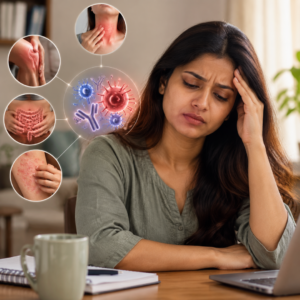
Facial paralysis is a condition marked by the sudden loss of facial muscle movement due to nerve damage. In this condition, the patient is unable to move the muscles on one or both sides of the face due to nerve damage.
Further, it makes it difficult to express emotions through facial expressions. However, Ayurvedic treatment for Facial Paralysis helps in increasing muscle strength, improving facial expressions and coordination.
Understanding Facial Paralysis Through the Ayurvedic Lens
Facial palsy results in drooping of the face, difficulty in making facial expressions, and challenges with speaking, eating, or closing eyes on the affected side. Further, the severity and duration of Facial Palsy varies and depends on the underlying cause.
Causes of Facial Paralysis
Facial Palsy can result from various causes that affects the facial nerve (cranial nerve VII). This particular nerve is responsible for controlling the muscles of the face. Some of the common causes are ;
- Ear damage such as middle ear infection
- Bell’s Palsy is a sudden and unexplained weakness or paralysis on one side of the face, often thought to be associated with viral infections
- Stroke disrupts blood flow to the brain that damages the facial muscles area
- Trauma or injury to the face, skull, or brain can damage the facial nerve
- Ramsay-Hunt Syndrome, Lyme disease, herpes zoster, or otitis media (middle ear infection) effects the facial nerve
- Tumors in the head or neck can press the facial nerve that causes gradual or sudden paralysis
- Neurological conditions like multiple sclerosis or Guillain-Barré syndrome affect the nerves and can lead to Facial Palsy
- As per Ayurveda, seasonal factors like exposure to extreme cold or damp conditions, emotional stress, anxiety or negative mental stress, and accumulation of Aama (Toxins) can disrupt the blood flow to the brain and related areas
Anemia, putting a heavy weight on head, and excessive laughing, sneezing, or yawning
Symptoms of Facial Palsy as per Ayurveda
In Ayurveda, facial palsy, known as “Ardita,” primarily is related to the imbalance of the Vata Dosha. Some of the key symptoms are-
- Drooping of the mouth and eyes to one side. Additionally, it is difficult for the eyes to get closed
- Facial weakness on one side of the face and restriction in facial movements like smiling, frowning, or even blinking
- Numbness and Tingling sensations on the paralyzed side of the face
- Speech difficulties like slurred speech and difficulty in pronunciation
- Inability to chew properly, drooling, & difficulty in swallowing
- Pain, headache, & discomfort in the affected side
- Inability to close the eyes because of the inability to blink or excessive tearing
- Loss of facial expressions or facial asymmetry
Why Conventional Treatment Falls Short: The Ayurvedic Advantage
Facial paralysis can affect much more than facial movement. Difficulty smiling, closing the eyes, speaking clearly, or eating can make everyday activities uncomfortable and emotionally stressful. In many cases, conventional medical treatment focuses on identifying the underlying cause and managing the condition during its acute stage. Depending on the cause, treatment may include medicines such as corticosteroids or antivirals, along with eye care and physical rehabilitation.
However, recovery does not always end when the initial treatment is completed. Some people may continue to experience facial weakness, stiffness, involuntary movements, or incomplete facial expression. This is where a supportive rehabilitation approach may be useful.
In Ayurveda, facial paralysis is primarily associated with Ardita, a condition linked to an aggravated Vata dosha that affects facial muscles and functions. Ayurveda focuses on calming Vata, supporting muscle function, improving local circulation, and gradually restoring facial movement.
Treatments such as Abhyanga, Swedana, Nasya, Shirodhara, and Mukhabhyanga may be used as part of an individualised treatment plan. Along with therapies, Ayurveda may also include dietary changes, lifestyle measures, yoga, breathing practices, and selected herbal preparations to support overall recovery.
The key difference is that Ayurveda views facial paralysis as part of a broader imbalance rather than focusing solely on the visible facial weakness. Its approach is generally personalised and recovery-oriented, with the aim of supporting facial function and improving overall well-being alongside appropriate medical care.
Importantly, Ayurvedic treatment should not be considered a replacement for urgent medical evaluation, particularly when facial paralysis develops suddenly. Early assessment is important to rule out serious causes such as stroke and to determine the appropriate treatment.
The Complete Ayurvedic Treatment Protocol for Facial Paralysis
According to Ayurveda, Ardita is a condition that closely resembles the symptoms of Bell’s palsy or facial palsy and causes functional abnormalities affecting the Uttamanga (head). Also, it is caused by the vitiation of Vata Dosha (movement force). Further, Ayurveda plays a major role in the successful treatment of facial palsy because it targets the specific Dosha that is involved in the disease.
Detailed Facial Paralysis Treatment in Ayurveda
It has been observed that a number of Ayurvedic herbal formulations and Panchakarma procedures are useful in alleviating facial palsy.
Ayurvedic treatment for Facial Paralysis consists of combination of several changes and inclusions. Here’s a detailed approach:
Dietary Recommendations
- Vata-Pacifying Diet is recommended that includes warm, moist, and nourishing foods. Further, include healthy fats like ghee, sesame, and olive oil, along with warm spices like ginger, turmeric, cumin, and cinnamon to help digestion.
- Choose a soft, easy-to-chew diet instead of firm, chewy foods.
- Avoid mixed consistencies like cereals and milk. Also, coughing is more likely to occur with mixed consistency and these are more challenging to manage.
- Avoid foods that are stringy or have husks, peels, pulp or skins, such as raw tomatoes, peas, lettuce, chewy meat or sweet corn.
- If your mouth feels dry, add extra butter, gravy or sauce to make sure your food is moist.
Lifestyle Modifications
- Maintain regular routine, sleep patterns, and work schedule
- Ensure proper rest and avoid overexertion
- Avoid exposure to cold and windy surrounding
Phase 1 – Vata pacification & Detoxification (Week 1-2)
Phase 1 focuses on reducing symptoms and supporting early recovery. Rest, gentle facial exercises, and medicines may be recommended by an Ayurvedic doctor. Patients should protect their faces from cold wind and follow proper sleep, regular meals, and stress control.
Phase 2 – Nerve Regeneration & Muscle Strenthening (Week 3-6)
Phase 2 focuses on improving facial movement and muscle control. Gentle facial exercises may include smiling, closing and opening the eyes, raising the eyebrows, puffing the cheeks, and moving the lips. An Ayurvedic doctor or therapist may continue medicines such as Ashwagandha, Bala, or Brahmi, depending on the patient’s condition.
Phase 3 – Maintenance and Prevention (Week 7+)
The third phase focuses on maintaining the improvement. Patients should continue facial exercises and follow a healthy daily routine. An Ayurvedic doctor may continue medicines for some time. The dose and duration depend on the patient’s condition.
Panchakarma Therapies for Facial Paralysis: Clinical Mechanisms
VVAC offers the best facial paralysis Ayurvedic treatment plan based on the body type, risk factors and prognosis of the condition to eliminate the root cause of the disease. Additionally, our highly qualified doctors are skilled in finding the underlying cause of diseases and offering specialized treatment options to manage facial palsy.
Also, we provide guidance on appropriate diet and lifestyle modifications to prevent recurrence. The treatment helps improve facial mobility, facial drooping, and facial expressions.
To learn how Panchakarma may fit into a personalised diabetes wellness plan, explore Panchakarma Therapy for Paralysis Rehabilitation for more information. You can also consult an Ayurvedic physician for personalised guidance.
Some of the Panchakarma therapies available for Facial Palsy in Ayurveda are as follows-
- Nasya Karma (nasal instillation of medication): Nasya Chikitsa provides efficient purification of the body, especially in the upper body, and hence provides symptomatic relief in Ardit (facial paralysis).
- Shiro Pichu and Shirodhara: Applying medicated oil to the head is a beneficial Ayurvedic treatment recommended for nerve problems such as facial paralysis. Further, Shiro Picchu has a calming effect on the brain and the entire nervous system, which significantly reduces stress. Also, it increases the supply of blood and nutrition to the brain, thereby increasing the efficiency of its functions.
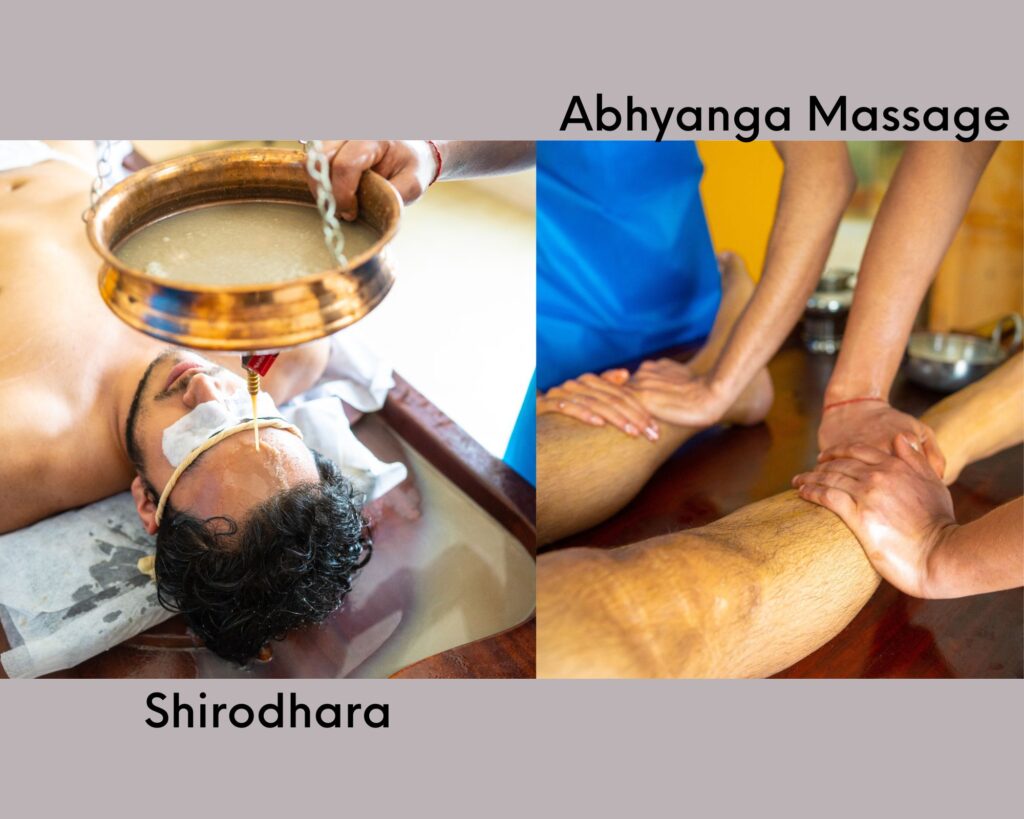
- Tarpanam: The application of therapeutic oil to closed eyes for a prescribed duration strengthens and nourishes the eye. Additionally, the dryness and lethargy caused by the disease reduces.
- Mukhabhyanga (facial massage): Mukhabhyanga improves local blood circulation, provides strength to the facial muscles, accelerates medicine absorption and results in fast recovery.
Herbal Medicines for Facial Paralysis: Dosage & Formulations
Ayurveda uses several herbs to support strength, balance Vata, and promote overall recovery. Herbs may be used along with therapies such as Abhyangam, Nasya, and facial exercises.
The choice of herb, dose, and duration depends on the patient’s condition. They should be prescribed by an Ayurvedic doctor rather than used without guidance.
Ashwagandha (Withania somnifera): Support for Nerve and Muscle Health
Ashwagandha is traditionally used in Ayurveda to support strength and help balance Vata. It may be included when weakness or fatigue is present. The dose depends on the form of the medicine and the patient’s needs. It may be used for several weeks as part of a longer treatment plan.
Bala (Sida cordifolia): Support for Muscle Strength
Bala is traditionally known for its strengthening and nourishing properties. It may be considered when facial muscles feel weak. It is sometimes used with other Vata-pacifying herbs. However, Bala should only be taken under professional guidance because the appropriate preparation and dose are important.
Dashmoola: Traditional Support for Pain and Inflammation
Dashmoola is a combination of ten roots traditionally used in Ayurveda for Vata-related conditions. It may be included when pain, stiffness, or inflammation is present.The dose and form can vary depending on whether it is used as a decoction, powder, or another preparation.
Brahmi & Rasna: Support for Relaxation and Comfort
Brahmi is traditionally used to support mental calmness and nervous system health. It may be useful when stress or poor sleep is also present.
Rasna is a traditionally used to support mental calmness and nervous system health. It may be useful discomfort or tightness is present.
These herbs are often selected according to the patient’s symptoms rather than given as a fixed combination. An Ayurvedic doctor can decide which herbs, formulations, doses, and treatment duration are suitable for each person.
Vata-Pacifying Diet: Nutritional Support for Nerve Healing
In Ayurveda, a Vata-pacifying diet primarily consists of warm, fresh, soft, and nourishing foods. Diet can play a supportive role during facial paralysis recovery.
Foods to Emphasize
Choose freshly cooked meals such as:
- Warm rice and dal with a little ghee
- Khichdi with vegetables
- Cooked vegetables and soups
- Roti with dal or cooked vegetables
- Warm milk with a pinch of turmeric, if suitable
Sesame, ghee, nuts, and other nourishing foods can also be included in moderation.
Foods to Strictly Avoid
Try to limit very cold and dry foods, especially during recovery. Avoid or reduce:
- Cold drinks and ice-cold foods
- Too many raw vegetables
- Excessive caffeine
- Packaged and highly processed foods
- Very dry or heavily fried foods
Meal Timing & Digestive Support
Eat meals at regular times and avoid skipping meals. A simple routine can be:
Breakfast: 8–9 AM
Lunch: 1–2 PM
Dinner: 7–8 PM
Choose warm food and eat slowly. Staying hydrated is also important. If advised by your doctor, warm water or mild ginger-infused water can be included during the day.
Facial Yoga & Pranayama for Facial Paralysis Recovery
Gentle yoga, breathing exercises, and facial movements can be used as a supportive part of facial paralysis recovery. Regular practice may help with relaxation, muscle control, and coordination.
Recommended Asanas
Simple yoga poses can be practised daily:
- Tadasana
- Vrikshasana
- Sukhasana
These poses can help improve posture, balance, and relaxation. They can also help the body stay calm during the recovery period.
Pranayama Protocols
Nadi Shodhana: This practice is 5–10 gentle rounds, twice a day. It can help calm the mind and steady breathing.
Bhramari Pranayama: This practice is 5–10 rounds once a day. The gentle humming sound may help reduce stress and promote relaxation.
Slow breathing may support the parasympathetic nervous system, which helps the body relax and recover.
Facial Muscle Exercises
Facial exercises help the affected muscles practise simple movements. Try:
- Slowly smiling
- Closing and opening the eyes
- Raising eyebrows
- Puffing the cheeks
- Moving the lips gently
Practise these exercises for 10–15 minutes daily. Start with simple movements and increase them slowly as facial control improves. Regular practice gives the brain and facial muscles repeated signals. This process, known as motor relearning, may help improve control and coordination over time.
Classical Ayurvedic References for Ardita Treatment
Ayurveda has described Ardita, a condition that affects facial movement. This is connected to Vata dosha and describes different ways to manage the condition.
Charaka Samhita
The Charaka Samhita, Chikitsa Sthana 28.15–20, describes Ardita as a Vata-related disorder. It explains the signs of the condition and discusses Ayurvedic approaches used for its management.
Sushruta Samhita
The Sushruta Samhita, Uttara Tantra 42.5–15, also describes Ardita and related problems of facial movement. It provides an important classical reference for understanding facial disorders from an Ayurvedic perspective.
Bhava Prakasha
The Bhava Prakasha, Haritakyadi Varga, describes various herbs and their traditional uses. Some of these herbs are used in Ayurveda to support strength and balance Vata.
These classical references form the traditional foundation for the Ayurvedic approach to Ardita.
VVAC’s Integrated Facial Paralysis Treatment Approach
At Vaidyaratnam Vrindavan Ayurveda Chikitsalayam (VVAC), facial paralysis treatment is planned according to the patient’s condition and stage of recovery. Instead of using the same treatment for everyone, the doctors first understand the patient’s symptoms, health history, and Prakriti.
The treatment may include a combination of Panchakarma therapies, medicated oils, herbal medicines, facial massage, yoga, and facial exercises. Therapies such as Abhyangam, Swedana, Nasya, Shirodhara, and Mukhabhyanga may be included when suitable.
Diet and daily routine are also given attention. Patients may receive guidance on suitable foods, sleep, exercise, and other lifestyle habits that can support their recovery.
The treatment plan can be adjusted as the patient progresses. Facial movements, muscle control, and other symptoms can be reviewed regularly to understand how the patient is responding.
The aim of VVAC’s integrated approach is to support facial movement, improve muscle function, and help patients return to their daily activities with greater comfort and confidence.
Expected Timeline & Recovery Milestones
Recovery from facial paralysis is different for every person. It depends on the cause, severity of paralysis, overall health, and how early treatment begins. Some people notice changes within a few weeks, while others may need more time.
Early Stage – First 2 Weeks
The focus is on reducing discomfort and supporting the affected facial muscles. Patients may begin to notice small changes in facial movement or muscle control.
Recovery Stage – Weeks 3–6
With regular treatment and facial exercises, some patients may gradually see better control of movements such as smiling, closing the eyes, or moving the lips.
Later Stage – Week 7 Onwards
Recovery may continue gradually. Facial exercises, a healthy routine, and treatment advised by the doctor can help maintain progress.
There is no fixed timeline for complete recovery. Regular follow-ups can help track changes and adjust the treatment according to the patient’s progress.
Classical Ayurvedic References for Ardita Treatment
Ayurveda has described Ardita, a condition affecting facial movement, in its classical texts. These references provide the traditional basis for understanding facial paralysis and its management.
- Charaka Samhita, Chikitsa Sthana 28.15–20: Describes Ardita as a Vata-related disorder and discusses its symptoms and management.
- Sushruta Samhita, Uttara Tantra 42.5–15: Describes Ardita and conditions affecting facial movement, along with their Ayurvedic management.
- Bhava Prakasha, Haritakyadi Varga: Discusses herbs traditionally used to support strength, nourishment, and Vata balance.
These classical texts form an important part of the Ayurvedic understanding of Ardita. They also provide the traditional foundation for therapies and medicines used in its management today.
However, modern facial paralysis can have different causes. A proper medical diagnosis is important before starting Ayurvedic treatment.
Frequently Asked Questions
Q: How long does Ayurvedic treatment for facial paralysis take to show results?
A: Most patients experience visible improvement in facial drooping and muscle tone within 2-3 weeks of consistent Panchakarma and herbal therapy. Complete recovery typically requires 8-12 weeks, depending on disease duration and Prakriti.
Q: Can Ayurveda cure Bell’s palsy permanently?
A: Ayurveda addresses the root Vata vitiation causing facial paralysis, offering high recovery rates when treated early. Long-term recurrence prevention requires ongoing lifestyle modifications and seasonal Rasayana therapy.
Q: What is the difference between Ayurvedic Ardita and medical Bell’s palsy?
A: Ardita is the Ayurvedic classification emphasizing Vata dosha imbalance and nerve pathway obstruction, while Bell’s palsy is the modern medical diagnosis. Ayurvedic treatment targets the constitutional cause rather than just symptom suppression.
Q: Are Ayurvedic herbal medicines safe alongside conventional steroids?
A: Ayurvedic herbs like Ashwagandha and Bala are generally safe with steroids, but timing and dosage must be coordinated with your physician. VVAC doctors provide integrated protocols that optimize both approaches.
Q: Which Panchakarma therapy is most effective for facial paralysis?
A: Nasya Karma (nasal oil instillation) combined with Shirodhara provides the fastest nerve regeneration by directly accessing the brain and facial nerve pathways. A multi-therapy approach yields superior outcomes.
Q: Can facial yoga alone treat facial paralysis?
A: Facial yoga accelerates recovery by improving blood circulation and neuroplasticity, but must be combined with Panchakarma therapies and herbal medicines for optimal results. Yoga alone is insufficient as primary treatment.
Q: What dietary changes help facial paralysis recovery?
A: Warm, oily, easily digestible foods with healthy fats (ghee, sesame oil) and warming spices (ginger, turmeric) pacify Vata and support nerve healing. Avoid cold, dry, and raw foods that aggravate the condition.
Q: How does Ashwagandha help facial nerve regeneration?
A: Ashwagandha contains withanolides that promote myelin sheath repair and reduce neuroinflammation, accelerating facial nerve regeneration. A dosage of 500-1000mg twice daily for 8-12 weeks yields optimal nerve-regenerating benefits.