Brahmi is considered to be one of the most valuable plants in Ayurvedic medicine. It acts as a very good brain food for improving memory and increasing intelligence. Brahmi is a very powerful medicinal plant used as a brain tonic for the growth of the cerebrum.
Brahmi has several pharmaceutical actions on the body. These include treatment of various skin diseases such as leprosy, lupus, varicose ulcers, eczema, psoriasis, diarrhoea, fever, amenorrhea, disorders of the genitourinary tract, and reducing anxiety.
What is Brahmi?
Shodhana is the process of purifying herbs. It often uses methods like Swedana (steaming) or Mardana (trituration) with special liquids. These techniques improve the herb’s properties. Purified Brahmi serves as a crucial component in Ayurvedic preparations like Brahmi Ghrita and Brahmi Vati.
Health Benefits of Brahmi: Ayurvedic Uses of Brahmi
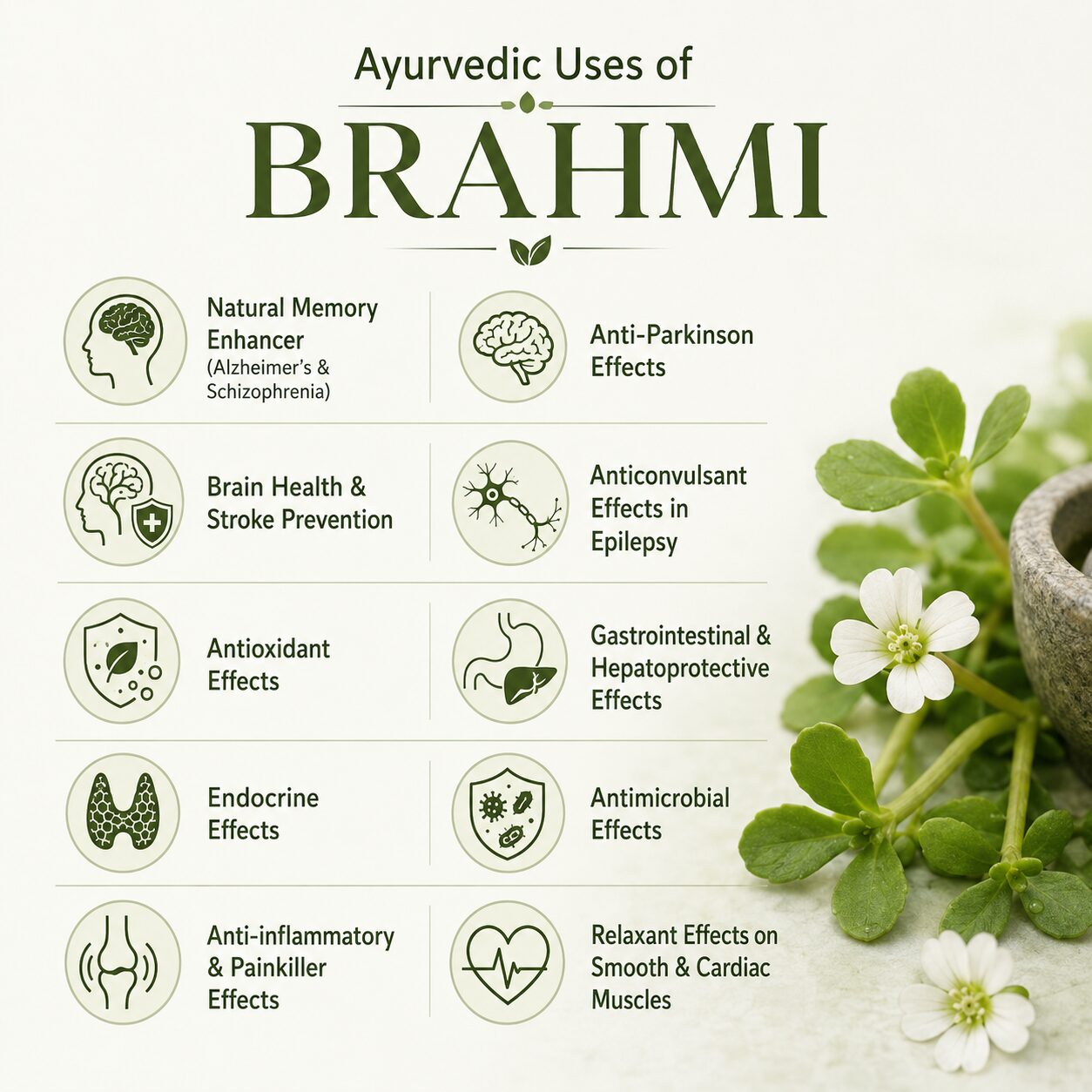
- Natural memory enhancer in Alzheimer’s disease and schizophrenia: The brain-protective and memory-enhancing effects of Brahmi have been studied extensively, and numerous scholarly studies have demonstrated that Brahmi could help treat cognitive impairment related to Alzheimer’s disease and schizophrenia.
Its main modes of action comprise decreasing oxidative stress, inhibiting acetylcholinesterase, and increasing glutamate activity. Brahmi can increase serotonin levels, a hormone that regulates mood and sleep.
- Anti-Parkinson effects: Alpha-synuclein protein is responsible for Parkinson’s disease. Bacopa monnieri extract has been shown to reduce the aggregation of alpha-synuclein protein, thus reducing its toxic effects.
Consequently, the identification and extraction of HSP (heat shock protein)-like proteins from Indian medicinal plants may significantly contribute to the therapeutic management of various neurodegenerative disorders.
- Brahmi for brain health and stroke prevention: Brahmi protects the brain and helps reduce stroke damage. It lowers brain infarct size, boosts blood flow, and combats oxidative stress.
- Anticonvulsant Effects in the Treatment of Epilepsy: Brahmi shows strong anticonvulsant and neuroprotective effects for epilepsy. It works by adjusting neurotransmitter levels, lowering oxidative stress, and supporting normal brain function.
Research suggests it raises seizure thresholds, mimics benzodiazepines, and lessens seizure severity. This makes Brahmi a promising add-on treatment.
- Antioxidant effects: Studies show that Brahmi acts as a potent antioxidant by increasing the activity of enzymes such as superoxide dismutase (SOD), catalase, and glutathione peroxidase. Its active components, primarily bacosides, counteract free radicals, reduce oxidative stress in the brain, and protect against neurotoxicity.
- Gastrointestinal and hepatoprotective effects: Research studies indicate that Brahmi possesses hepatoprotective activity and gastrointestinal benefits, primarily due to its powerful antioxidant, anti-inflammatory, and antiulcer properties. Brahmi improves digestion by increasing digestive enzyme secretion and improving gut health.
- Endocrine effects: Research studies on Brahmi indicate its important endocrine effects, primarily by stimulating the thyroid gland and increasing plasma T4 levels. However, research has also noted its role in stress regulation by controlling adrenal gland function and cortisol pathways.
- Antimicrobial effects: Studies show that Brahmi possesses remarkable broad-spectrum antimicrobial properties, primarily due to bioactive compounds such as bacosides, alkaloids, and flavonoids. Its extracts have shown particular effectiveness against Gram-positive bacteria and fungi, offering a promising natural solution for the management of microbial infections.
- Anti-inflammatory and painkiller effects: Research on Brahmi emphasises its potential anti-inflammatory and analgesic (pain-relieving) effects, primarily attributed to active phytochemicals such as bacosides and triterpenoids.
- Relaxant effects on smooth and cardiac muscles: Brahmi exhibits a relaxing effect on both smooth muscle and cardiac muscle. This effect is primarily due to its active triterpenoid saponins (bacosides), which act through calcium channel antagonism and modulation of nitric oxide (NO).
How to take Brahmi:
Brahmi is available in several forms, including standardised extracts (capsules/tablets), powder, and raw herb, and it is extremely important to follow your doctor’s instructions:
Brahmi is often recommended to be consumed with a meal rich in healthy fats, as this can improve absorption and reduce the likelihood of digestive discomfort.
Powder or Churna form can be mixed with substances such as warm water, milk, or honey.
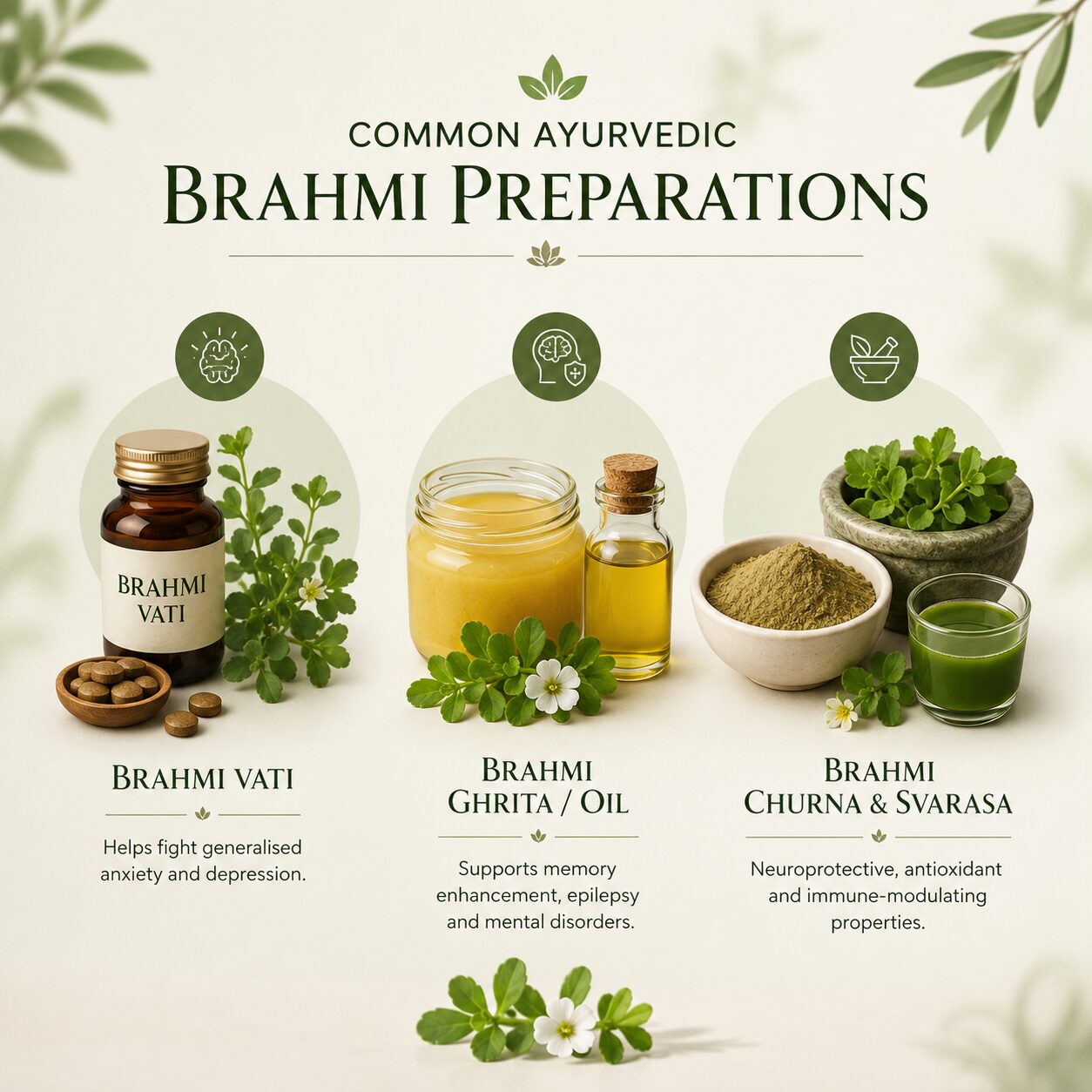
Common Ayurvedic Brahmi Preparations
- Brahmi Vati: It is a traditional tablet made by combining Brahmi with other herbs and Bhasmas (metallic/mineral mixtures). Brahmi Vati helps fight generalised anxiety and depression.
- Brahmi Ghrita/Oil: Brahmi, when processed with clarified butter (ghee), serves as a lipid-soluble medium that facilitates its passage across the blood-brain barrier.
Brahmi oil benefits include memory enhancement, epilepsy and mental disorders. - Brahmi Churna & Svarasa (Extracts/Juices): Ayurveda uses various forms of Brahmi, particularly swarasa (fresh plant extract/juice) and churna (finely powdered whole plant). Ayurvedic literature emphasises its neuroprotective, antioxidant, and immune-modulating properties.
Side effects and care tips while taking Brahmi:
When taken appropriately, it is generally safe, but sometimes it may cause mild side effects such as:
- Nausea
- stomach cramps
- dry mouth
- fatigue
Pregnant women and people with pre-existing heart conditions should consult a health professional before using it.
FAQ
Q1. What is the side effect of Brahmi?
Brahmi is generally safe when taken in recommended doses, but it may cause nausea, stomach cramps, diarrhea, dry mouth, and frequent bowel movements. Its sedative effects may also cause drowsiness or fatigue. Brahmi may increase secretions in the stomach and intestines. Therefore, if you have stomach or intestinal ulcers, it is advisable to consult a doctor before taking Brahmi.
Q2. Is it safe to take Brahmi daily?
Brahmi is an herb used in Ayurveda, often considered suitable for daily and long-term consumption to enhance cognitive abilities such as memory, concentration, and anxiety relief. It is recommended to seek advice from a healthcare professional before incorporating it into a daily regimen.
Q3. Who cannot take Brahmi?
Pregnant/lactating women, people with a slow heart rate (bradycardia), thyroid disorders, or gastrointestinal ulcers should avoid or use Brahmi with caution. It may interact with sedatives and cause excessive drowsiness, and should not be used in children without medical supervision.
Q4. What is the best time to take Brahmi?
The best time to consume Brahmi depends on your health goals. To enhance cognitive function and improve concentration, it’s best taken in the morning on an empty stomach. For relaxation, anxiety relief, or improved sleep, it should be taken in the evening or just before bed.
Q5. What is the main use of Brahmi?
Brahmi is a perennial herb primarily known for its memory-enhancing properties and acts as a natural brain tonic.