Are you confused about where to buy oil?
How to check for the quality standards?
Do your oils develop mould after some time of opening?
Do you want to prepare oil on your own?
Here is the complete guide:
Ayurvedic oils are deep-rooted in the Indian system of disease management. They have been an integral part of various treatment modalities in Ayurveda, ranging from Abhyanga to Basti.
In ancient texts, the preparation of each oil is mentioned with such precision that they not only heal but also nurture your soul. These oils contain herbs infused through traditional processes along with decoction, milk or plant extract. They are designed to maintain an equilibrium between your body, mind, and doshas. However, quality, sourcing, and storage play a huge role in achieving the desired effectiveness.
In this blog, you’ll learn how to identify high-quality Ayurvedic oils, where to buy them, how to store them properly, and even how to make your own at home.
How to Check the Quality of Ayurvedic Oils
Not all products labelled “Ayurvedic” meet authentic standards. Ayurvedic Pharmacopoeia of India (API) decides the quality standards for all Ayurvedic medicines, including oils. Besides this, other scientific parameters ensure purity, safety, and efficacy. Here’s what to look for:
Preparation method
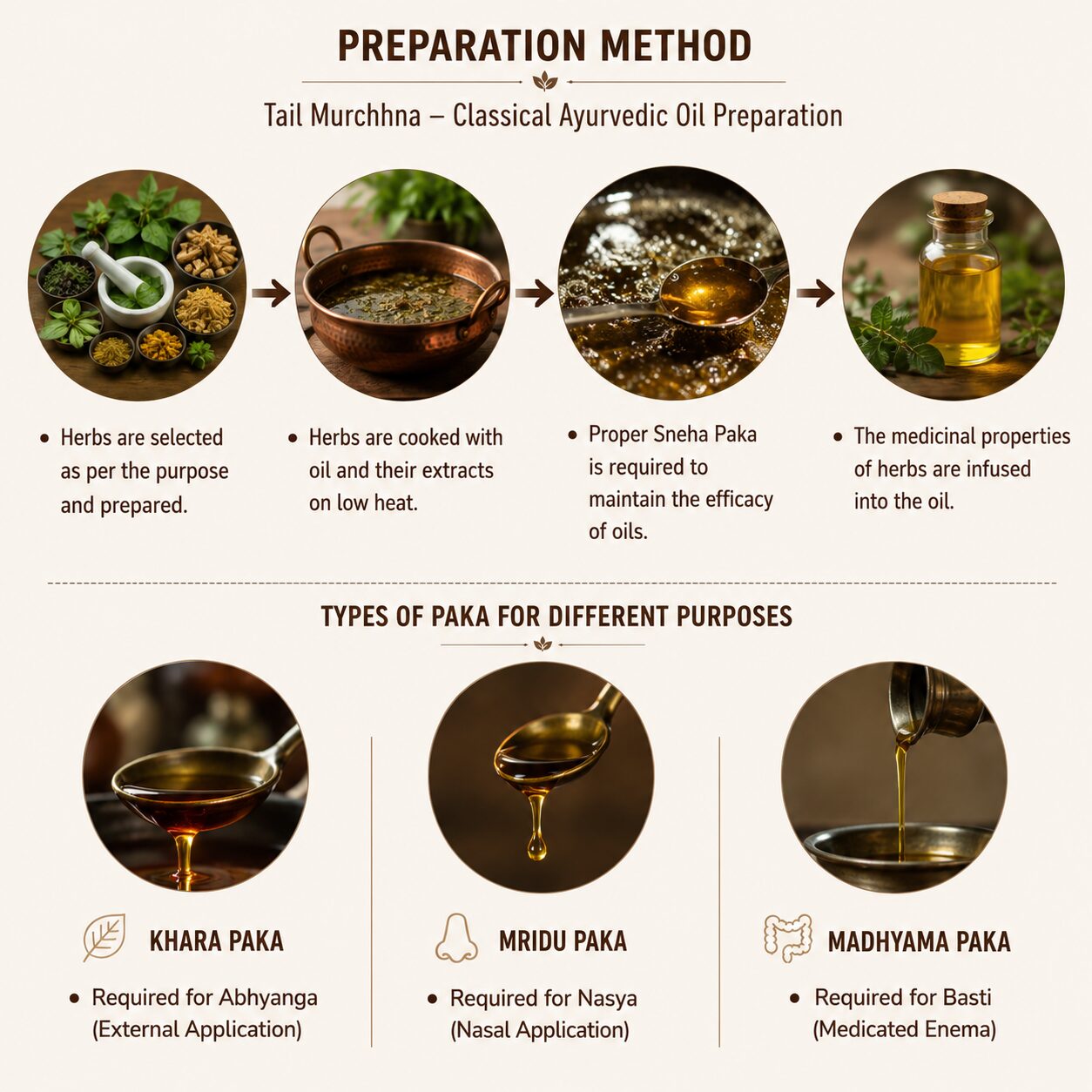
High-quality oils are prepared using the classical Tail Murchhna process. In this, herbs are cooked with oil and their extracts to infuse medicinal properties on low heat. Proper Sneha Paka is required to maintain the efficacy of oils. There are different types of Paka mentioned in Ayurveda for different purposes. For Abhyanga, Nasya, and Basti, different stages of heating are required, namely Khara, Mridu and Madhyama, respectively.
Certifications
Various quality certifications for Ayurvedic oils ensure purity, safety and manufacturing standards. The basic certifications are as follows:
- GMP (Good Manufacturing Practices) – ensures cleanliness, the selection of standard ingredients, and safe preparation methods.
- Ayurveda License – to ensure preparation according to traditional Ayurvedic texts.
- ISO certification – for quality management from sourcing ingredients to the final product packaging.
- AYUSH Premium mark – denotes high quality of Ayurvedic products, especially for the international market.
- Organic certification – provided by Organic India to signify that the ingredients are organically grown.
- ISO 22000 (Food Safety Management): Applicable for oils that may be ingested or are food-grade.
Heavy metals and microbial count
If an oil is prepared as per the quality standards, there will be no heavy metals or microbes in it. The standard Ayurvedic process confirms the proper purification and incineration of heavy metals, if any are used.
High-quality ingredients
An oil containing low-quality ingredients can never give you the desired results. Always check the label for:
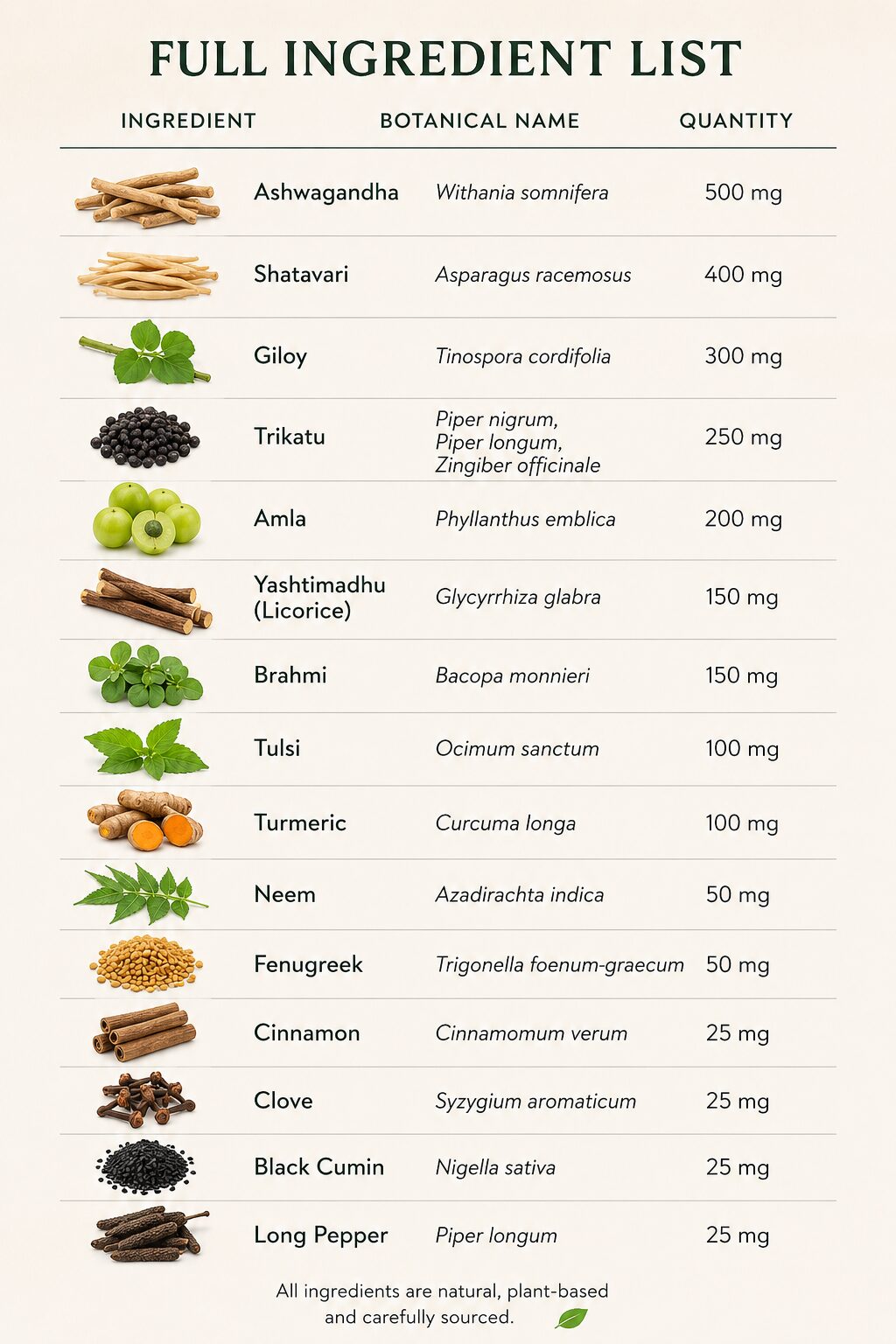
- Full ingredient list
- Their botanical (Latin) names
- Quantity of each ingredient

Base oil quality
Base oils are the oils that make up the foundation of Ayurvedic oil formulations. Common base oils are sesame oil, coconut oil, or sometimes castor oil. The base oil should be:
- Cold-pressed
- Organic (if possible)
- Free from mineral oils or petroleum derivatives
Avoid oils with:
- Parabens
- Synthetic perfumes
- Petroleum-based oils
- Mineral oil as base
- Artificial fragrance
Where to Buy Ayurvedic Oils
Another big challenge is to find an authentic source to buy Ayurvedic oils. The best Sources for purchase could be:
Certified Ayurvedic brands
Always choose a brand with a long-standing reputation in the market. Opt for the manufacturer who prefers traditional preparation methods, follows transparent sourcing practices and sticks to all API quality standards.
Ayurvedic pharmacies (Medical stores)
Local Ayurvedic pharmaceutical stores often have many options from various brands. You can choose one of them accordingly.
Direct from the manufacturer
Some small-scale producers sell their product directly to consumers. You can contact them through promotional pages or websites.
Trusted online marketplaces
Nowadays, almost every manufacturer has a website, especially the larger ones. You can buy oils directly from their websites, like Vaidyaratnam, Patanjali or Baidyanath. Oils are also available on other e-commerce websites such as Amazon or Flipkart. When buying from an e-commerce site, read verified reviews and check the manufacturing details.
Avoid:
- Extremely cheap oils
- “Ayurvedic” labels without ingredient transparency
- No certification mentioned
- Reference from an ancient text or API not written
- Highly perfumed oils
DIY Ayurvedic Oil: Simple Home Remedies
For Pain Relief
Recipe No. 1
Ingredients -:
- 100 ml sesame oil
- 7 – 8 garlic cloves
- 2 teaspoon ajwain
Method -:
- Heat the oil on low flame.
- Add the ingredients.
- Cook on a low flame until the garlic turns slightly brown.
- Allow it to cool.
- Strain it using a muslin cloth.
- Store in a glass bottle.
Recipe No. 2
Ingredients -:
- 100 ml sesame or edible castor oil
- 20 – 30 fresh parijat leaves
- 20 ml water
Method -:
- Prepare a herbal paste – crush the leaves in water till it becomes a paste.
- Add the paste to the oil.
- Cook on a low flame until the water evaporates completely.
- Filter it and store in a glass jar.
This is the traditional method, but it requires high precision. A single drop of remaining water may destroy all your hard work. You can prepare this oil using the method mentioned for Recipe No. 1.
For Hair Growth
Ingredients -:
- 100 ml coconut oil
- 1 teaspoon methi seeds
- 3 – 4 hibiscus flowers
- 1 medium onion, diced
- 10 – 20 curry leaves
Steps -:
- Heat the base oil on a low flame.
- Add the crushed herbs.
- Simmer gently for 15 – 20 minutes.
- Allow it to cool.
- Strain it using a clean cloth.
- Store it in a glass bottle.
How to Choose the Right Base Oil for Your Body Type
Choosing the right base oil to prepare oil on your own is the key to success. Always choose an oil as per your body type and dosha imbalances. You can mix oils together if there are multiple doshas involved.
Vata (dry, cold) – use warming oils like sesame oil.
Pitta (hot, sensitive) – choose cooling oils like coconut oil.
Kapha (heavy, oily) – opt for stimulating oils like mustard oil.
Read more( Add link for blog Ayurvedic Oils Explained: The Complete Guide Which Oil is Right for Your Dosha & Condition)
How to Store Ayurvedic Oils
Storage is a key step after oil preparation. If you don’t store oils properly, they will start to lose their potency and may turn rancid. Let’s see what are the precautions you should take while storing a homemade oil:
Container – Keep the oil in air-tight glass containers. This prevents oxidation and chemical reactions to maintain optimum quality.
Storage space – Store the oil in a cool, dark place away from direct sunlight. Sun exposure can damage the active compounds.
Usage instructions – Never dip a wet finger or spoon into the oil bottle. This may contaminate the oil. Always use a dry spoon or clean hands.
Shelf life – Ayurvedic oils remain effective for 6 months to a year after opening.
Avoid if:
- There is a change in smell or texture of the oil.
- Fungal growth is present in the bottle.
- There is a sudden change in the texture of the oil.
Final Thoughts
High-quality Ayurvedic oils, when you choose them correctly, work wonders. Maintaining quality standards is the only significant role a manufacturer plays. After that, you need to handle them carefully, store them properly, and use them wisely.
Quality standards matter a lot for delivering the best results. Never choose low-quality products, as they may not deliver the desired results. Always go for an oil that has benchmark preparation methods, original high-quality ingredients, and proper packaging.
They are not only about branding. They are about purity, preparation, and purpose.
FAQ
1. Can I use Ayurvedic oil daily?
Yes, you can use Ayurvedic oils daily, especially for Abhyanga and Nasya. Oiling keeps your doshas in balance.
2. Do Ayurvedic oils expire?
Yes, Ayurvedic oils have a shelf life of 1 to 2 years after opening. Thereafter, they start to lose their potency.
3. Which oil is better – homemade or store-bought?
Both of them have their own benefits. DIY oils are used to counter mild conditions and are customizable and fresh. Store-bought oils are highly problem-specific.
4. Is it safe to make Ayurvedic oils at home?
Yes, if you follow proper hygiene and preparation methods. There are some simple recipes you can try.
5. How much should I heat Ayurvedic oil before use?
Heat the oil until it is comfortably warm to the touch. Not less and not more. Remember to do this in a double boiler; otherwise, the oil may lose its potency.
Research corner
- Standardisation of ayurvedic oils by P.T.A. Hepsibah, N.B.R. Prasad, P. Sanjeev Kumar
https://www.researchgate.net/publication/224898096_Standardisation_of_ayurvedic_oils
- Ayurvedic Pharmacopoeial Publication
https://pcimh.gov.in/show_content.php?lang=1&level=1&ls_id=56&lid=54