You may feel some discomfort in your upper abdomen. You might have heartburn, feel full quickly, or feel bloated and nauseous after eating. This is due to the weakness of Agni, which leads to difficulties in the digestive process.
Agni is responsible for strength, health and longevity. It determines the amount of food you can consume. The digestion, absorp
tion, and assimilation of food are essential for life, and in Ayurveda, this process is performed by Agni.
Agni is a vital factor for your life, and maintaining health depends on it. Agni digests food, which determines the body’s strength, appearance and immunity. Maintaining Agni is essential for overall health. However, a poor diet and lifestyle can weaken Agni. This creates Ama, or natural toxins, which lead to disease and a lower quality of life.
Ritucharya (seasonal guidelines) and Dinacharya (daily Ayurvedic routine) help restore Agni. These practices help you maintain a good diet and lifestyle. Your physical and mental well-being relies on the strength of your digestive fire.
1 . Agni is of 13 types as per functions and sites of action.
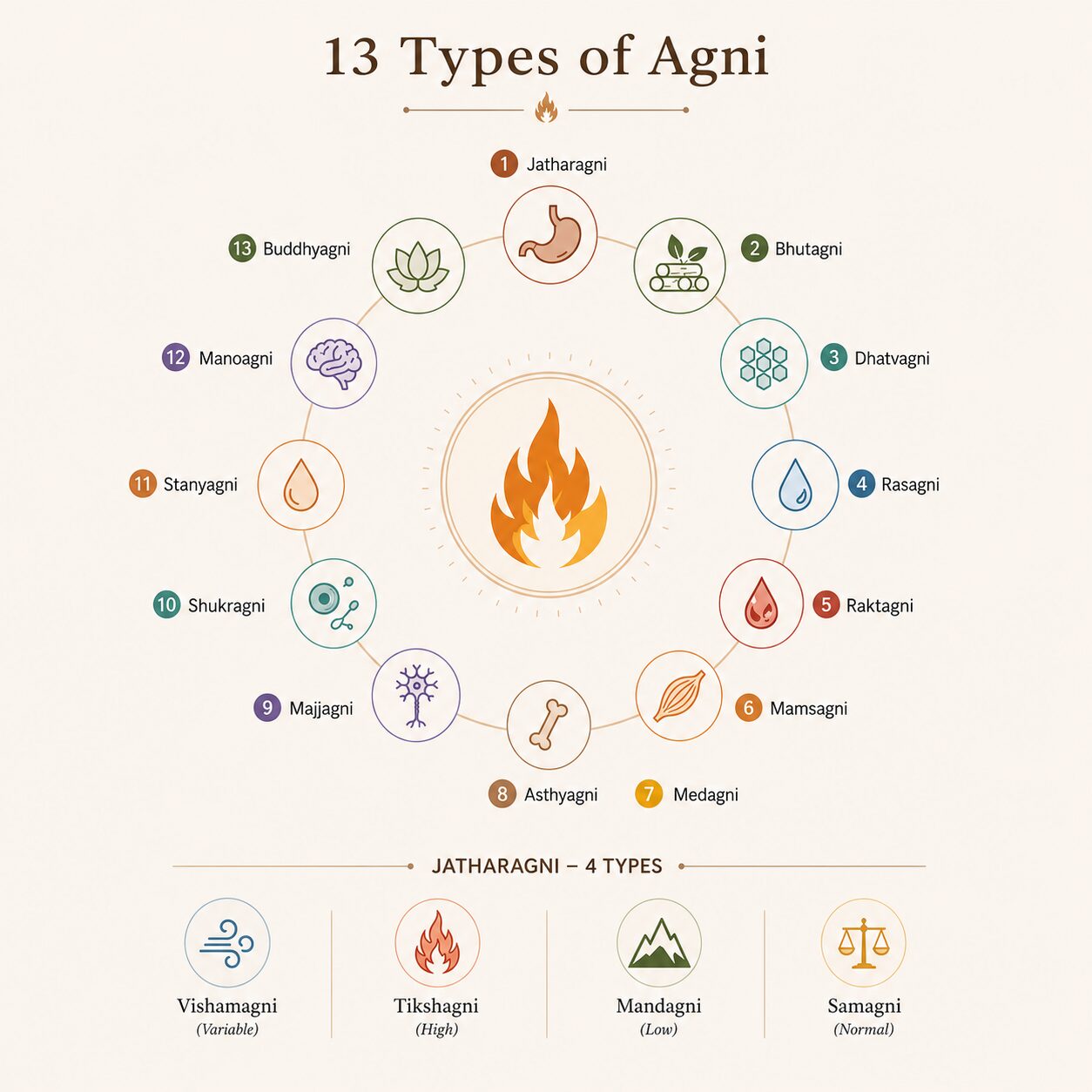
They are:
- Jatharagni – This is the only Agni present in your stomach and duodenum. Jatharagni, based on how the human body digests food, can be grouped into four categories.
- Vishamagni (Variable): Vata disrupts the digestive fire. This leads to issues like gas in the stomach, constipation, and flatulence.
- Tikshagni (High): In this condition, Pitta disturbs the digestive fire. This leads to diarrhoea, a burning sensation, hyperacidity, and an increased appetite.
- Mandagni (Low): Here the digestive fire is disturbed due to Kapha, resulting in loss of appetite and slow metabolism.
- Samagni (Normal): A normal digestive fire means a strong appetite. It’s easily satisfied with regular food. It nourishes the body by building a strong foundation for the seven tissues.
2. Bhutagni – There are five types of Agni in each of the five basic elements (Panchamahabhutas).
These five digestive fires are
- Parthivagni (Earth),
- Apyagni (Water)
- Agneyagni (Fire)
- Vayavyagni (Air)
- Nabhasagni (Space)
3. Dhatwagni – Seven types of Agni, present one in each of the seven dhatus.
- Rasagni: Metabolizes Rasa Dhatu (fire present in plasma/lymph).
- Raktagni: Metabolizes Rakta Dhatu (fire present in blood).
- Mamsagni: Metabolizes Mamsa Dhatu (fire present in muscle).
- Medagni (or Medo-Agni): Metabolizes Meda Dhatu (fire present in fat).
- Asthagni: Metabolizes Asthi Dhatu (fire present in bone).
- Majjagni: Metabolizes Majja Dhatu (fire present in bone marrow/nerve tissue).
- Shukragni: Metabolizes Shukra Dhatu (fire present in reproductive tissue)
How is the food digested by Agni?
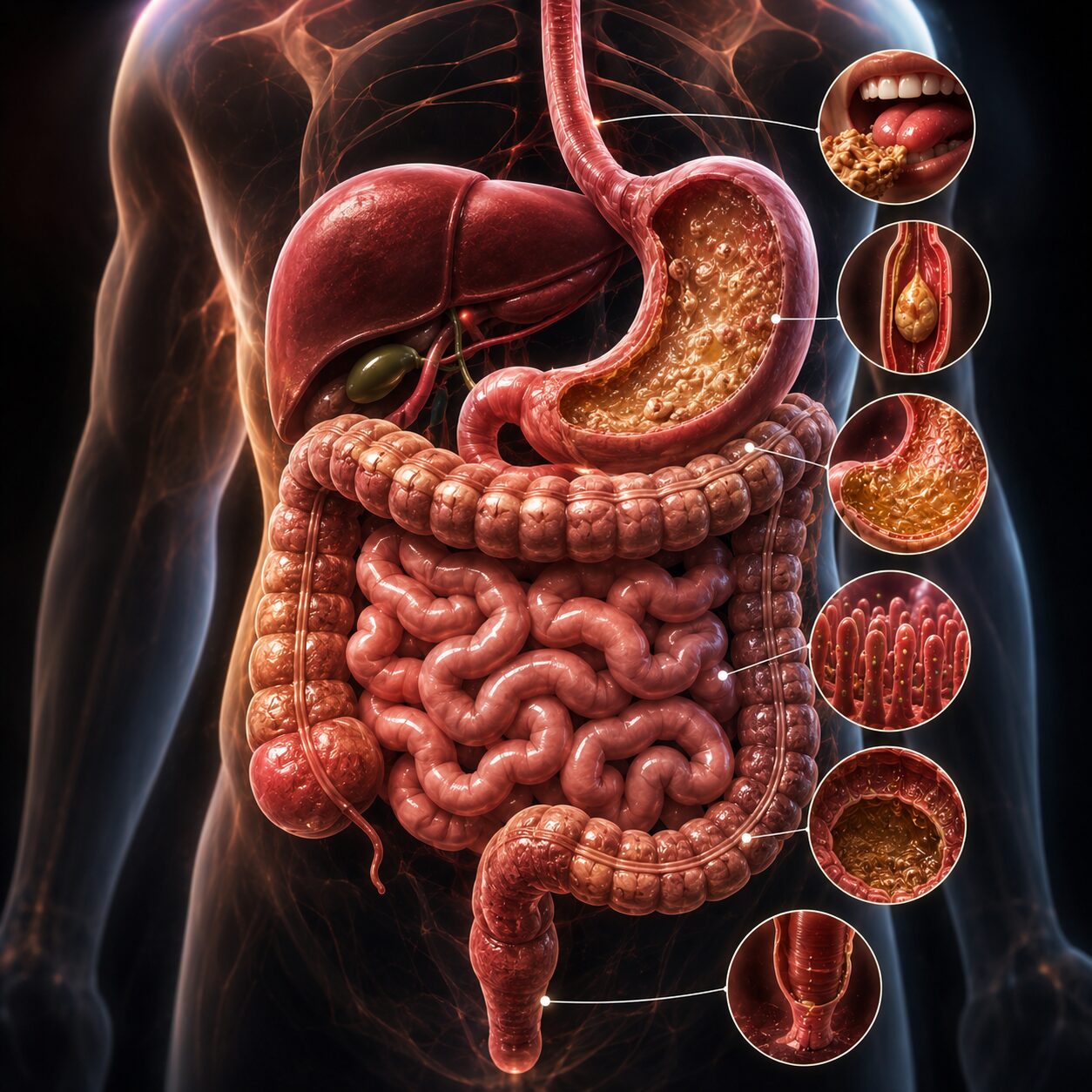
- When you eat something, the first thing that happens with food is that Jatharagni (gastric fire) acts on it and converts the eaten food into Rasa and Mala. Jatharagni is the most important agni because every nutrient entering the body must first be processed by it.
- Bhutagnis act on key parts of food, nourishing the body’s elements.
- Then Dhatvagnis acts on the relevant tissues, causing them to break down into 7 different dhatus for tissue metabolism and nourishment.
The overall transformational process led by Agni contributes to maintaining vitality, health, enthusiasm and energy. According to Ayurveda, if your Agni is balanced, then you remain completely healthy and live a long, happy and healthy life.
Importance of Agni in Ayurveda:
As long as Agni remains normal, a healthy and long life is possible and the loss of Agni affects the longevity. Foods rich in the nutrients can only be helpful if they have been properly digested by Agni.
However, if your Agni becomes vitiated, the entire metabolic process of the body will be disrupted, resulting in disease and if your Agni stops functioning you can die, Therefore, Agni is called the foundation of life.
Weakening of Agni leads to the formation of Ama, which is considered the primary pathogenic factor in the development of disease. The concept of Agni shows close similarities with modern concepts of digestive enzymes, metabolic pathways and cellular metabolism.
Is your digestive fire actually just Pitta?
Pitta is derived from “Tapa”, which means combustion/digestion – nourishing the body by digestion of ingested food. It helps in maintaining heat and through heat, it maintains the colour, glow etc. of the body.
Now the question arises: whether Pitta and Agni are the same thing or different? Does Pitta exist without Agni, or is Pitta itself Agni?
This must be clearly understood. Different scholars have presented different views regarding the relationship between Pitta and Agni. Some scholars consider Pitta to be similar to Agni, while others are different.
You can Improve your Agni Naturally
- Eat meals at regular times and avoid skipping meals or eating frequently.
- Use spices that aid digestion such as ginger, cumin, coriander, fennel, and black pepper help speed up digestion.
- Eat warm, properly cooked foods and avoid raw, cold or processed foods.
- Mindful Eating: Eat in a quiet place without distractions like eating while watching mobile or TV.
- Avoid overeating and eat in such a way that only one-third of the stomach is filled with solid food, one-third with liquid and one-third with air.
Conclusion:
In Ayurveda, Agni is the central regulatory force of digestion and metabolism. Balanced Agni maintains health, while imbalanced Agni causes disease.
Understanding the concept of Agni aids in the proper prevention, diagnosis, and treatment of diseases. This review highlights the eternal importance of Agni in maintaining metabolic balance.
FAQ
Q1. How is Agni related to doshas in Ayurveda?
Agni is affected by three doshas: Vata creates irregular Agni (Vishama Agni), Pitta creates intense Agni (Tikshna Agni), and Kapha creates slow Agni (Manda Agni).
Q2. How do I know if my Agni is weak?
If your Agni is weak, you may experience symptoms like bloating, heaviness after meals, persistent gas formation, a thick white coating on the tongue, loss of appetite, and constipation.
Q3. How can I improve my Agni naturally?
Avoid skipping meals, cold, raw, or processed foods, eat warm, properly cooked food and avoid overeating.
Q4. How does warm water improve Agni?
Yes, drinking lukewarm water throughout the day helps digestion, while cold beverages “quench” the digestive process.
Q5. Why is Agni important?
Agni is considered the foundation of health, immunity, and longevity. It determines vitality and energy.
Q6. Can strong fire be beneficial?
Strong Agni can sometimes cause hyperacidity, heartburn, intense hunger, diarrhoea, and irritability.