What is Shatavari?
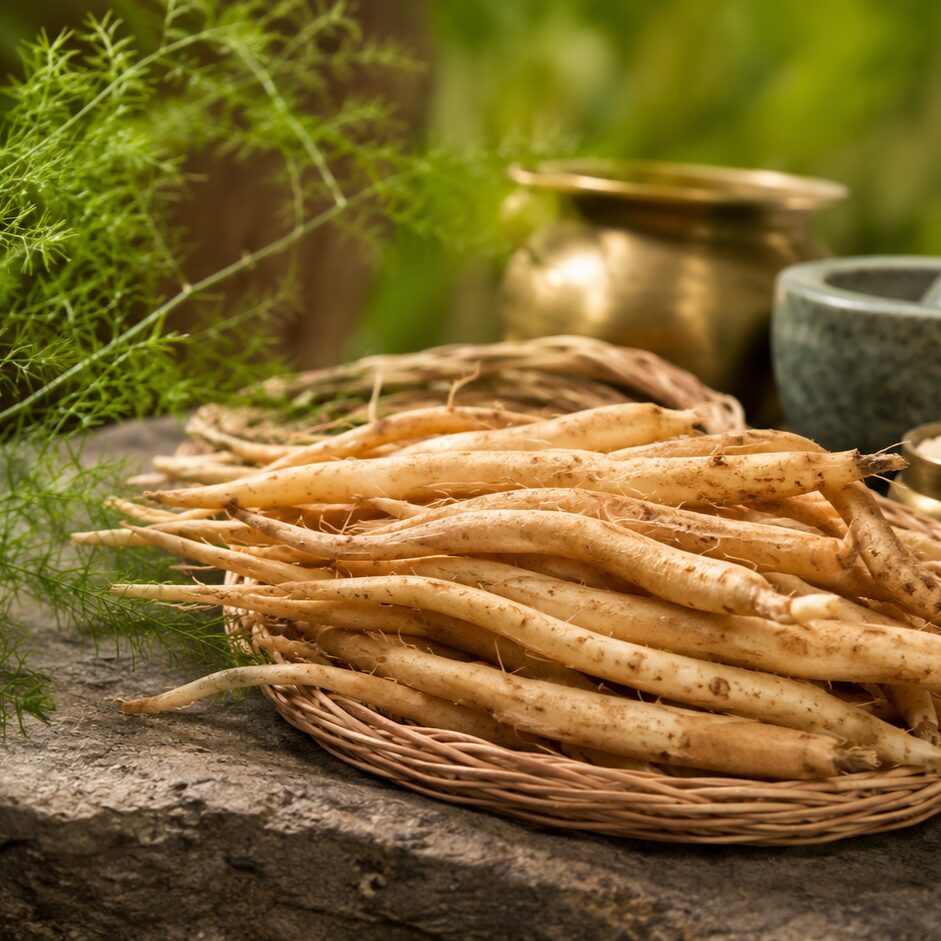
Shatavari (Asparagus racemosus), a member of the Asparagaceae family, holds a special place among Ayurvedic herbs because it is beneficial in the prevention and treatment of a variety of diseases.
Shatavari means “one who has a hundred husbands or one who is acceptable to many” and hence it is considered a general tonic and a female reproductive tonic. It helps to increase fertility and vitality in females.
Shatavari is an adaptogen, which means it helps the body adapt to stress and helps relieve anxiety and depression.
In different local languages, people also knew it by the names of Satwar, Satmuli, and Satwari.
Characteristics of the Shatavari Plant: Shatavari is a perennial, thorny, climbing shrub that is typically found in tropical and subtropical regions of India, flourishing in gravelly soil. Renowned for its medicinal tuberous roots, the plant has needle-like or scale-like leaves, fragrant white flowers, and small purple-black berries. Most notably, it has a wide network of smooth, tuberous roots, which are used in Ayurveda as a nutritional and herbal supplement.
Chemical constituents of Shatavari: It is in high demand among all medicinal plants because it contains various bioactive chemicals such as steroidal glycosides, saponins (mainly asparagine I, II, III and IV), polyphenols, flavonoids, alkaloids (racemosoles) and vitamins.
Various extracts of different parts of the Shatavari plant – root, leaves, flowers and stem – have demonstrated their medicinal effects that alleviate problems related to the female reproductive system and several diseases like indigestion, nervous disorders, cough, bronchitis, throat infections, TB, COVID-19, etc.
The health benefits of Shatavari: Shatavari powder uses
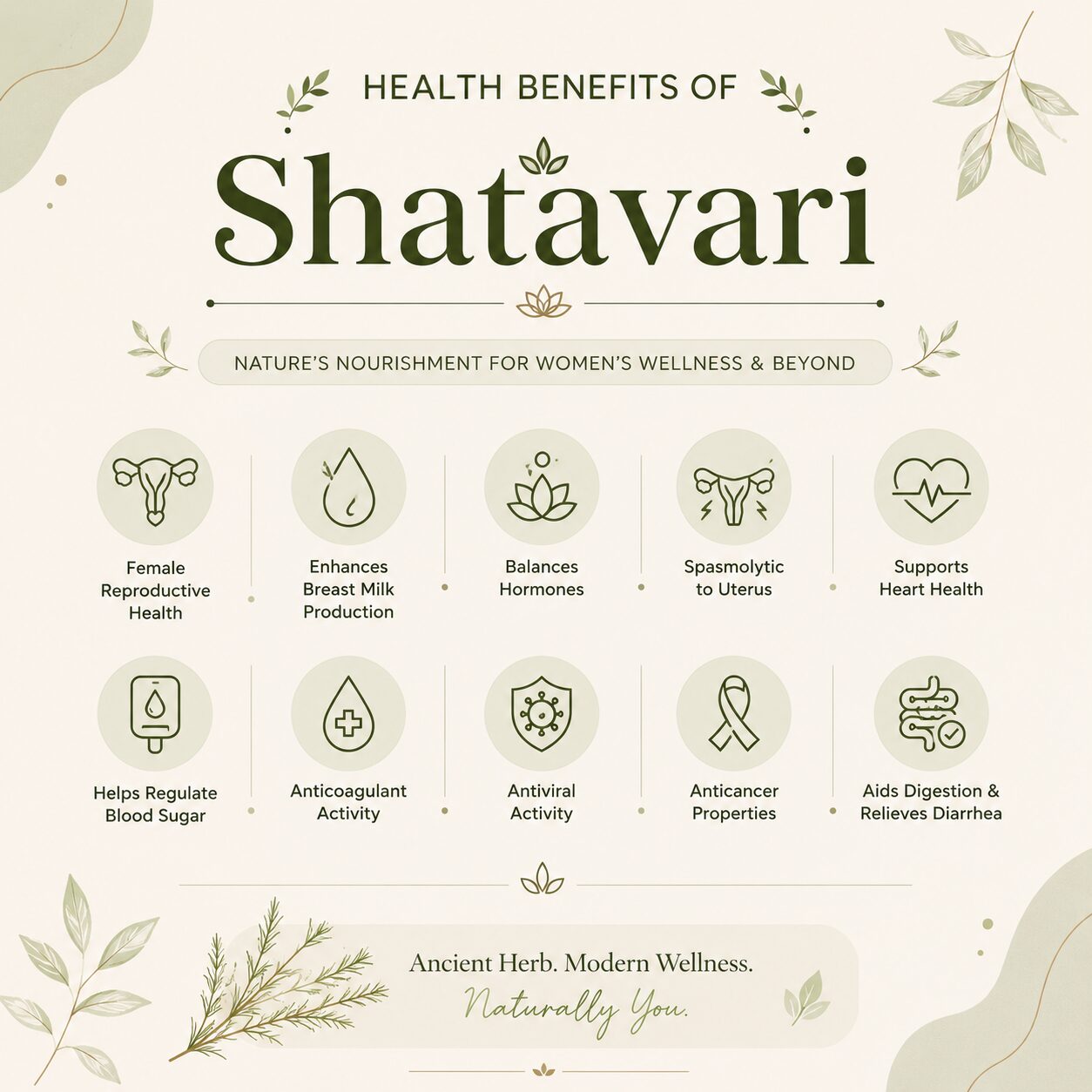
Shatavari has many medicinal uses, such as:
- Effect on female reproductive health: Despite being a rejuvenating herb, it is also beneficial in female infertility as it boosts libido, helps reduce inflammation and moisturises dry tissues of the sexual organs, aids in folliculogenesis and ovulation, prepares the uterine lining for pregnancy, prevents miscarriage, acts as a postpartum tonic by normalising the uterus and balances hormones.
Compounds such as phytoestrogens and steroidal saponins found in Shatavari alleviate menopausal symptoms, including hot flashes and mood swings, by functioning as adaptogens that assist in stress reduction and estrogen regulation.
- Enhance breast milk output: Shatavari is a revered herb in Ayurveda, often used as a galactagogue to increase breast milk production. It is believed to help regulate prolactin levels. Clinical research suggests Shatavari may help increase milk production and breast size.
- Antioxytocin Effect: Shatavari has significant anti-oxytocin effects, primarily driven by its steroidal saponin component, Shatavarin-I. This compound relaxes uterine muscles and inhibits oxytocin-induced uterine contractions, making it useful for controlling premature labour or reducing uterine irritation.
- Spasmolytic to uterus: In Ayurveda, Shatavari is considered an excellent tonic for the female reproductive system, with significant antispasmodic properties that directly benefit the uterus. It helps relax the uterus’s smooth muscle, reduce the frequency and intensity of contractions, and relieve pain, especially during menstruation.
- Hypotensive Effect: The hypotensive effect of shatavari makes it an effective herbal supplement for supporting heart health. It is commonly used to improve heart function by lowering blood pressure and cholesterol, but use caution, as it can cause low blood pressure.
- Hypoglycemic Effect: Shatavari has hypoglycemic (blood sugar-lowering) properties, which are often used in the management of diabetes by enhancing glucose metabolism and providing antioxidant benefits.
It works by inhibiting enzymes such as alpha-amylase and alpha-glucosidase, leading to a decrease in blood sugar levels. Nevertheless, it has the potential to induce excessively low blood sugar when used in conjunction with other diabetes medications.
- Anticoagulant activity: Shatavari root extract has been found to possess anticoagulant and antithrombosis characteristics. Should you be under medication that acts as an anticoagulant, it would be prudent for you to seek consultation with your doctor.
- Antiviral activity: The steroidal saponin components in shatavari inhibit viral replication, giving it promising antibacterial activity. Studies suggest that it provides antioxidant protection against virus-induced oxidative stress and acts as an immunomodulator, potentially supporting overall immune function.
- Anticancer Properties: Shatavari has shown considerable potential in preventing cancer in studies done in laboratories and on animals because of the abundance of steroidal saponins, especially Shatavarin IV, present in this herb. While not recognised as an effective agent against cancer in humans, it has been observed that it interacts with cancer cells in multiple ways.
- Antisymmetric activity: Shatavari possesses anti-dysenteric and anti-diarrheal characteristics, which are frequently ascribed to its elevated levels of steroidal saponins, especially asparagus I-IV. Its astringent properties have led to its use in traditional Ayurvedic medicine to treat digestive problems.
How Shatavari Balances the Doshas:
Shatavari is an ideal Ayurvedic herb for harmonising Vata and Pitta doshas because of its cooling (sheet), heavy (guru), and smooth (snigdha) characteristics. But it can increase kapha due to its heavy nature. It serves as a potent Rasayana (rejuvenator) that nourishes tissues, alleviates inflammation, and calms Vata-related dryness or nervous anxiety.
How to take Shatavari: You can take Shatavari in different forms:
- Churna (Powder): Take 1/4 to 1/2 teaspoon twice a day, usually with warm milk or honey.
- Tablets/Capsules: Take 1-2 tablets twice a day after meals with milk or water.
- Shatavari Syrup – Take 1-2 teaspoons twice a day.
Side Effects of Shatavari: Shatavari is generally safe, but can cause side effects if taken in high doses. You must know about the side effects:
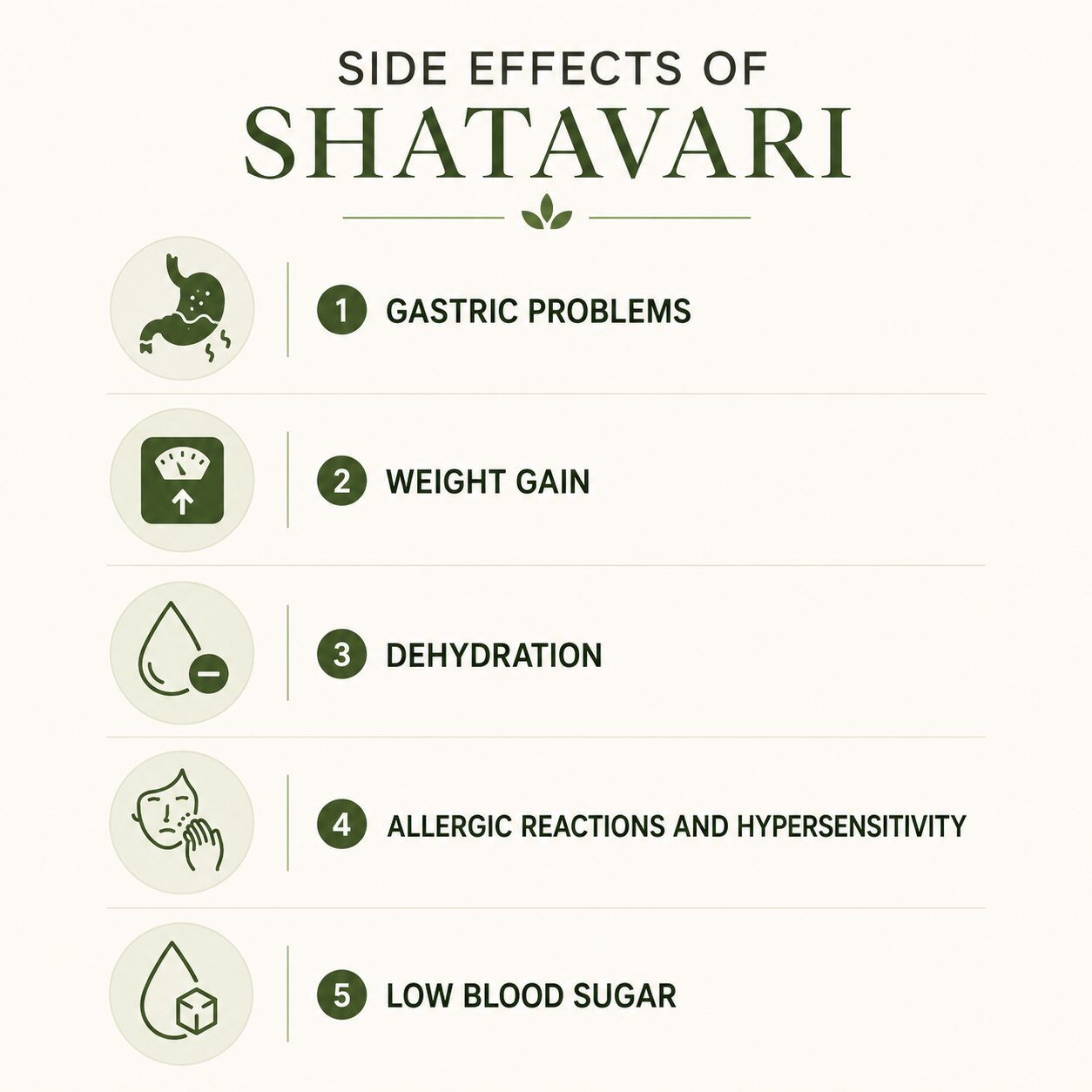
- Gastric problems: Excessive consumption of Shatavari may result in mild digestive problems like stomach pain, discomfort, gas, bloating or diarrhoea.
- Weight gain: Although Shatavari may be beneficial for weight management, consuming it in excess or without the guidance of a qualified expert may lead to weight gain in some individuals.
- Dehydration: Shatavari has strong diuretic properties that significantly increase urine output, which can sometimes result in dehydration.
- Allergic reactions and hypersensitivity: Certain individuals might experience specific allergic reactions due to the consumption or coming into contact with Shatavari. Symptoms can include watery eyes, itching, rashes, hives, and difficulty breathing.
- Low blood sugar: The herb Shatavari is beneficial in reducing blood sugar levels. Therefore, diabetic patients who are undergoing any treatment to control their blood sugar should exercise caution when using Shatavari to prevent hypoglycemia (characterised by abnormally low blood sugar).
FAQ
1. What is the use of Shatavari?
Shatavari (Asparagus racemosus) is an Ayurvedic herb known to boost women’s reproductive health, balance hormones, increase fertility and promote lactation.
2. What should not be taken with Shatavari?
It is advised not to combine this with other diuretic herbs or medications, including furosemide (Lasix). Shatavari could reduce your blood sugar levels. Therefore, it is recommended to avoid taking it alongside other medications or herbs that also lower blood sugar.
3. When should one stop taking Shatavari?
If you are allergic to asparagus or shatavari. If you suffer from hormonal problems such as uterine fibroids. If you are taking any kind of medication or health supplement that is contraindicated for the consumption of Shatavari.
4. What is the best time to take Shatavari?
The best time to consume Shatavari is in the morning on an empty stomach for maximum absorption and energy, or in the evening for relaxation and sleep. It’s typically taken 1-2 times a day, and it’s best taken with warm milk or water to maximise its nutritional benefits.
5. How long does it take for Shatavari to show its effect?
Shatavari generally requires a consistent daily intake of 4 to 8 weeks to exhibit significant benefits, as it functions gradually to nourish the body. Although some individuals, particularly those utilising it for lactation, may observe effects within a few days to two weeks, the majority of enhancements related to hormonal balance, fertility, or menopause symptoms typically manifest after a duration of 2 to 3 months.