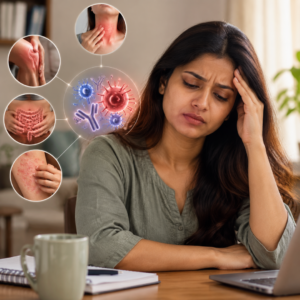
Have you ever felt like your body needs a reset?
Do you have any autoimmune disease?
Are you tired of those heavy steroids?
Have you been struggling with psoriasis and eczema for a long time?
Or are you struggling with long-term ailments?
Now imagine a system that doesn’t just treat symptoms—but cleanses your body from the root level.
That’s exactly what Panchakarma does.
In today’s fast-paced world, stress, unhealthy eating habits, and pollution have taken a toll on our health. More people are choosing natural healing methods. Panchakarma stands out as a strong detox therapy in Ayurveda. This ancient practice not only clears your body but also rejuvenates the mind and restores overall health. It is not only a treatment modality but a way of living life.
Panchakarma is more than a detox – it is a complete healing process that revitalises your body, mind, and soul. Add this ancient Ayurvedic treatment to your wellness routine for better health. It is nature’s way towards your improved immunity, better digestion and inner balance.
In this blog, we’ll explore what Panchakarma is, its benefits, procedures, five therapies included, and much more.
Panchakarma – Definition in Ayurveda
In Ayurveda, Panchakarma is a detox and rejuvenation therapy. It helps remove toxins, known as Aama dosha, from the body. The term “Panchakarma” stands for “five actions”. These five actions refer to five therapeutic procedures that cleanse your body at the micro level. It is an Ayurvedic therapeutic process that detoxifies your body in a completely natural manner.
These therapies aim to balance all three doshas – Vata, Pitta, and Kapha by different means. Panchakarma therapies alone or combined ensure you optimal physical and mental health.
Panchakarma is a long, deep internal cleansing method rather than a quick spa treatment. Panchakarma therapy is your Ayurvedic friend for overall well-being.
Five Types of Panchakarma Therapies
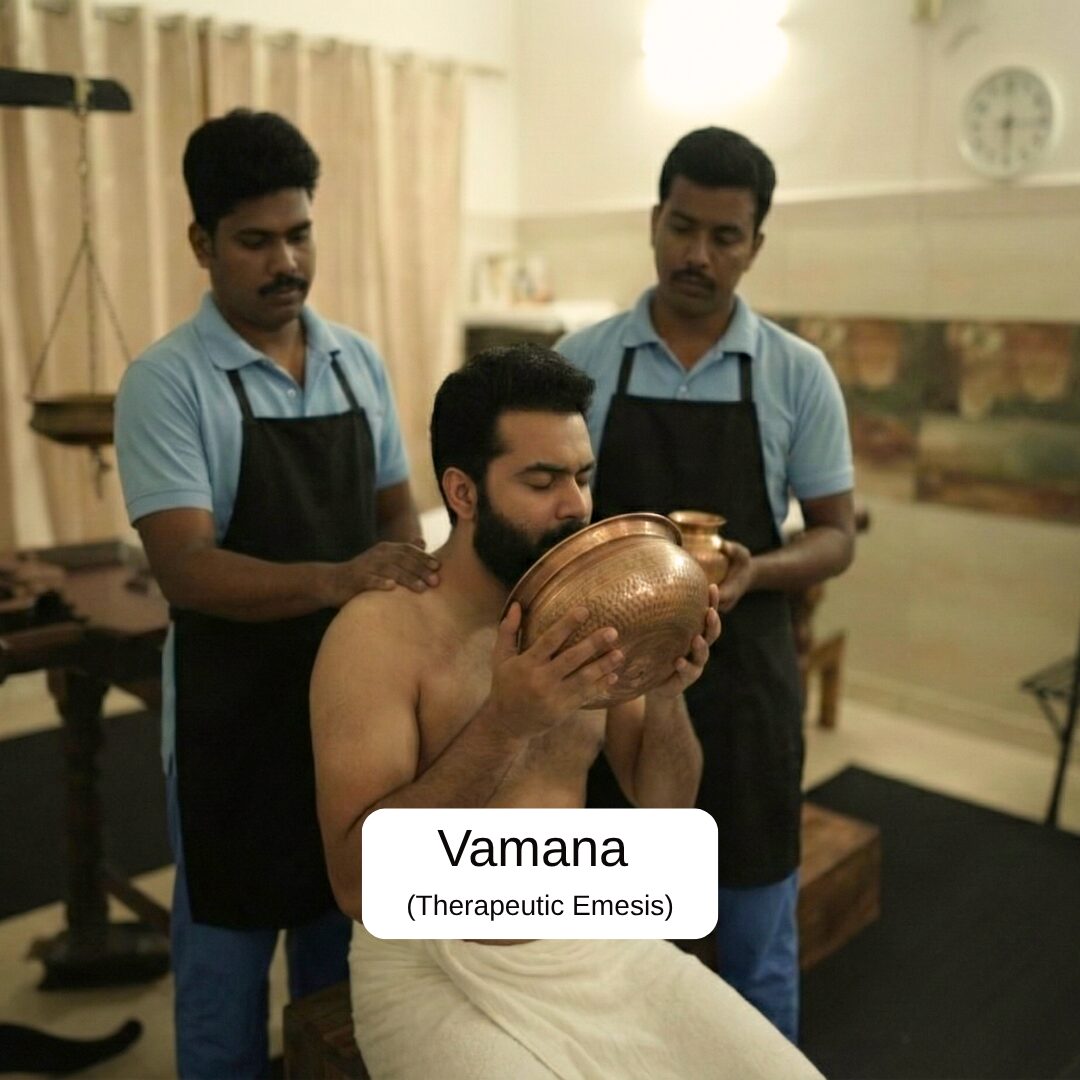
1. Vamana (Therapeutic Emesis)
In this procedure, you undergo controlled vomiting to cut toxins from the upper digestive tract. It is mainly beneficial for Kapha-related disorders.
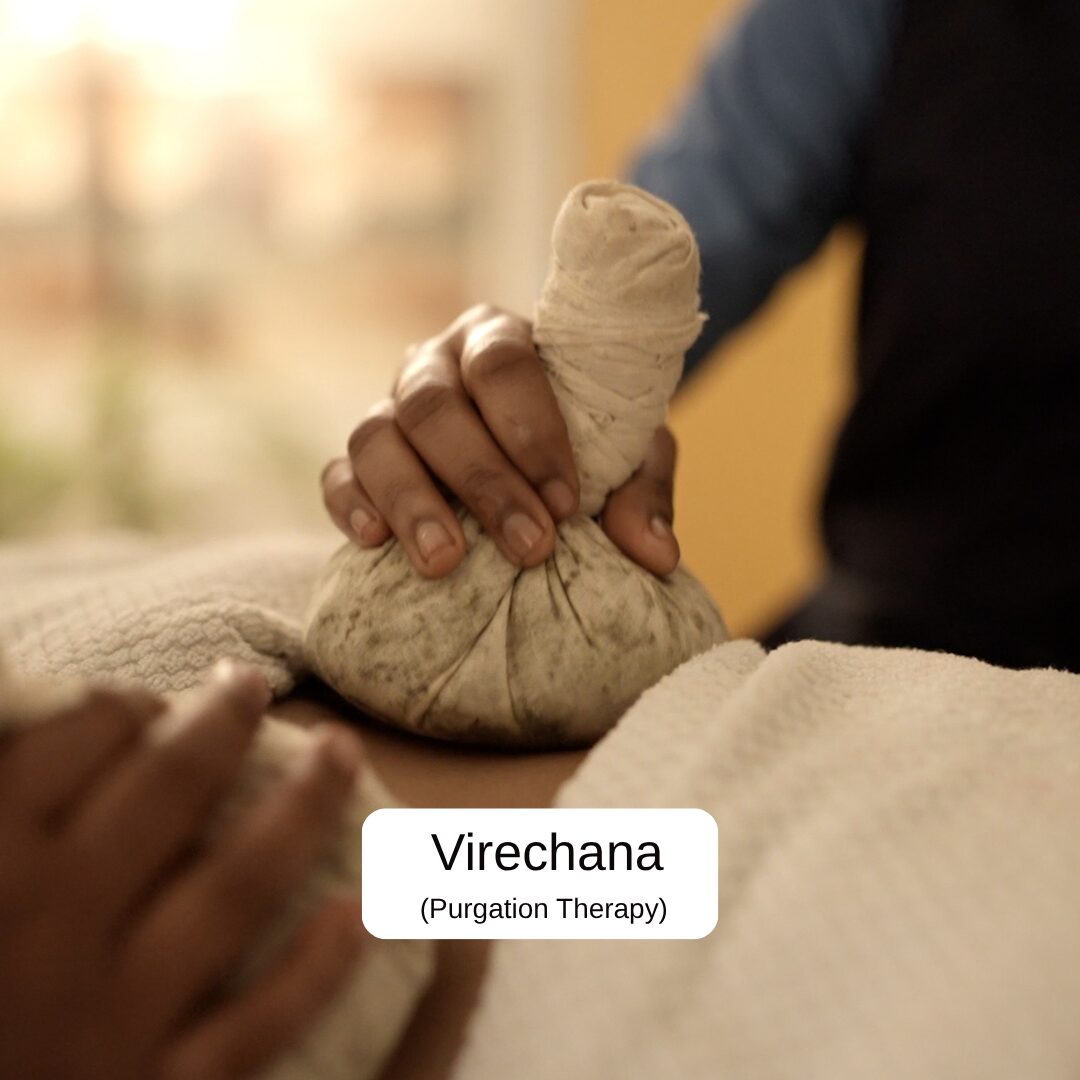
2. Virechana (Purgation Therapy)
In virechana, practitioners use herbal laxatives to clean the intestines and remove excess Pitta. It helps in treating skin disorders, liver issues, and digestive problems.
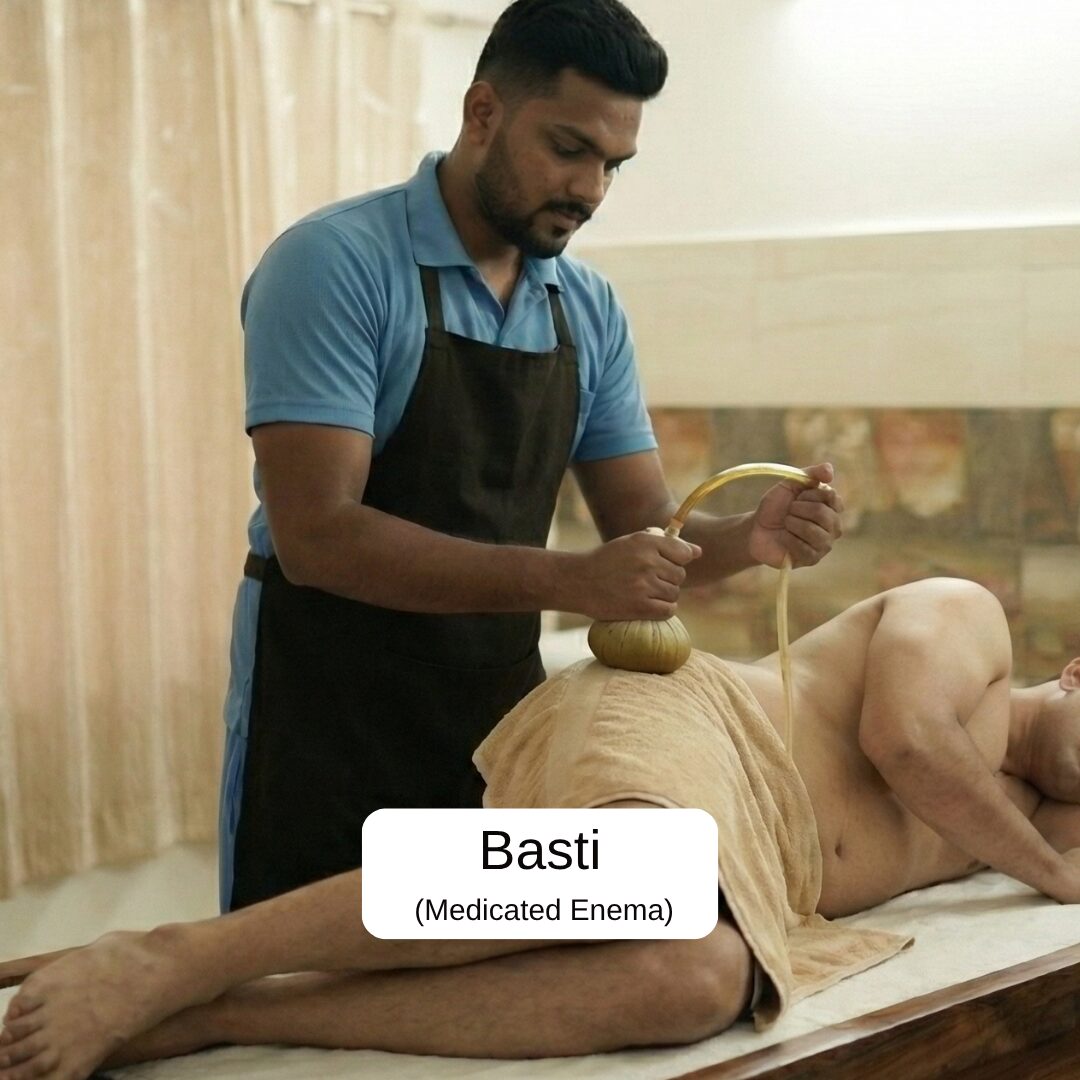
3. Basti (Medicated Enema)
Basti is a key Panchkarma therapy. It uses herbal oils or decoctions given through the anal route. It is highly effective for Vata disorders such as arthritis and joint pain.
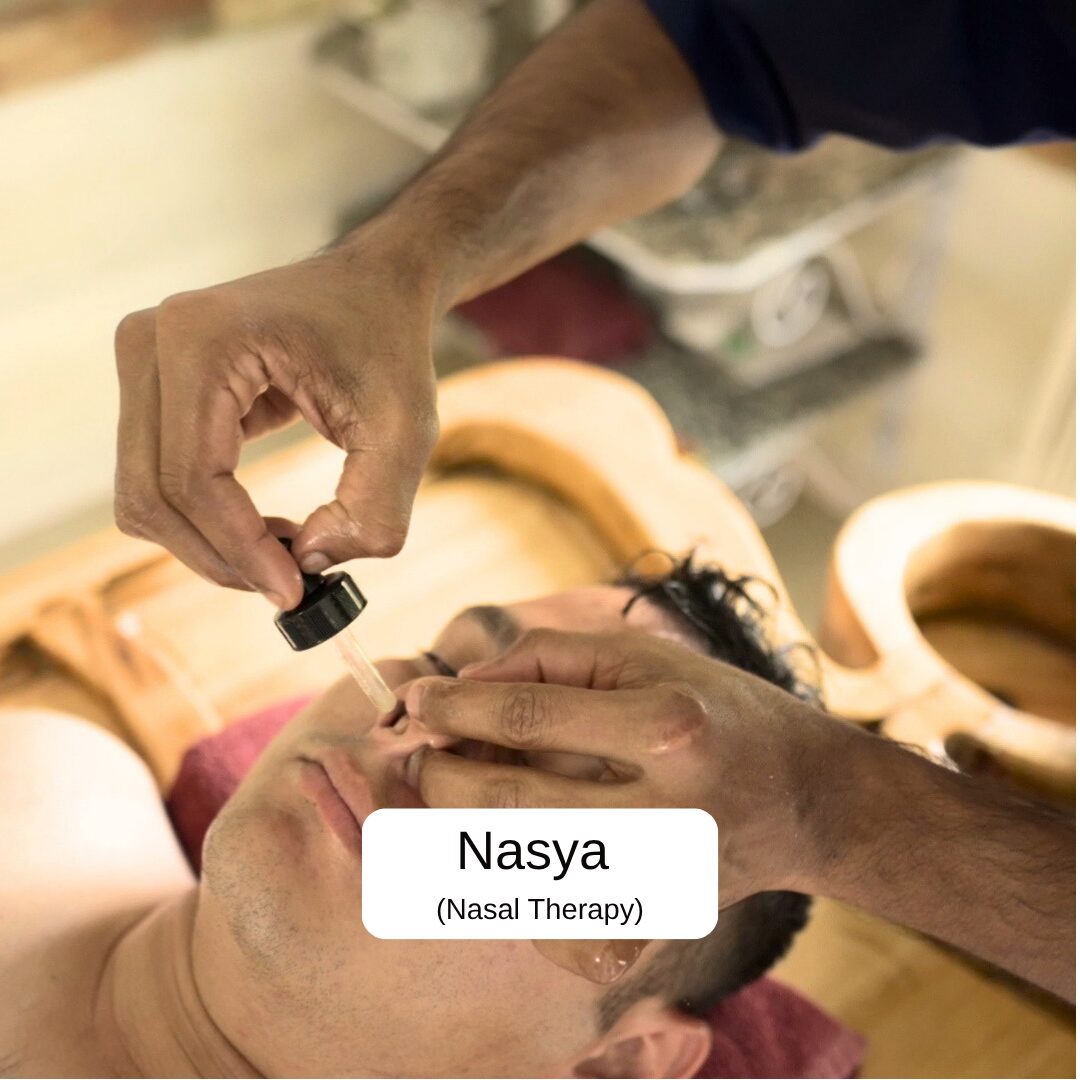
4. Nasya (Nasal Therapy)
Nasya involves the administration of herbal oils through your nasal passages. It helps in clearing sinus congestion, improving brain function, and enhancing respiratory health.
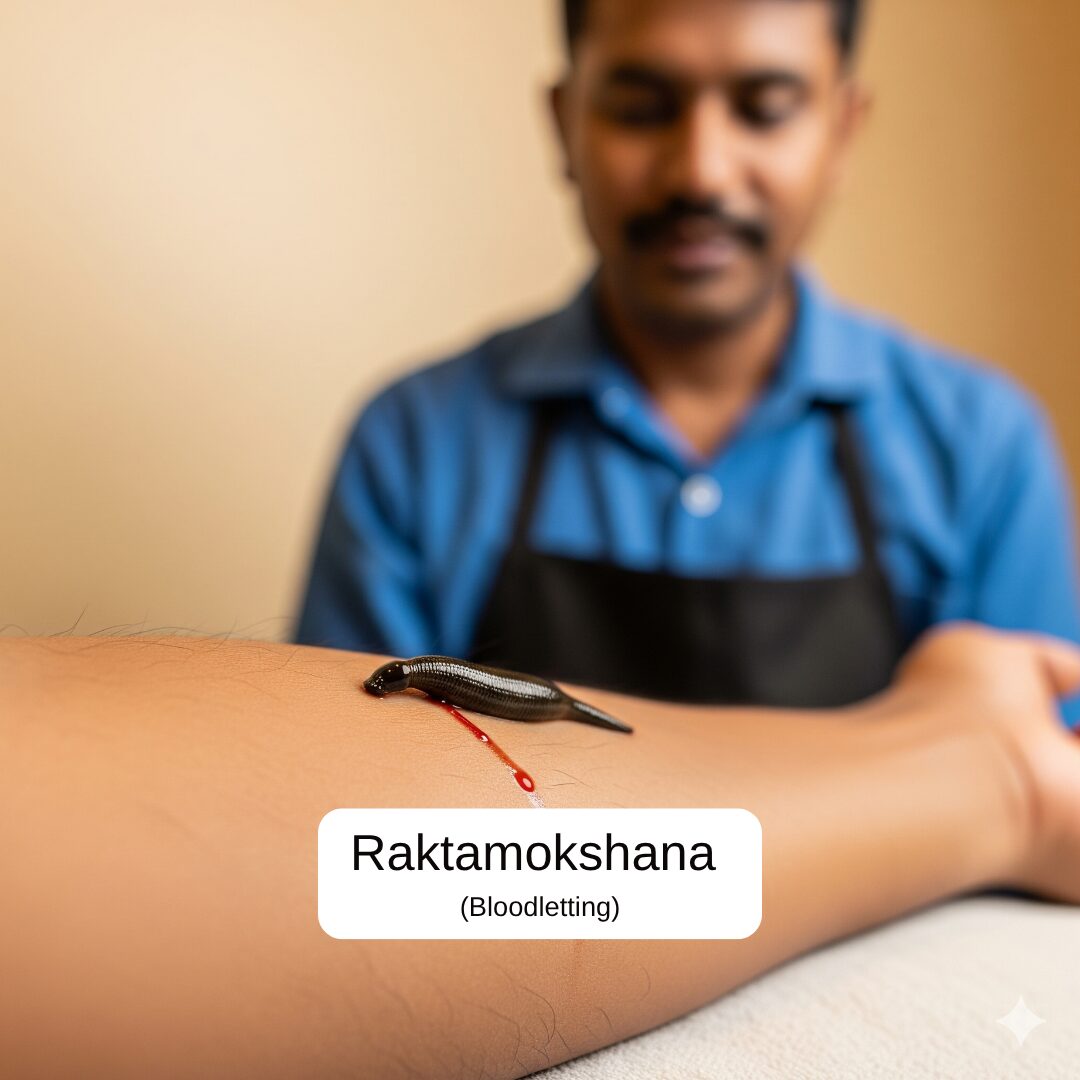
5. Raktamokshana (Bloodletting)
This therapy purifies your blood and treats conditions like acne, eczema, and other skin diseases. It is less commonly practised but highly effective in specific cases.
Key Health Benefits of Panchakarma in Ayurveda
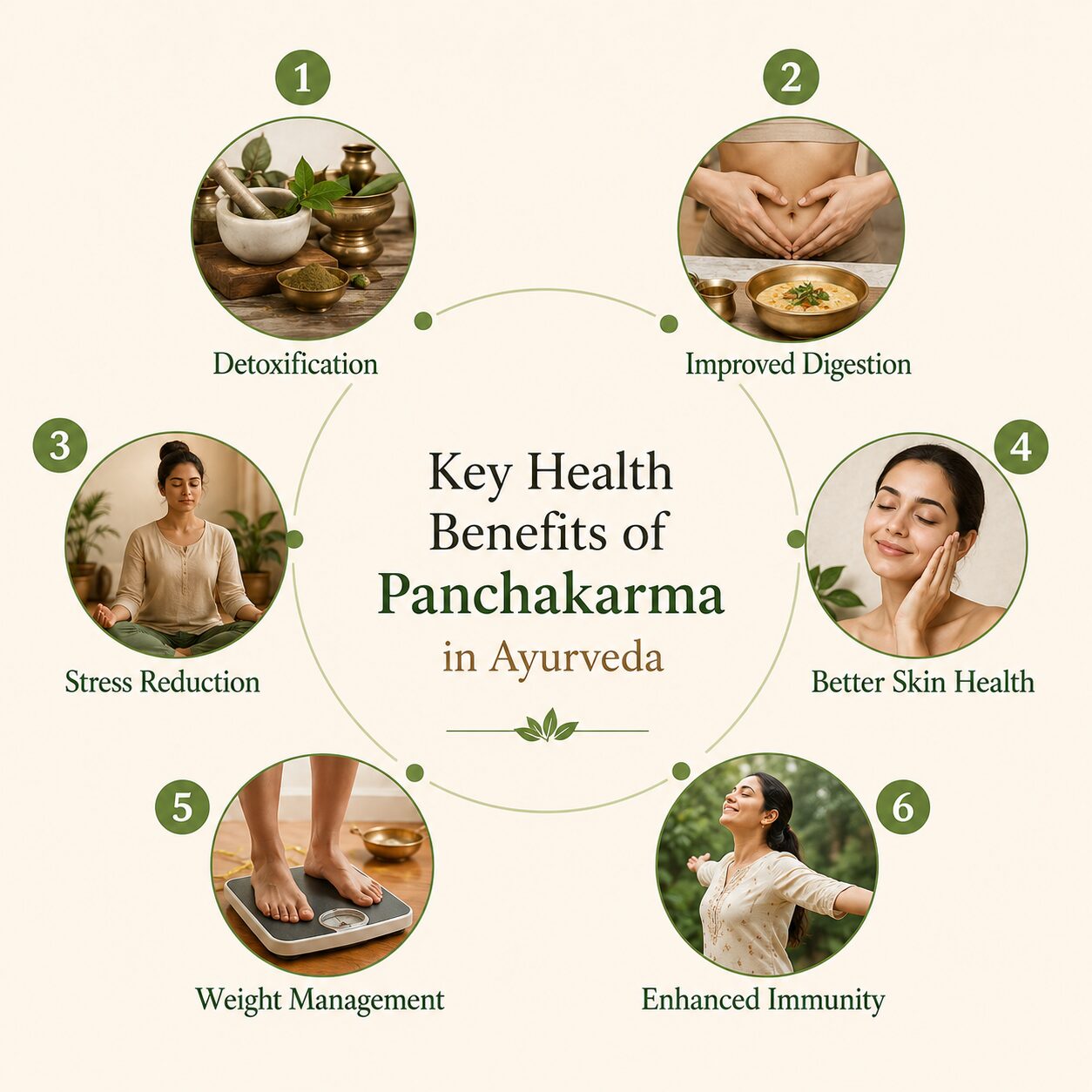
1. Detoxification
Panchakarma therapy removes deep-rooted toxins from your body. It clears your body of aama dosha(toxins). The Detoxification process is done after toxins come into your gut. From there, the nearest route removes toxins. Toxin removal helps you by improving overall health and immunity. Panchakarma is a completely natural process to detox your body.
2. Improved Digestion
Panchakarma strengthens your Agni (digestive fire). Aama dosha is the result of your sluggish digestion. When aama is removed, all the channels get opened. In open channels, prana flows effortlessly. This helps in better nutrient absorption and assimilation in your body.
3. Stress Reduction
Panchakarma processes calm your nervous system, especially Nasya. When you perform panchakarma according to your body’s needs, it not only provides you with a healthy body but also a healthy mind. Nasya is specifically designed to address the issues above the level of the clavicle. It works by reducing your anxiety, stress and mental fatigue. It fills you with new energy and enthusiasm.
4. Better Skin Health
By purifying the blood and removing toxins, Panchakarma gives you relief from various skin issues. Raktamokshana, Vamana and Virechana are the procedures that work wonders for your skin. Elimination of disease-causing toxins is the main motive of detoxification. When you get free of aama dosha present in your blood, disorders subside automatically.
5. Weight Management
Panchakarma helps in regulating your metabolism. It is mentioned in the Samhitas that panchakarma improves your digestive fire. Better and proper digestion leads you towards fast metabolism. Faster metabolism supports healthy weight loss. And in addition to this, when you undergo panchakarma therapy, some of your weight gets reduced in one go.
6. Enhanced Immunity
Panchakarma is a process that modifies your immunity. This property makes it a top choice for the treatment of autoimmune diseases. A cleaner body functions more efficiently, leading to a stronger immunity. It is a proven fact that Panchakarma therapy offers you a stronger immune system with concrete immunity.
Panchakarma – Complete Ayurvedic Procedure
Purva Karma (Pre-Treatment Process)
Before beginning the main Panchakarma, your body is prepared. This preparation helps in loosening of toxins and get them into your gut for easy elimination.
- Snehana (Oil Therapy): Internal and external oiling.
In Snehana, you are asked to have a fixed quantity of medicinal ghee on an empty stomach in the morning. Along with this, oil is applied to your entire body. This massage is done in a specific way. That helps the toxins move toward the gastrointestinal tract.
Snehana is given daily for three to seven days, as indicated
- Swedana (Sweating Therapy): Herbal steam therapy.
Sudation therapy is given every day immediately following the Snehana. A herbal decoction or normal water is used for steaming. Steam is given to you after snehana, which leads to sweating. Swedana helps break down toxins. It also boosts their movement to your gastrointestinal tract.
After three to seven days of Snehana and swedana, the doshas come into GIT. The specific Panchkarma method is provided based on your body type (prakruti) and condition (vikruti).
Pradhana karma(Main Detoxification process)
This is the main process, in which you undergo one of the five therapies of Panchakarma. In this phase, your Vaidya will give you medicines. These medicines expel the toxins present in your gut. In Nasya and Raktamokshan, expulsion is done through the nasal passage and blood.
- Therapy
- Purpose
- Vamana
- Removes Kapha dosha
- Virechana
- Expels Pitta dosha
- Basti
- Balances Vata dosha
- Nasya
- Clears Nasal passage
- Raktamokshana
- Blood purification
Pashchata Karma (After Treatment process)
After the therapy, a specific diet and lifestyle routine is followed. This is done to restore your lost digestive strength and to maintain the benefits.
After detox, the team follows a special plan for recovery. The Diet plan for that is named as Samsarjana Krama. It is being done to restore digestive power. Some Ayurvedic medicines are also used for Shamana, which helps pacify imbalanced doshas.
Following all the instructions is necessary for complete and long- term benefits.
Who Should Consider Panchakarma Therapy?
Panchakarma is a therapeutic procedure. If you are suffering from any chronic disease or a skin issue like psoriasis, you can opt for Panchakarma. If you are not suffering from any disease, you can still go for seasonal detoxification. Seasonal Panchakarma is done to sustain your health and for preventive care. Otherwise it is suitable for you if you have certain conditions, as mentioned:
- Chronic stress or fatigue
- Severe digestive issues
- Psoriasis
- Eczema
- Allergies
- Systemic lupus erythematosus
- Vitiligo
- Severe acne
- Gout
- Paralysis
- Asthma
- Sciatica
- Avascular necrosis
- Osteoarthritis
- Hormonal imbalance
- PCOD
- Hypothyroidism/Hyperthyroidism
- Infertility
However, it should always be performed under the guidance of a qualified Ayurvedic practitioner.
Who Should Avoid Panchakarma Treatment?
- Pregnant women
- During indigestion
- Children below 14 years
- Very weak or elderly individuals (without supervision)
- During acute illness
Always consult a qualified Ayurvedic doctor before going for Panchakarma.
Final thoughts
Panchakarma has become a preferred choice for those seeking detox and are tired of long-term allopathic treatments. It’s a personalised approach, without harsh chemicals for long-lasting benefits.
Panchakarma is a traditional Ayurvedic detox and rejuvenation therapy designed to cleanse the body of toxins (ama). It also restores balance among the three doshas: Vata, Pitta, and Kapha.
If you’re looking for a natural and effective way to reset your body, Panchakarma could be the perfect solution.
Frequently Asked Questions (FAQs)
1. Can I Do Panchakarma at Home?
No, you can’t do Panchakarma at home. It is not a general process that you can do on your own. It should strictly be done under the supervision of an Ayurvedic doctor.
2. How Long Does Panchakarma Take?
It varies according to the condition for which you are undergoing Panchakarma treatment.
- Short programs: 7–10 days
- Full detox: 21–28 days
3. Is Panchkarma painful or uncomfortable?
No, Panchakarma is not a painful process except for Raktamokshan. Blood letting can be slightly painful, like getting an injection.
4. How will I feel after Panchkarma?
After Panchkarma therapy, you will observe:
- Lightness in the body
- Better digestion
- Clearer skin
- Calm mind
5. How often should I go for Panchkarma?
- If you are healthy – Once or twice a year (Seasonal detox)
- If you are suffering from a disease, as advised by your Ayurvedic doctor
Get your personalised health check-up done at VVAC today. Your body can heal –sometimes it just needs the right guidance. At VVAC, we help you reconnect with that natural balance through authentic Panchakarma therapies.
Come, experience the power of Ayurveda and give your body the reset it truly deserves.
Research corner
- Panchakarma procedures for a healthy life that can be performed at home by Suman M, Pradeep KM
https://jaims.in/jaims/article/view/2853/4295
- Ayurveda Panchakarma treatment worked for a case of chronic spontaneous urticaria that didn’t respond to standard medicine. This is a case study by Krishna Rao S, A.K. Panda, Binitha P, Bikash Ranjan Kar, and Indu S.
https://www.sciencedirect.com/science/article/pii/S0975947622000080
- Panchakarma Therapy for Systemic Lupus Erythematosus – A Case Report by Chinju Thankachan, T. K. Sujan, Ambili Krishna