Guggulu is a rich source of anti-inflammatory, antioxidant, and hypolipidemic properties. Guggulu contains various medicinal properties. Guggulu assists in reducing fat and soothing nerves. Guggulu can be used for the treatment of arthritis, cholesterol, obesity, and skin problems.
What is Guggul?

Guggulu is a very special kind of oleo-gum-resin that comes from Commiphora mukul, which is a very spiny bush. This plant has been highly significant in Ayurvedic medicine since ancient times. The resin is obtained from the stem of the Commiphora mukul.
The tree is found in the dry areas of India, particularly Rajasthan and Gujarat, as well as the border areas of Pakistan. The tree has been used in Ayurvedic medicine for centuries. It is very useful for treating inflammatory conditions like arthritis, obesity, and dyslipidemia. The name for the tree is varied, and includes such names as Guggula, Guggul, Guggal, Gugar and Indian Bdellium.
Guggulu Shodhana (Purification of Guggulu): Ayurvedic texts say that raw guggulu can lead to skin rashes, irregular periods, diarrhea, headaches, mild nausea, and liver toxicity. This is especially true if taken in very high doses.
To remove the unwanted effects of raw guggulu, Ayurveda describes several purification processes (shodhana vidhi) using various substances, which not only take care of the adverse effects but also enhance the therapeutic activity.
During the purification process, guggulu is treated with special ingredients derived from organic sources, such as herbal extracts, cow urine, and cow milk. Some of the properties (both chemical and biological) of the purification ingredients may be absorbed into the guggulu during the purification process. Additionally, it is possible that some toxic or harmful elements present in raw guggulu are inactivated, detoxified, or eliminated during this process.
Chemical make-up of Guggulu: Guggulu, a medicinal plant used in traditional medicine systems, has proven to be a rich source of several biologically active compounds.
It is a mixture of volatile oil-like phytoconstituents containing terpenoidal components such as monoterpenoids, sesquiterpenoids, diterpenoids, and triterpenoids; steroids; flavonoids; guggul tetraols; lignans; sugars; and amino acids.
Therapeutic Actions of Guggulu: Benefits of Guggulu
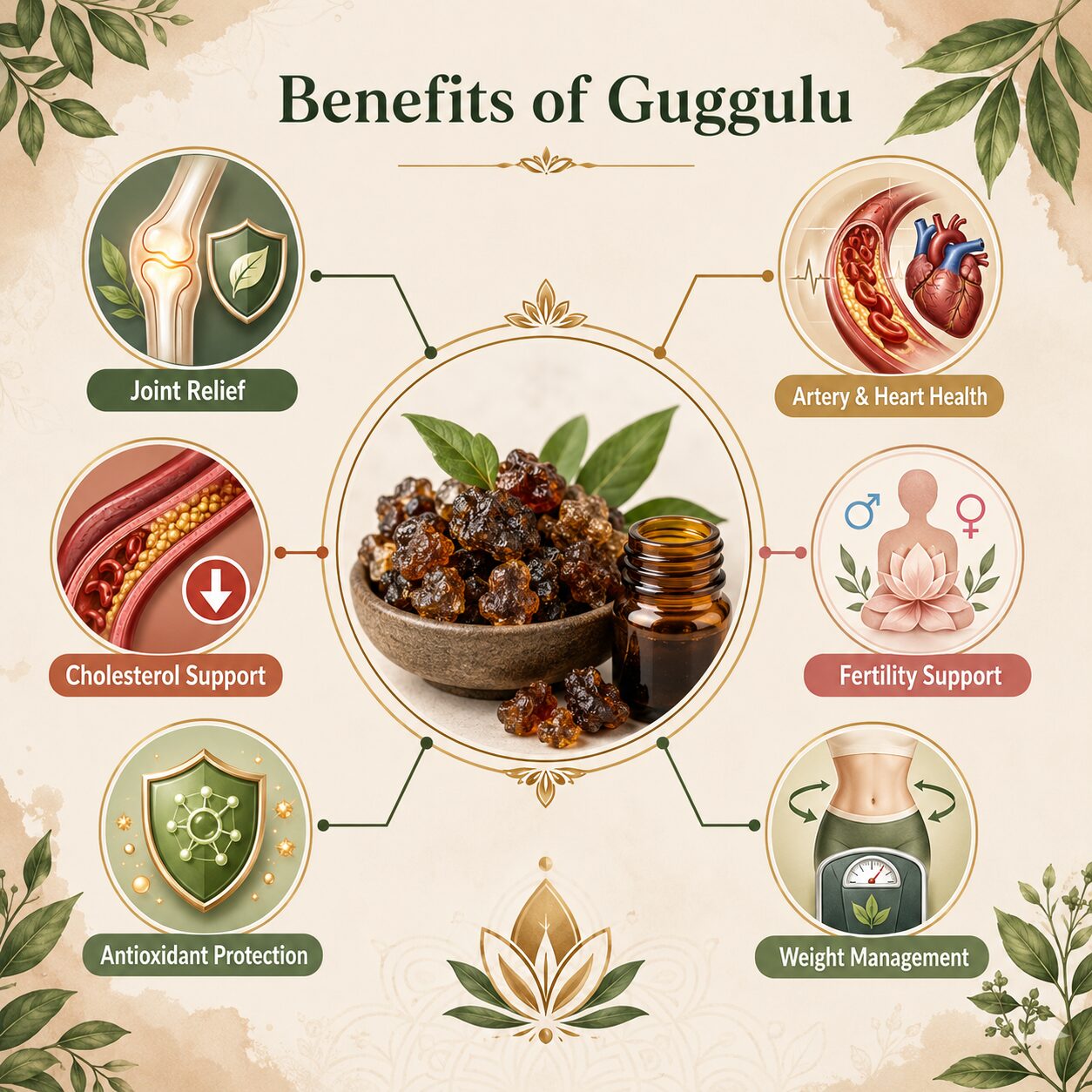
- Anti-inflammatory and Anti-arthritic activity: Guggulu has proven to be a powerful anti-inflammatory and anti-arthritic herb. A study comparing the effects of ibuprofen (an anti-inflammatory drug) and guggulu found that guggulu had significantly greater anti-inflammatory potential and hence effective in Ayurvedic joint pain relief.
- Hypolipidemic Activity: Guggulu contains active compounds like Z- and E-guggulsterones, which are responsible for natural cholesterol management, reducing triglycerides and increasing HDL.
- Antioxidant Activity: Guggulu possesses potent antioxidant properties, primarily driven by compounds such as guggulsterones. The metal-chelating ability of guggulsterones contributes to its significant antioxidant properties. It scavenges free radicals and prevents lipid peroxidation. It acts by inhibiting oxidative enzymes, protecting low-density lipoproteins (LDL) from oxidation, and scavenging reactive oxygen species (ROS), making it effective against cardiovascular diseases.
- Anti-atherosclerotic Activity: Atherosclerosis is considered an inflammatory disease. Guggulsterones act as inhibitors of nuclear factor-kappaB, a key inflammatory mediator, thereby reducing systemic inflammation.
- Antifertility activity: Guggulu resin is renowned for its Vrsya (aphrodisiac/fertility-promoting) properties, primarily used to support the male and female reproductive health. In addition, it increases glycogen and sialic acid levels. This suggests that it may be useful as an anti-infertility agent. Kanchanar guggulu is often used to manage polycystic ovary syndrome (PCOS), a common cause of female infertility, as it helps break down follicular cysts.
- May help with weight loss: It’s often claimed that guggul contains natural anti-obesity properties that help treat obesity by reducing fat and suppressing appetite. However, this natural metabolism booster supports weight loss when combined with a controlled diet and exercise.
Guggulu Dosage and how to take:
- When to take? Traditionally, guggulu is consumed after meals to reduce stomach irritation.
- How to take it? Anupana (Vehicle): It is usually consumed with warm water, honey or milk to aid its absorption.
- Formulation: It is often used in combination with other herbs for specific therapeutic purposes
Common Ayurvedic Guggulu Preparations
- Medohar Guggulu: Helps to manage weight, reduce excess fat and support metabolism.
- Kaishore Guggulu: It is commonly used for joint health and inflammatory skin problems.
- Yograj Guggul: Traditionally, it has been used for joint pain and inflammation.
- Triphala Guggulu: It is often used to improve joint health and metabolism. Due to its laxative properties, it is widely used to treat chronic constipation, hemorrhoids, fissures, fistulas, and in weight management by aiding metabolism.
Side effects and precautions while taking guggulu:
Guggul is generally safe when taken in recommended doses. However, taking it in higher doses may cause side effects, including:
- headache
- nausea or vomiting
- belching
- hiccups
- diarrhea
- skin rash
- Itching
If you have any concerns about side effects while taking guggulu, you should speak to a health professional.
FAQ
Q1. How should I take guggulu?
It is usually taken in tablet or capsule form, often 1-2 tablets twice a day.
Q2. What is the best anupana (vehicle) for guggulu?
Guggul is often recommended to be taken with warm water, honey or milk.
Q3. How does Guggulu help reduce inflammation?
Guggulu (Commiphora mukul) alleviates inflammation mainly due to its active components, guggulsterones, which function as natural anti-inflammatory substances by blocking the activation of nuclear factor-kappaB (NF-κB), an essential regulator of the body’s inflammatory response.
Q4. What is the best time to take guggul?
Guggul is available in various forms, like tablets, capsules, or powder forms, typically taken twice daily after meals. It is thought to enhance metabolism, aid in fat breakdown, and promote thyroid function. For optimal results: Pair it with a balanced diet and regular exercise.
Q5. How long can you take guggul?
Guggul is generally considered safe for short-term consumption, usually for a duration of up to 24 weeks (approximately 6 months). Some studies suggest it may be safely used for up to 75 weeks or even 2 years; however, it is important to follow the dosage instructions on the product label and consult a healthcare professional regarding long-term use.
Q6. Which Guggulu is best for arthritis?
In Ayurveda, Yogaraja guggulu and Simhanada guggulu are considered highly effective for arthritis. Yogaraja guggulu is most commonly used to reduce pain, stiffness, and swelling. Simhanada guggulu is especially recommended for rheumatoid arthritis and joint stiffness.