Have you ever wondered why turmeric has been used in every Indian house for cooking?
We could have used another spice instead, but why turmeric powder only ?
Is it for the colour, or is there something hidden behind this habit?
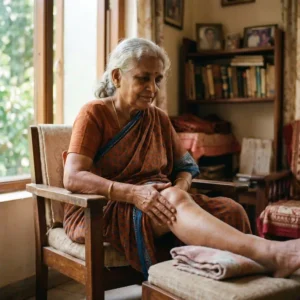
Our mothers and grandmothers apply turmeric as the first thing when we get cuts, add it to milk when we’re sick, and mix it in ubatans.
So, what makes turmeric powder so special? The answer is curcumin, its active compound. From healing wounds to boosting immunity, our very own ‘Golden Spice’ has played a significant role as a natural healer. This has now gained a reputation in modern science for its incredible health benefits.
In this blog, we’ll explore how turmeric powder works, what its benefits are, what curcumin is, the right dosage, daily use and much more.
What is Curcumin?
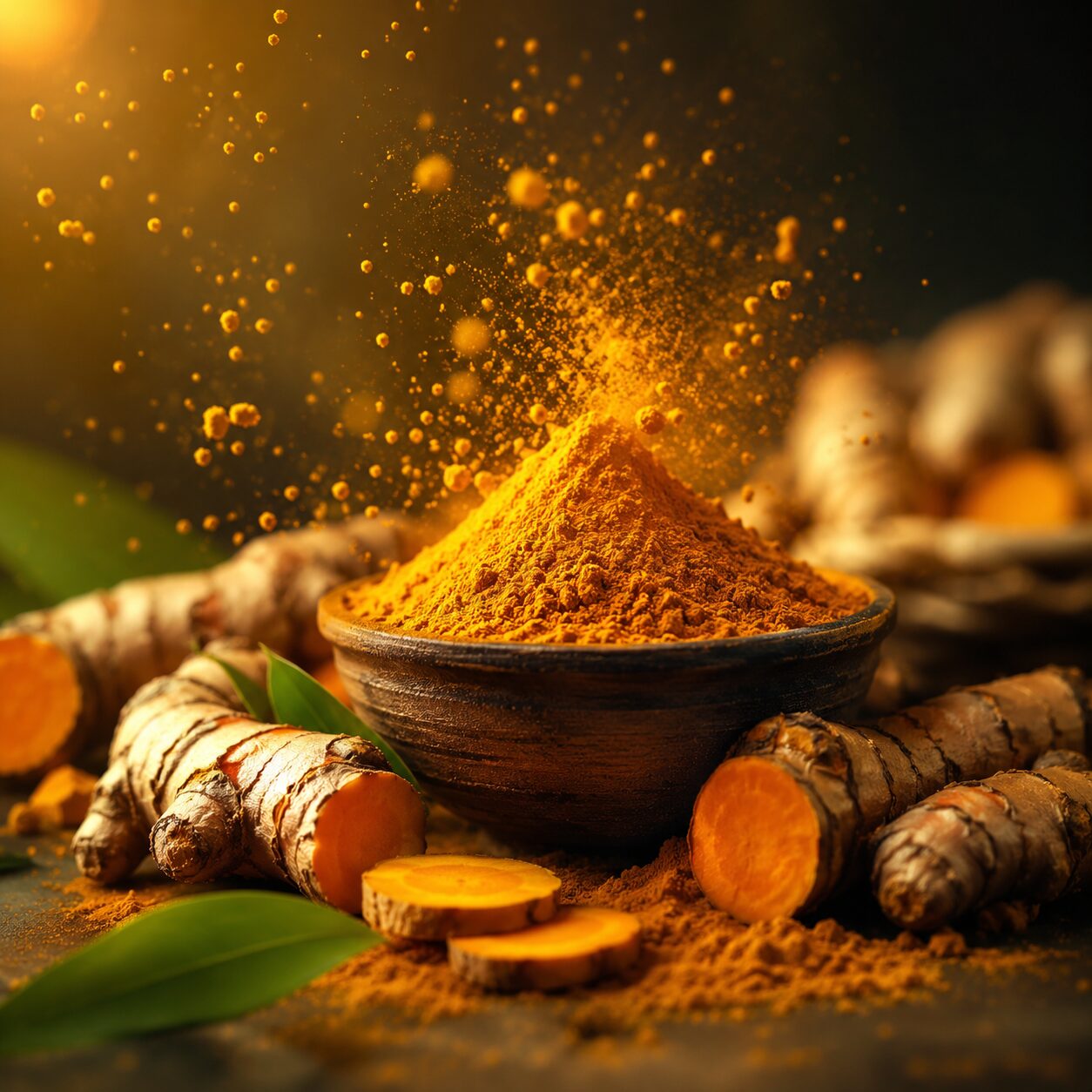
Curcumin is a naturally occurring yellow pigment present in the rhizome of Turmeric, Curcuma longa. Most of the therapeutic actions performed by turmeric are due to curcumin. Turmeric has been used in Indian kitchens and traditional Ayurvedic medicine for ages.
It has a wide range of medicinal benefits, including antiseptic, anti-inflammatory and cardioprotective activity. Many studies have shown its efficacy as a cancer-fighting and antiviral drug. This free radical scavenger is a must-use in your daily routine
Our Acharyas believed that turmeric balances your body’s dosha and promotes long-term wellness. Modern science is now beginning to validate this Ayurvedic principle.
Turmeric and Curcumin: What’s the Difference?
– Turmeric: The whole root or powdered spice
– Curcumin: The active compound extracted from turmeric
Curcumin makes up about 2–8% of turmeric. This is too little if you want to gather the effects of curcumin. Therefore, many supplements in concentrated form are available as Curcumin drops or tablets.
How to Increase Curcumin Absorption
Curcumin has low bioavailability in the human body on its own. To maximise its benefits:
- Combine it with black pepper, which contains piperine. This may enhance the absorption of curcumin by up to 2000%.
- Consume it with healthy fats like coconut oil or ghee
But, Ayurveda does not completely imply this fact that curcumin absorption depends solely on its combination with piper. There are many Ayurvedic medicines containing turmeric without black pepper.
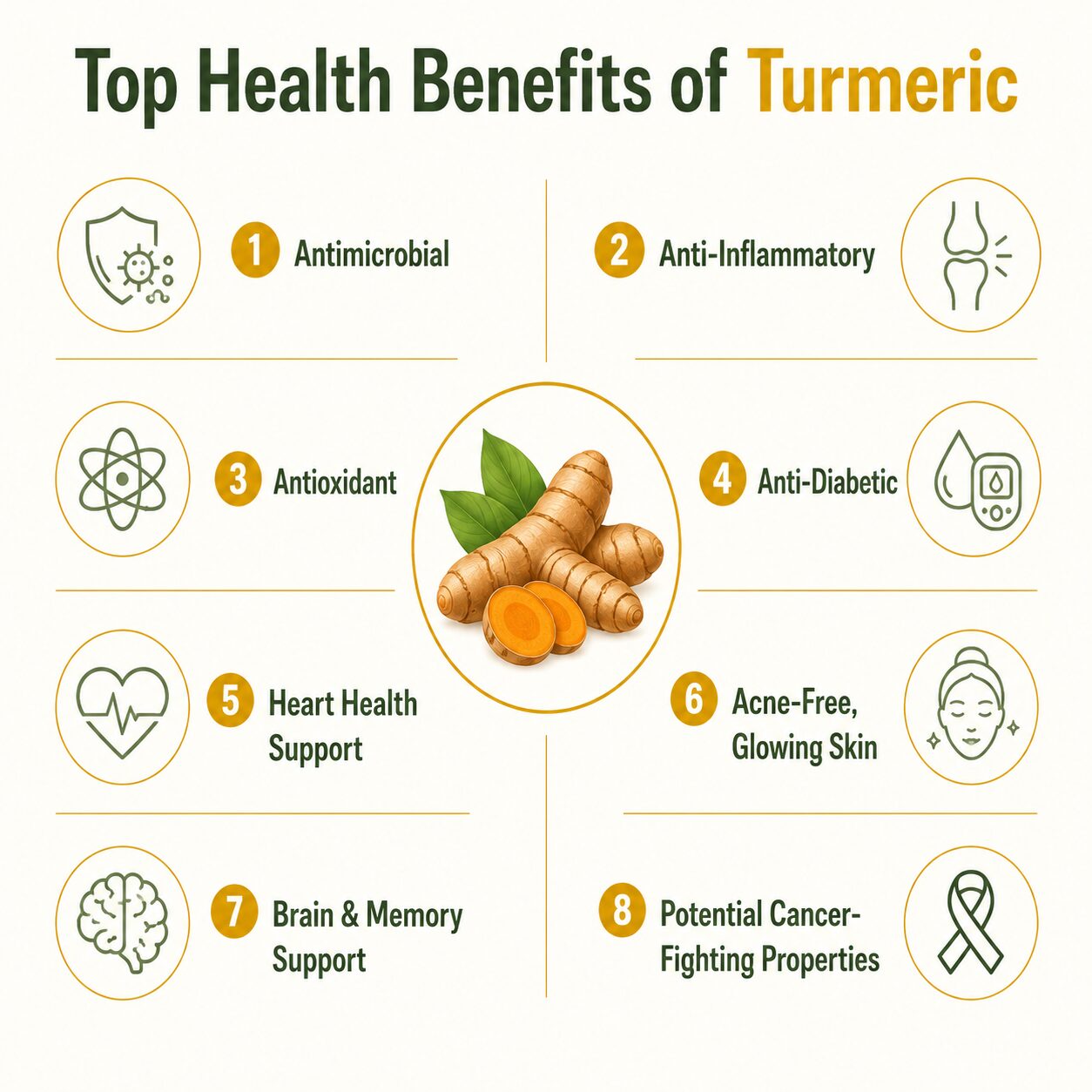
Top Health Benefits of Turmeric
1. Antimicrobial activity
Turmeric possesses a strong antimicrobial action. It inhibits the growth of many microorganisms, including bacteria, fungi, and protozoa. In our Indian households, when someone gets injured, the first thing applied is turmeric paste. Its antimicrobial activity has been highly appreciated since ancient times.
2. Anti-Inflammatory agent
Turmeric is a very effective anti-inflammatory agent. It helps in reducing inflammation at the micro level in your body. This makes it a natural substitute for allopathic inflammatory drugs. It lowers the inflammation by countering histamine, an inflammatory mediator. Turmeric handles both acute and chronic inflammation present in your body.
3. Antioxidant property
Turmeric neutralises harmful free radicals present in your body. This helps in protecting your cells from damage and ageing. This antioxidant property makes turmeric an effective protective shield, preventing damage to cells.
4. Anti diabetic action
Turmeric is a good anti diabetic agent. It reduces the sugar levels effectively. In Ayurveda, turmeric is said to be the most important medicine to fight diabetes. Modern-day studies also justify this fact.
5. Heart Health Support
Turmeric improves the function of the endothelial wall (the lining of blood vessels) through its lekhana guna (scraping activity). This plays a crucial role in maintaining cardiovascular health. In addition to this, it prevents your vascular system from chronic inflammation, preventing cardiovascular diseases.
6. Acne – free, glowing skin
Turmeric has been used as a part of skin care routine for ages. It is a proven fact that Haldi reduces blemishes and dark spots. It fights acne- causing bacteria and nourishes your skin from within. It provides you with healthy and glowing skin.
7. Brain Health and Cognitive Function
Studies suggest curcumin may increase the speed of neuronal tissue repair. This lowers the risk of neurodegenerative diseases like Alzheimer’s. In older adults, regular use of Turmeric may improve memory and cognitive functions.
8. Potential Cancer-Fighting Properties
Some research suggests that curcumin lowers the growth and spread of cancer cells. Curcumin has been found to possess anti-cancer activities through its effect on a variety of biological pathways. In various studies, the anti-tumour-promoting effects of curcumin were studied and proved. This could be a breakthrough in the treatment of this deadly disease. However, further human studies are needed to establish this fact completely.
How to Use Turmeric in Daily Life
In India, turmeric is an inseparable part of our cooking routine. However, there are some more ways in which we can include turmeric in our daily lives to enhance its benefits:
Golden Milk (Haldi Doodh)
A traditional Indian drink made with milk and a pinch of turmeric. This is the perfect drink to have at night, especially during winter. Golden milk boosts your immunity and promotes relaxation. This also helps you get a sound sleep.
Turmeric Tea
You can make it as an herbal tea with ginger. Have it on an empty stomach in the morning instead of regular tea. If you are Pitta prakruti, add dried ginger instead of fresh one.
Supplements
Curcumin capsules or drops are widely available in the market. If you are looking for a concentrated dose, then this can be an option.
Recommended dosage
Turmeric powder:
Internal use – 1 – 3 gm for an adult
External use – 2 – 3 pinches of powder in a face pack
Curcumin supplement:
Drops: 500 – 1000 mg along with a cup of water
Tablets/capsules: 1 – 2 tablets once or twice
It is better to consult an Ayurvedic doctor before starting turmeric in therapeutic dosage.
Possible side effects
Turmeric is generally safe when consumed in moderate amounts. However:
- High doses may cause digestive discomfort
- It may interact with certain medications, such as blood thinners
Precautions
- Take it with caution if you have an elevated Pitta or a Pitta prakruti.
- Pregnant women should consult a doctor before use
- Avoid, if you are allergic to curcumin
Final Thoughts
Turmeric is a bridge between ancient wisdom and modern science. It stands firmly as a natural remedy along with the effects of its various chemical constituents. What was once a part of traditional healing is now backed by scientific evidence highlighting its immense health potential.
This antioxidant-rich herb is a key to your overall health and well-being. Whether you use it in your kitchen or as a supplement, adding turmeric to your lifestyle can be a simple yet powerful step toward better health.
Embrace this golden spice, as the oldest wisdom holds the most powerful secrets towards a healthy life.
FAQs
1. Is it safe to consume turmeric every day?
Turmeric has been used in cooking for ages. It is safe for daily consumption in moderate amounts. However, high doses may lead to side effects. Turmeric as a supplement should be taken under medical guidance, especially if you are on medication.
2. What are the ways to consume turmeric?
Turmeric can be consumed in multiple ways. You may include it in curries, teas, smoothies, or as golden milk. Supplements are also available for a more concentrated dose.
3. Does turmeric help in weight loss?
Turmeric may promote weight loss by reducing inflammation and improving metabolism. It should be combined with a healthy diet and exercise.
4. In how much time does Turmeric show its results?
It may take a few weeks to months, depending upon the condition and desired result.
Research corner
- Impacts of turmeric and its principal bioactive curcumin on human health: Pharmaceutical, medicinal, and food applications: A comprehensive review by Mohamed T El-Saadony, Tao Yang, Sameh A Korma, Mahmoud Sitohy, Taia A Abd El-Mageed , Samy Selim, Soad K Al Jaouni, Heba M Salem, Yasser Mahmmod, Soliman M Soliman, Shaimaa A A Mo’men, Walid F A Mosa, Nahed A El-Wafai, Hamed E Abou-Aly, Basel Sitohy, Mohamed E Abd El-Hack, Khaled A El-Tarabily, Ahmed M Saad
https://pmc.ncbi.nlm.nih.gov/articles/PMC9881416/
- Turmeric, the Golden Spice
From Traditional Medicine to Modern Medicine by Sahdeo Prasad and Bharat B. Aggarwal.
https://www.ncbi.nlm.nih.gov/books/NBK92752/
- Curcumin: A Review of Its Effects on Human Health by Susan J Hewlings, Douglas S Kalman
https://www.ncbi.nlm.nih.gov/books/NBK92752/
- Curcumin Supplementation and Human Disease: A Scoping Review of Clinical Trials by Timothy M. Panknin, Carol L. Howe, Meg Hauer, Bhanu Bucchireddigari, Anthony M. Rossi and Janet L. Funk