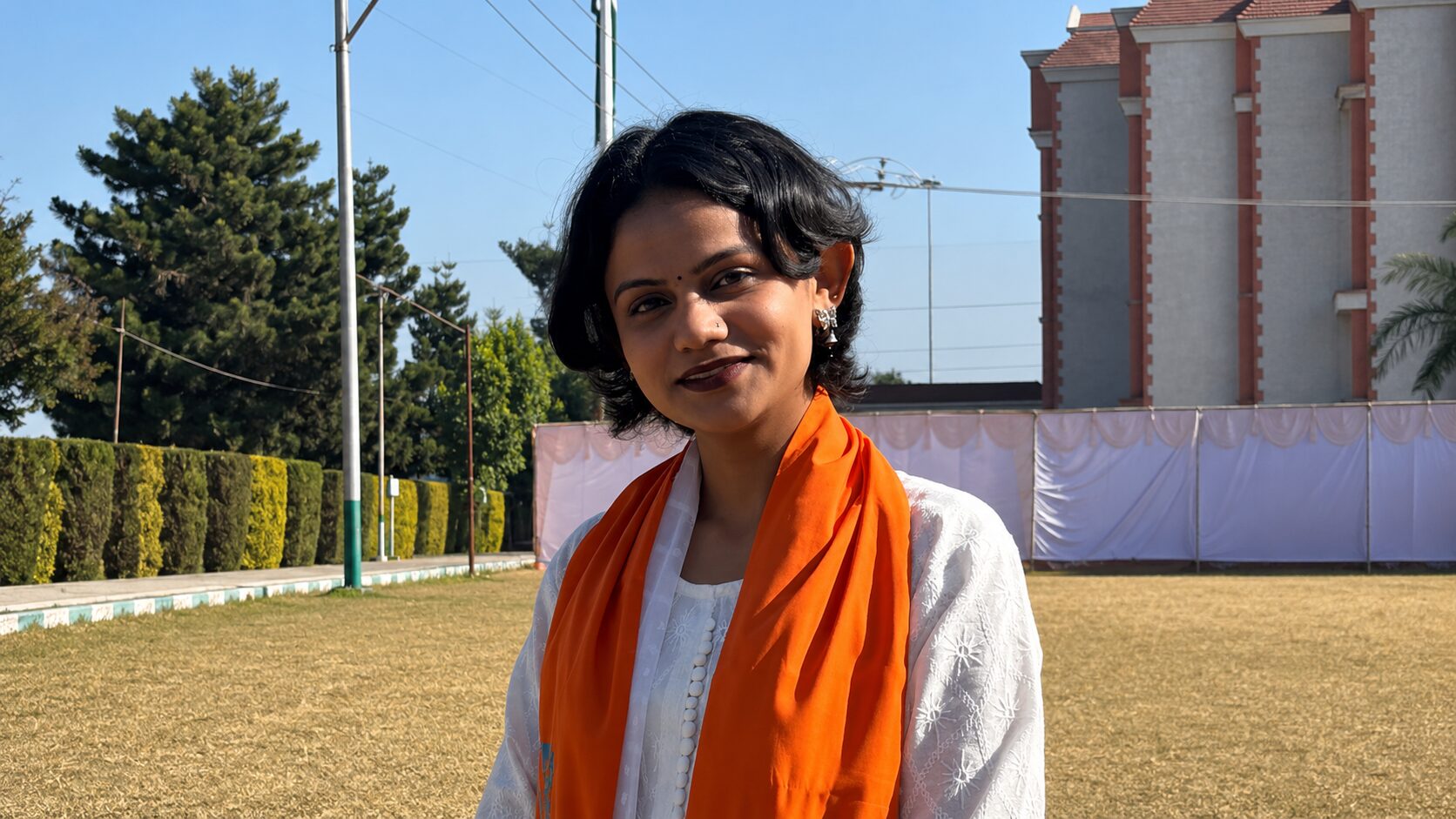
If you have experienced a sense of warmth, have a good digestive system, a sharp intellect, and are quick to anger, you likely have a Pitta-dominant nature. A medium build, oily skin, and an idealist nature are typical characteristics of a Pitta-dominant nature.
Sometimes you may be irritable, impatient, have skin irritations, stomach problems and cannot tolerate hot weather due to excess Pitta Dosha in your body.
This is due to the nature of Pitta dosha, which is made up of fire and water elements and is responsible for every change that occurs within the body.
You can say it is Agni (digestive fire) inside the body. The main seats of Pitta Dosha in the body are the small intestine, stomach, liver, spleen, heart, blood, eyes and sweat.
The most important function of the Pitta doshas is to digest food and then convert it into products that can be assimilated for nutrition and provide energy for various functions. The overall metabolic activities of the body depend on the state of Pitta dosha within the body
Understanding Pitta Prakriti helps in preventing diseases and formulating appropriate nutrition, lifestyle and treatment strategies.
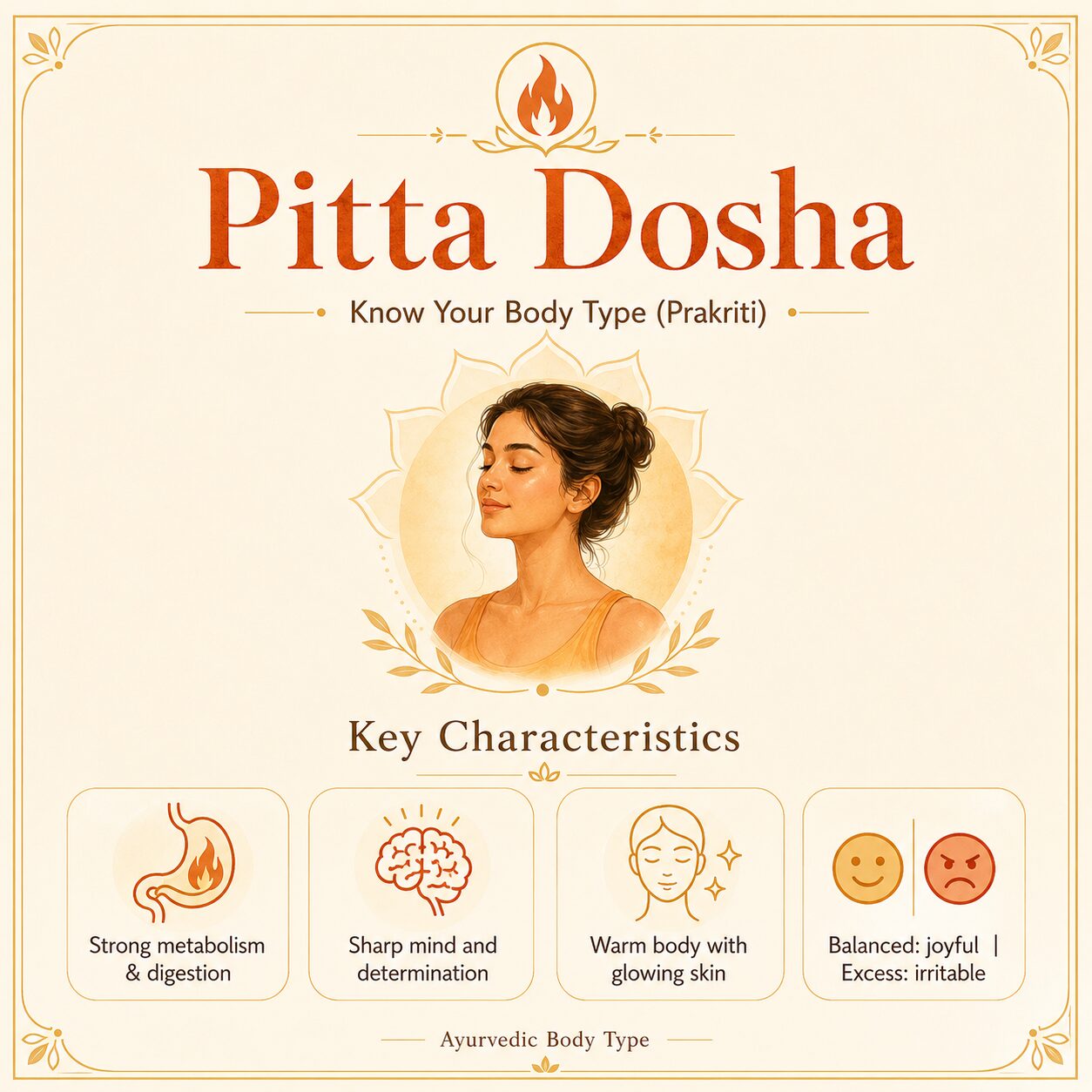
Pitta dosha characteristics: Know your body type (Prakriti)
- Physiological Impact: Pitta controls metabolism, eyesight, skin glow and liver function.
- Psychological Role: Individuals with a predominant Pitta often have high intelligence, quick learning abilities, determination, concentration, and a sharp, goal-oriented mindset.
- Physical Characteristic: Pitta-dominant body is associated with medium stature, warm body temperature, good appetite and glowing skin.
- Emotions: When Pitta Dosha is in moderation, it promotes happiness and joy; when in excess, it leads to anger, irritability, and jealousy.
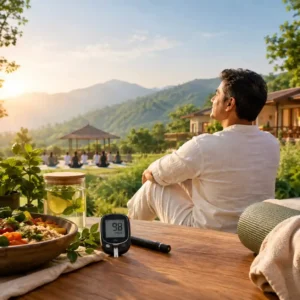
You can balance your aggravated Pitta dosha through a Pitta-pacifying diet. Include sweet and bitter tastes in your diet. Sour, salty and hot flavours are not recommended for Pitta prakriti.
- Cereals like wheat, barley, rice, oats are the optimal diet.
- Heat-treated vegetables like pumpkin, cauliflower, broccoli, cabbage, potatoes, corn, peppers, cucumber, lettuce, peas, and asparagus are beneficial and can also be taken in raw form.
- The fruits like pineapple, watermelon, apple, pear, grape, orange, grapefruit, plums, mango, figs, and dates have a calming and harmonising character and have a natural cooling effect on the increased element of fire.
- Most legumes are suitable: beans, mung, tofu, soy, peas, chickpeas.
- You can take milk that is the most suitable for its cooling nature.
- Take coconut, almond or sunflower oil sweetened with cane sugar, maple syrup or honey.
- Avoid hot spices and can take a few selected spices such as: coriander, fennel, cardamom, turmeric, mint, lemon grass, cumin, etc.
- You need a lot of fluids to hydrate yourself. The best drinks are pure water, mineral water, milk, herbal teas or fruit juices.
- Avoid coffee and other hot drinks.
Lifestyle Modifications to Balance Pitta Dosha:
Although Pitta dosha has a hot and sharp nature, it benefits from cool and soothing things.
- You can engage yourself in cooling or refreshing activities like swimming, walking in nature (but not in the hot sun).
- Your activities should be moderate. Avoid overwork and maintain balance in your daily routine (Dinacharya).
- Practising yoga, meditation and breathing exercises (especially Sheetali Pranayama) daily helps you stay calm.
- Wear breathable and light-colored clothing to regulate body temperature and prevent sweat build-up.
- Spend your time in nature, near water and in shady, cool places.
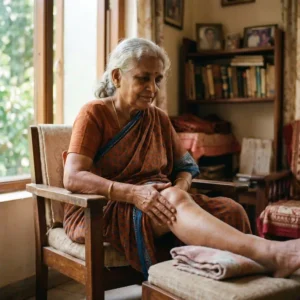
- You can massage your body with cooling oils such as coconut and sunflower oil.
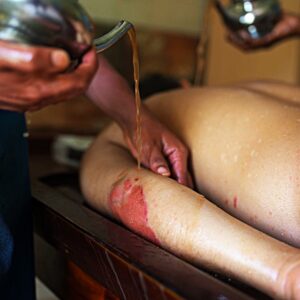
Panchakarma Modalities at Vaidyaratnam Vrindavan Ayurveda Chikitsalayam: Ayurveda Panchakarma treatment to remove excess Pitta
Doctors at VVAC create personalised Panchakarma treatment plans for each individual to promote a state of harmony and help you feel healthy—inside and out
- Virechana (Purgation): Virechana helps to detoxify the body by removing vitiated Pitta and Rakta (blood) from the body. It is recommended for treating conditions such as inflammation, skin and gastric issues.
- Raktamokshana (Bloodletting by Leech Therapy): It is used to treat various skin problems like inflammation, infections and irritation caused by aggravated Pitta.
- Ghrita Pana (Medicated Ghee): Intake of ghee with bitter and cooling properties helps to nourish and balance Pitta in the body.
- Shirodhara: Pouring cooling medicated oil or buttermilk on the forehead to relieve Pitta-induced stress, hyperactivity, headache, insomnia, and high blood pressure.
FAQs
1. Which foods help reduce Pitta Dosha?
Cooling foods like cucumber, melon, mint, coconut water and fruit juices help calm excess pitta and restore balance.
2. What are the best drinks to balance Pitta Dosha?
Buttermilk, coconut water and herbal tea containing rose or mint are great options to cool the body.
3. Can Yoga and Pranayama help in balancing Pitta Dosha?
Practising cooling yoga postures along with Pranayama like Sheetali and Anulom-Vilom can effectively control Pitta and calm the body and mind.
4. Which season in India aggravates Pitta Dosha the most?
Pitta levels increase during intense heat and humid monsoon season, making symptoms more pronounced and emphasising the need for cooling measures.
5. Can aggravated Pitta Dosha be treated with Ayurveda?
Ayurveda offers simple, gentle dietary, herbal supplements, and lifestyle guidelines to assist the body in managing and balancing Doshas naturally.
6. How can I quickly balance Pitta?
Drinking cooling fluids, staying in shady areas, practising deep breathing, and eating light, non-spicy foods can provide immediate relief. For long-term balance, a healthy lifestyle and dietary habits are essential.