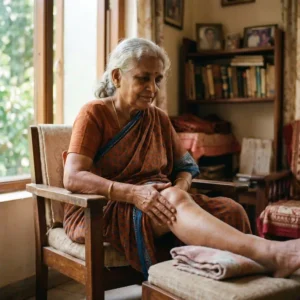
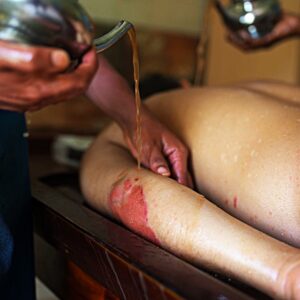
Have you ever realised how stress, pollution, and fast-paced living are draining you? What if a few drops of oil, used the right way, could help you reset your body and mind every single day? Nourish. Balance. Heal. Ayurveda’s oil therapies do it all naturally.
In Ayurveda, there is a special position of oils. These are part of many Ayurvedic therapeutic procedures. Oils deeply nourish your skin and tissues, not just moisturise them. Oils are the vectors of nourishment and strength for your body, mind and soul. An oil or combination of oils balances all the doshas.
In Ayurveda, various therapies are mentioned through which you can use oils. These therapies range from a daily ritual of Abhyanga to the therapeutic process of Basti. Each therapy has its own route that implies its different benefits.
In this guide, we’ll read about four powerful oil therapies: Abhyanga, Nasya, Basti, and Gandusha. We’ll learn how these therapies work, what their benefits are and how you can include them in your routine.
Abhyanga (Oil Massage)
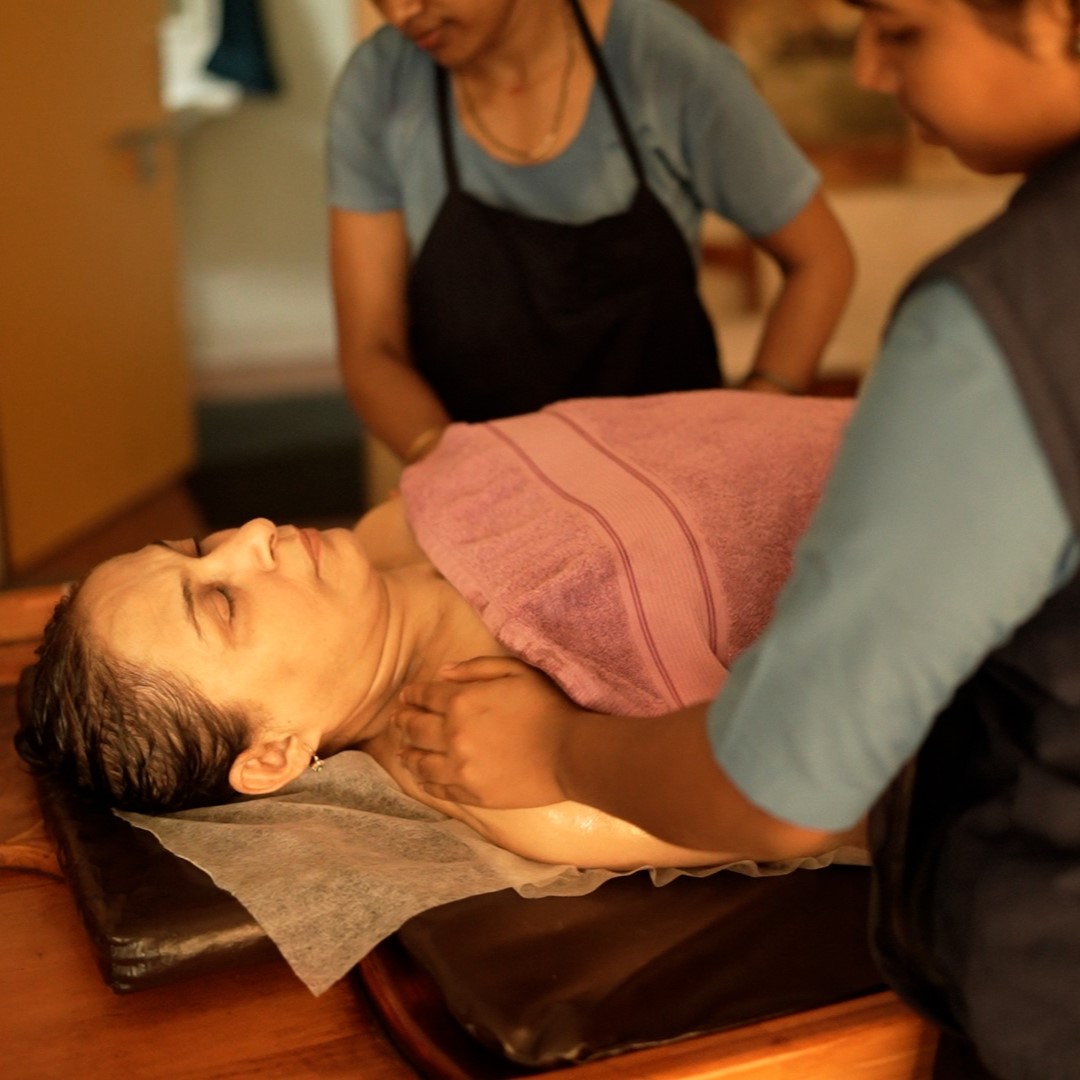
Abhyanga or Abhyangam is the process of applying warm oil all over your body. It is a part of the Ayurvedic daily routine, i.e. Dinacharya. In this therapy, medicated oils are used for their healing properties. Other than this, you can use simpler oils like sesame or coconut oil if you are doing it as part of your daily routine.
When massaged properly, the oil penetrates deep into your skin to provide nourishment to the tissues. Strokes used during the process relax your body, improve circulation and calm your nervous system.
Health Benefits:
- Balances Vata dosha
- Enhances blood flow and lymphatic circulation
- Reduces stress and anxiety
- Improves skin texture and complexion
- Promotes better sleep
- Strengthens muscles and joints
Procedure:
1. Heat the oil in a double boiler until it gets lukewarm.
2. Massage your whole body using circular motions over the joints and long strokes along the limbs.
3. Leave it on for 15–30 minutes.
4. Take a bath using warm water.
Best time:
Morning – for energy
Evening – for relaxation
Best oil:
Vata – Sesame oil
Pitta – Coconut oil
Kapha – Mustard oil
Nasya (Nasal Oil Therapy)
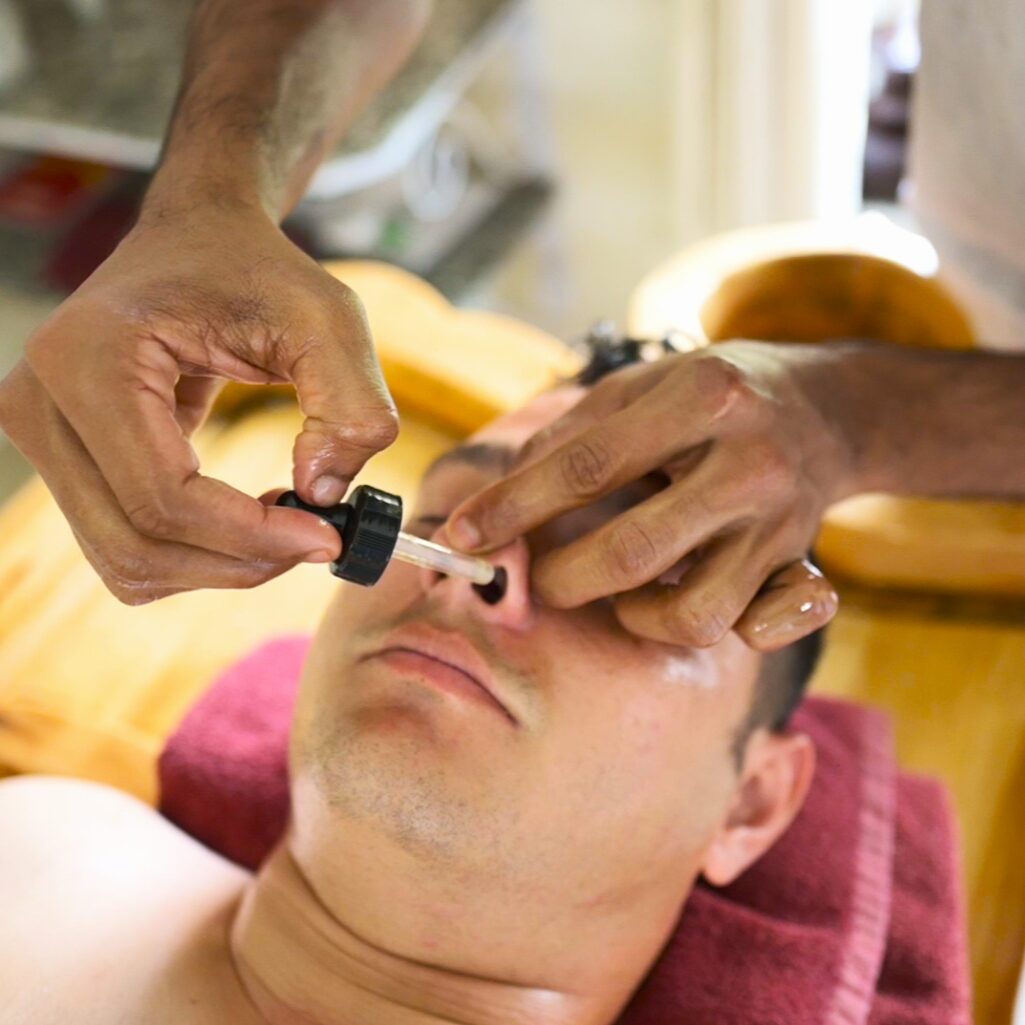
Nasya is a therapy involving the installation of oil drops into your nostrils. Like Abhyanga, it is also a part of Dinacharya. Besides medicated oils, herbal powders, decoctions or extracts are used as a medium.
In Ayurveda, the nose is considered the gateway to the brain. Through Nasya, medicine reaches all your senses and nourishes them as well as the brain cells. Nasya cleanses the region above the level of your shoulders and strengthens the structures present in that area.
Health Benefits:
- Clears the sinuses and nasal passages
- Improves mental clarity
- Supports respiratory health
- Reduces headaches and allergies
- Enhances skin and hair health
Procedure:
- Lie down on your back with your head tilted by 15°.
- Massage your forehead and the area around the nose with warm hands.
- Administer 2 drops of warm herbal oil into each nostril.
- Inhale gently and stay in this position for 5 minutes.
- Spit out the phlegm and oil; do not swallow.
Best time: Empty stomach in the morning
Best oil: Anu oil, Goghrita (Cow’s ghee)
Note: Avoid if you are suffering from a runny nose, right after a meal
Basti (Enema Therapy)
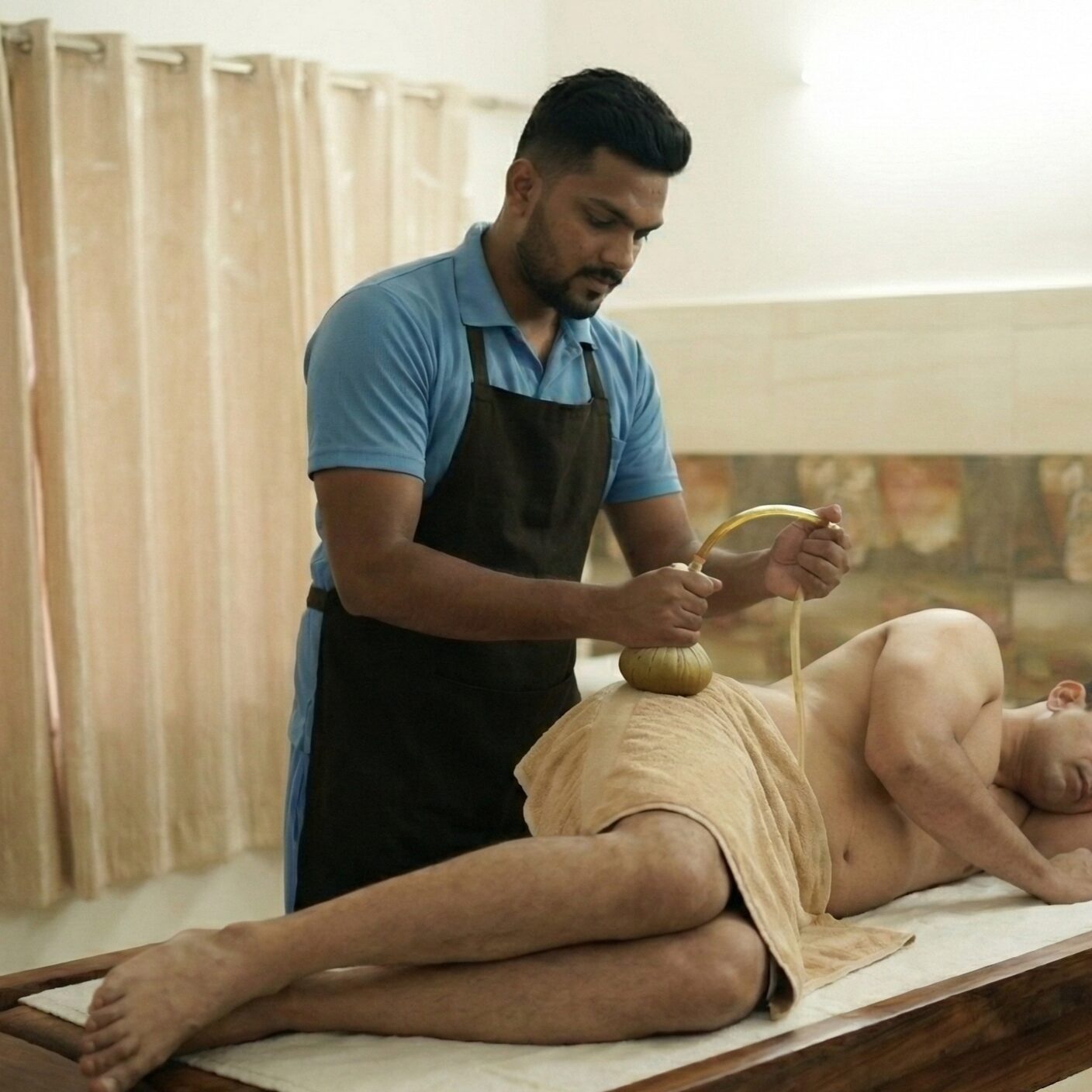
Basti is one of the five Panchakarma treatment therapies. In Basti, medicated oil is administered through the anal canal. Generally, we take medicines through the oral route, in Basti medicine is given through the lower opening. Apart from oil, milk or herbal decoctions are also used along with salt and honey. Salt and honey fasten absorption and break down the dosha association.
Basti is mainly of two types, Niruha and Anuvasana Basti. In Niruha, a type of Basti medicinal decoction is used. In Anuvasana Basti, medicated oils are used. There is another type, named as Matra Basti. In this, oil is administered in smaller amounts than Anuvasana Basti.
Health Benefits:
- Balances Vata dosha – best therapy
- Relieves constipation and bloating
- Detoxifies the body
- Supports joint and muscle health
- Strengthens the nervous system
Procedure:
- Lie down on your left side.
- Straighten your right leg and bend your left leg towards your body.
- The therapist will insert the apparatus into your anal canal.
- Then, the therapist will administer oil.
- Stay in this position for 30 minutes.
- Follow the instructions given by your doctor.
Note: Basti must always be done under the supervision of your Ayurvedic doctor. Don’t try to perform this on your own.
Best time:
Niruha Basti – Empty stomach
Anuvasana Basti – After having a light meal
Best oil: Your consultant will choose the right oil for you.
Oil Pulling (Gandusha/Kavala)

Gandusha is the process of swishing oil in your oral cavity after brushing. In this therapy oil is used to strengthen your oral cavity and to dissolve the toxins present in it. You should do Gandusha daily or at least two to three times a week.
Just like Gandusha, another therapy is there, named as Kavala. In this, a paste of medicines is used instead of oils. You need to do it until the toxins dissolve into the medium completely. This brings freshness to your breath and nourishes your oral cavity.
Health Benefits:
- Removes toxins from the mouth
- Improves gum health
- Freshens breath
- Strengthens teeth and gums
Procedure:
1. Take one tablespoon of lukewarm oil.
2. Swish it in your mouth for 10 to 15 minutes; do not swallow.
3. Spit it out and rinse with warm water.
Best time: After brushing in the morning
Best oil: coconut oil, sesame oil
Final thoughts
These Ayurvedic oil therapies are the way to reconnect your mind and body with the rhythm of nature. These are not just wellness trends, but time-tested treatment modalities that you can inculcate in your routine.
From Abhyanga to Gandusha, these transformative practices provide you with a path towards a healthy and harmonious life. Adding these into your daily routine can prevent you from future imbalances and correct the present ones.
These are the age-old wisdom of our ancestors, which we need to carry forward to maintain a healthy and happy life.
Frequently Asked Questions (FAQs)
1. Is Basti safe to do at home?
Basti is not a simple process like other therapies. It is a complete therapeutic process done for treatment. It must be done under the supervision of your Ayurvedic doctor.
2. Are there any side effects of these therapies?
If you do them correctly, there are generally no side effects. However,
- Using the wrong oil may aggravate an imbalance.
- Overuse or improper administration of Nasya can irritate nasal passages.
- Basti without following instructions may lead to complications.
3. After how much time can I see the results?
It depends on your desired results. Some of them, like relaxation, you can achieve in a few days. Dosha balance and detoxification may take longer.
4. Can I include all these therapies in my daily routine?
Yes, you can include these therapies in your daily routine, except Basti. For better guidance, contact a nearby Vaidya.
5. Are Ayurvedic oil therapies suitable for modern lifestyles?
Yes, you must undergo these therapies to prevent yourself from the harmful effects of the modern lifestyle. These therapies ensure the prevention of stress, pollution and related issues.
At VVAC, we believe wellness begins with balance. Inspired by traditional Ayurveda, we offer oil therapies to find that lost balance. To help you reconnect with your soul. Our experts create a personalised guide for your overall health and wellness.
Research corner
- AYURVEDA ABHYANGA (MASSAGE) PROCEDURE – A REVIEW by Rajendra Garg, Gopesh Mangal, Dinesh Sharma
https://www.researchgate.net/publication/344745102_AYURVEDA_ABHYANGA_MASSAGE_PROCEDURE_-_A_REVIEW
- Importance of Gandusha Dharana in Daily Life w.s.r. to Oil Pulling by Kumar Netam Y, Sharma A, Pali V
https://jaims.in/jaims/article/view/2179/2793
- Critical Analysis on Action of Basti: A Review by Rohan Agalcha, Kshipra Rajoria, Sarvesh Kumar Singh, Nivedita Sitpal
https://www.researchgate.net/publication/374756162_Critical_Analysis_on_Action_of_Basti_A_Review
- Nasya Karmukta with special reference to pharmacodynamics of Nasya by Moharana D, Bhosale S, Guddad S, Hiremath V, Badrinath G
https://jaims.in/jaims/article/view/2337/3110