If you have ever searched for Panchakarma treatment, googled Panchakarma near me, or wondered why your friend swears that detox works better in one season than another, this article will finally make everything clear. Ayurveda doesn’t just care what “Panchakarma Detox” you do; it cares about the time of the season, too.
Yes, the timing of Panchakarma therapy is as important as the therapy itself. Your body behaves differently in summer, winter, monsoon, and autumn. Your digestion, immunity, energy, hormones, metabolism, and everything else follow a seasonal rhythm. And Ayurveda uses this rhythm to perform Panchakarma at the exact time your body is MOST ready to detox.
What Exactly Is Seasonal Panchakarma?
You already know Panchakarma is Ayurveda’s most powerful detox and rejuvenation system. However, seasonal Panchakarma, also called Ritucharya Panchakarma means aligning the Panchakarma treatment with the natural seasonal changes and getting deeper cleansing, immunity, enhanced results, and long-lasting benefits.
As per Ayurveda, each season brings a natural dosha imbalance. For instance, summer increases Pitta, monsoon increases Vata, winter increases Kapha, spring melts Kapha, and autumn aggravates Pitta.
Hence, it is important to note that classical Panchakarma can’t be randomly chosen; instead, it should be based on proper Ritu to enhance the effects of the treatment. Some of the pointers based on which the panchakarma treatment is chosen are –
- Which type of dosha is going out of balance
- Where the toxins (amas) are getting stored in the body
- What your body can expel naturally
Therefore, seasonal Panchakarma feels effortless, deep, and extremely effective because nature during the time works with you, not against.
Why Timing Matters: The Ayurvedic Logic
Every season has its own personality, like the temperature shifts, humidity rises or falls, daylight changes, winds become dry or heavy, and even microbes in the environment fluctuate. Thanks to this incredible human body being intelligent and adaptive, it constantly adjusts itself to these climatic changes. But here’s the catch:
While the body adapts to each season naturally, it pushes one particular dosha out of balance. This slow, subtle imbalance keeps building up in the form of ama (toxins) inside us. As a Result? When a dosha accumulates beyond its healthy limit, it creates imbalance, weak digestion, and leads to toxin buildup (ama).
Ayurveda’s View:
Nature and the human body are mirrors. As the climate changes outside, the doshas shift inside. This subtle rhythm affects your digestion, immunity, mental clarity, metabolism and even your emotional stability. So, what happens when doshas rise in each season?
- Heaviness, mucus buildup, and slower digestion in case of aggravated Kapha during winters
- Heat, acidity, and irritability due to imbalanced Pitta happen when temperatures rise outside
- Monsoon is the most unstable period in Ayurveda. Vata becomes hyperactive and causes gas, bloating, constipation, joint pain, stiffness, insomnia and more issues related to anxiety or restlessness.
Ayurveda teaches that every dosha has a season when it becomes naturally weak or naturally excessive. Instead of fighting the body, Seasonal Panchakarma works with the body’s biological changes, making detoxification more effective and longer-lasting. Hence, doing Panchakarma at the right season accelerates results dramatically.
Scientific Support For Seasonal Detox:
Besides Ayurvedic logic, modern research strongly supports seasonal panchakarma detox. Like:
- Gut microbes change with seasonal change, meaning variations in gut bacteria diversity, immune activity, and digestive enzyme strength.
- Hormones like melatonin, cortisol, and serotonin cycle vary depending on daylight exposure, affecting metabolism, sleep quality, inflammation, stress resilience, and more. Hence, this supports Ayurveda’s claim that autumn and winter strengthen digestive fire, making deeper detox possible and lasting.
- During the season change, our immunity is compromised and drops in monsoon, early winter, or spring allergy period, making Panchakarma therapies like Basti & Nasya very effective for boosting Ojas.
Different Panchakarma for Different Seasons
Spring (Vasanta) – The Best Time for Kapha Detox
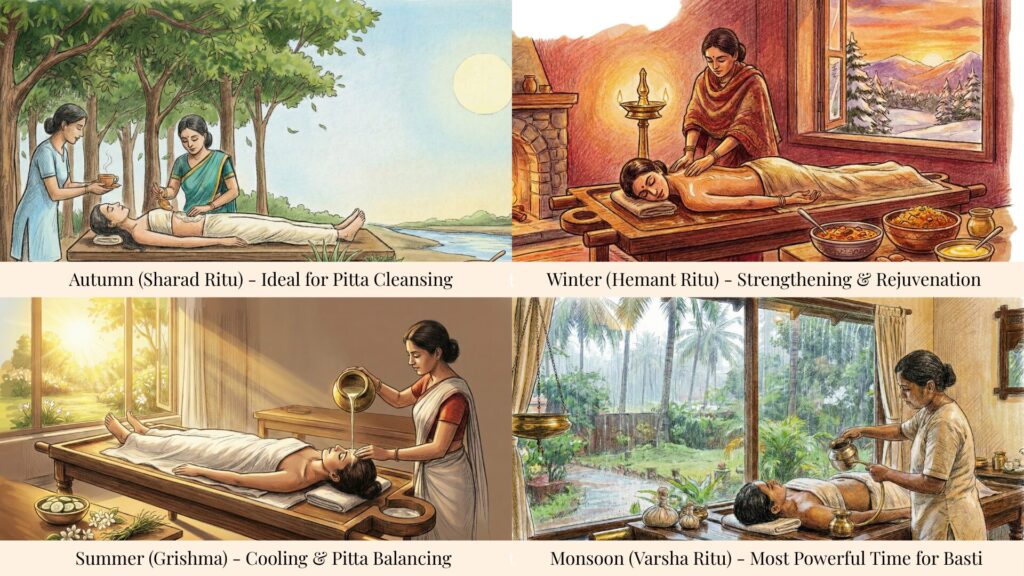
Kapha buildup causes mucus, heaviness, sluggish digestion, and other issues like allergies and sinus. Best Panchakarma therapies like Vamana, light Niruha Basti, and Udwarthanam clear mucus, improve allergies and sinus issues, enhance metabolism, and boost digestion.
Summer (Grishma) – Cooling & Pitta Balancing
During the summer season, our body overheats, and it dries, which requires Panchakarma treatments like Abhynagam, Shirodhara, and Nasya to cool down the body temperature. Some of the effective benefits of this Panchakarma include calming irritability, improving sleep, reducing heat rashes, acidity, and protecting against heat fatigue. However, it should be duly noted that heavy panchakarma is avoided because your digestion is already weak in summer.
Monsoon (Varsha Ritu) – Most Powerful Time for Basti
Here, the rain pours, and the Vata levels aggravate in the body, causing dryness, gas, bloating, constipation, and other serious issues that require immediate care. Most suitable Panchakarma treatments to pacify the elevated Vata are Basti, Abhyangam, Swedana, Nasya and more. It heals digestion, reduces lower back pain, treats sciatica, calms anxiety, and deep detox due to humidity. Actually, it is the monsoon season that is the best time for colon cleansing and rejuvenation.
Autumn (Sharad Ritu) – Ideal for Pitta Cleansing
If you are searching for Panchakarma near me for acidity, psoriasis, rashes, or inflammation, the autumn detox is perfect. After the rain, Pitta dosha peaks, where Panchakarma therapies give relief from acidity, improve liver health, balance the hormones, calm digestion, and more.
Winter (Hemant Ritu) – Strengthening & Rejuvenation
Winter brings cool and dry air, which increases strength but also aggravates Kapha. If we look closely, this season is the time to build and not detox the body deeply because your body absorbs nourishment the most. Speaking of the most effective panchakarma therapies during winters are Abhynagam, Swedana, Light Basti, Rasayana therapy, and more. Subsequently, the benefits from the classical treatments in Ayurveda are strong immunity, stable digestion, prevention of colds, congestion, increased stamina, and improved mental clarity.
Benefits of Doing Panchakarma Seasonally
If you have ever pondered why Ayurveda insists on doing Panchakarma at the right time, there is a big secret. When you adopt “Ayurveda First” and understand the science behind Panchakarma treatments, you match the therapy with the natural dosha cycle with enhancing the multiplied benefits.
- Faster Detox: Nature is already pushing the same dosha out, so Panchakarma targeting the imbalance dosha allows the treatment to go deeper. Also, because the body is already preparing to cleanse itself.
- More Sustainable Results: Since digestive fire remains stable, the chances of relapse are highly unlikely in a short period.
- Balanced Digestion: As mentioned earlier, season-specific Panchakarma restores your Agni naturally.
- Better Hormonal Balance: Hormones like cortisol, insulin, melatonin, and serotonin change throughout the year. Especially for women! Hence, seasonal panchakarma helps your body with these hormonal swings and regulates sleep, stress, appetite, mood stability, and more. Also, the reason why health seekers feel lighter and mentally calmer after detox is in the right season.
- Improved Immunity Levels: Each season, cleanse and protect the body before the next dosha imbalance spike.
- Better Mood & Mental Clarity: Vata-Pitta-Kapha balancing affects everything, including mind and body.
- Reduced Risk of Seasonal Diseases: Do you relate that as soon as the season changes, you feel sick, which takes 4 to 5 days to get better? But why is that? Because your body and the climate never change at the same speed. When season shifts, three major changes hit your system all at once, leading to heaviness or sluggishness every winter, acidity every summer, or cold and flu during autumn.
Here’s where seasonal Panchakarma prevents repeat patterns of allergies, sinus congestion, acidity, joint pain, skin rashes, headaches, and more.
- Faster & More Visible Results: Whether you are doing Panchakarma for weight loss, skin glow, digestion, mental health, or chronic pains, seasonal Panchakarma gives faster and longer-lasting results. Think of it as swimming with the river, not against it.
Why Is Monsoon Considered to be a Good Time for Panchakarma
Among all the effective classical seasonal Panchakarma, ayurvedic physicians consider Monsoon “Varsha Ritu” the BEST time for Panchakarma. But why? What makes this season so special?
1) Vata Dosha Peaks in Monsoon (Root Cause of Most Diseases): Ayurveda says that Vata aggravates naturally during monsoon due to cold winds, moisture in the atmosphere, low digestive fire, and irregular temperatures. And Panchakarma, especially Basti therapy, is the most powerful treatment for Vata disorders, which becomes the ideal season for a complete Vata reset.
2) Digestive Fire (Agni) Becomes Weak: Also, during monsoon, your body’s digestion naturally slows down, which leads to the accumulation of toxins (amas). The weakened digestive fire and sluggish metabolism make detoxification more effective and deeper.
3) Moist Climate Softens the Body Tissues: The humidity in the air softens the body tissues (Dhatus) and opens up the channels (srotas). This makes Panchakarma therapies like Swedana, Abhyangam or Basti penetrate much deeper.
4) Sweating is Minimal: It must seem like an absurd point, but in summer, constant sweating reduces the effect of therapies. However, during the monsoon, sweat is minimal, pores stay open longer, and oils absorb better. So, Panchakarma treatments become more nourishing and relaxing.

5) Immunity Drops in Monsoon: Since there is a drop in immunity levels in the rains, people may fall sick easily. In fact, modern science also agrees that humidity affects immune cell response, gut bacteria fluctuate, and viral infections spread easily. Therefore, Panchakarma in Monsoon helps by clearing toxins, strengthening the gut, improving immunity, and balancing doshas. Result? This makes your body more resistant to infections throughout the year.
6) Classical Texts Recommend Monsoon for Panchakarma: Ayurvedic scripts like Charaka Samhita and Ashtanga Hridaya specifically state that Varsha Ritu is ideal for Panchakarma, especially Basti. So, the “prime time for detox.”
Also, it is mentioned in the Sutrasthana 6th Chapter of Charak Samhita that to maintain normal digestion strength during Monsoon, one should take Purana Yava (Old Barley), Pragharshana (massage body with palm), Udvartana (Ayurvedic Powder Massage), Snana (Bathing), and Gandhamala (wear fragrant garlands during the season).
व्यक्ताम्ललवणस्नेहं वातवर्षाकुलेऽहनि| विशेषशीते भोक्तव्यं वर्षास्वनिलशान्तये||३७||
In the monsoon, the cool breeze and constant rain aggravate Vata. To keep it in check, your diet should have more sour, salty, and naturally oil foods.
7) Best Season for Preventive Health: Doing Panchakarma in Monsoon prevents the health crises that come in early winter, later winter, or summer. This is why many people who do monsoon Panchakarma say that they are healthy all year long after Karkidaka Chikitsa.